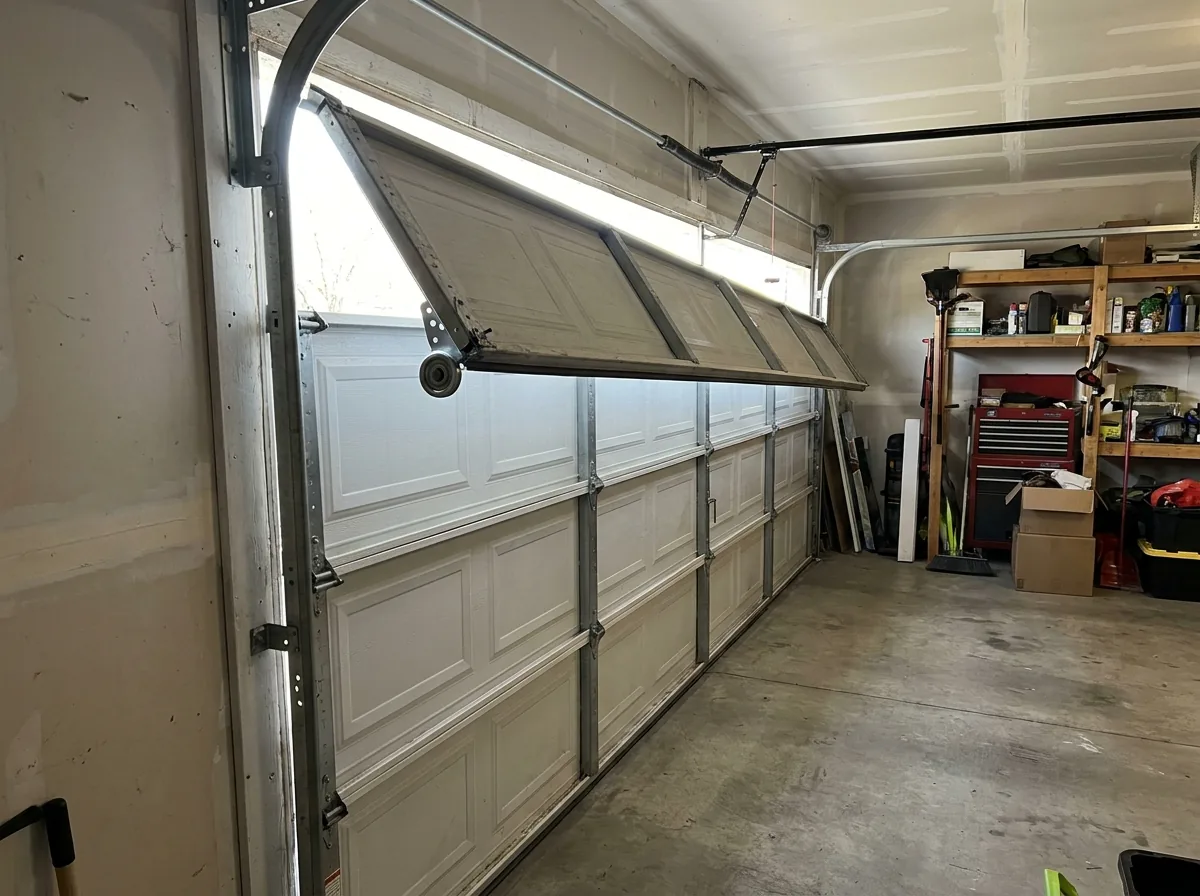
How Much Does a Garage Door Weigh?
A residential garage door weighs between 130 and 450 pounds. A standard single steel door runs 130 to 180 pounds, an insulated single 180 to 220, a standard double 200 to 250, an insulated double 250 to 320, and an impact-rated Florida double 300 to 400 or more, with wood and impact glass doors heavier still. Spring size is set by that weight, which is why a new rated door needs new springs at $150 to $350 each, and never the old ones.
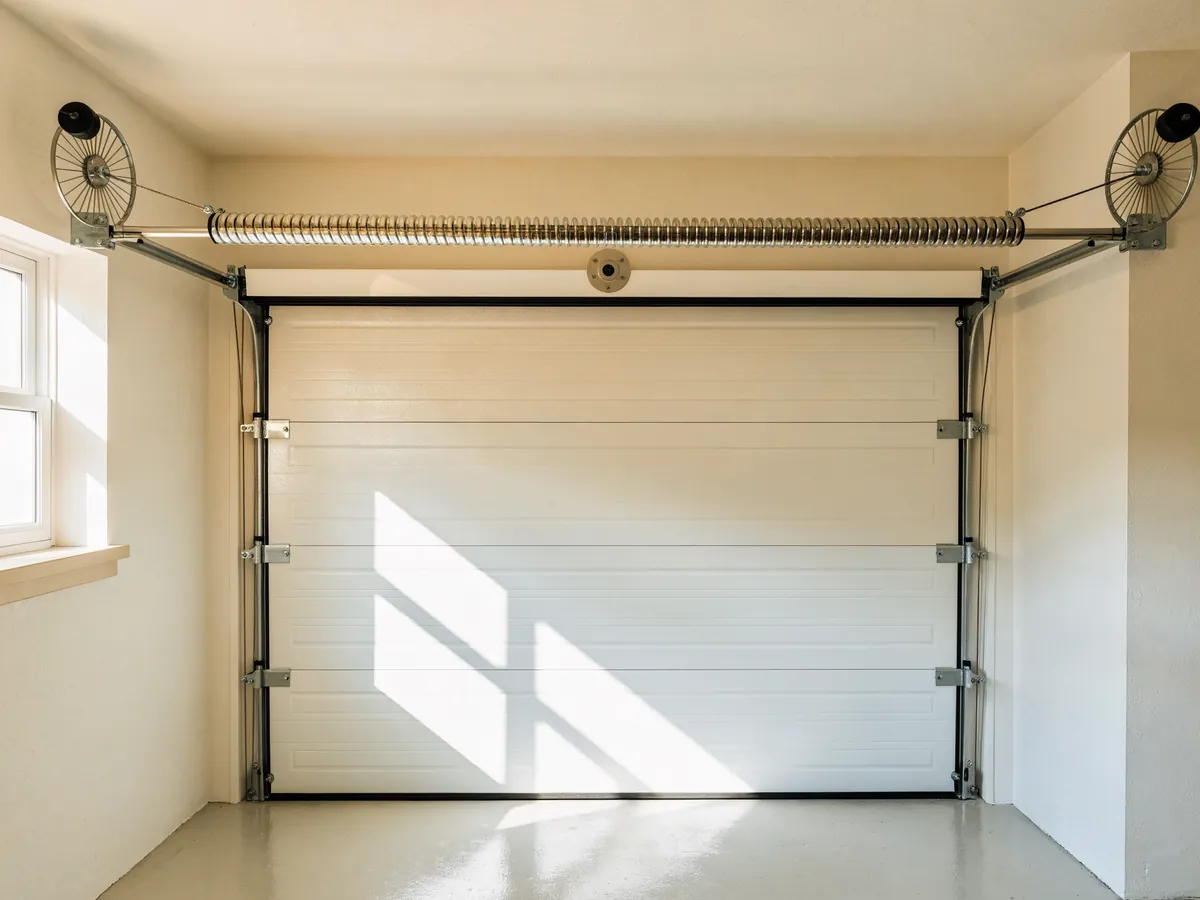
Typical weights
| Door | Weight |
|---|---|
| Single steel, uninsulated, 8x7 or 9x7 | 130 to 160 lb |
| Single steel, insulated | 180 to 220 lb |
| Double steel, uninsulated, 16x7 | 200 to 250 lb |
| Double steel, insulated | 250 to 320 lb |
| Double steel, impact-rated | 300 to 400 lb |
| Double aluminum | 180 to 250 lb |
| Double fiberglass over steel frame | 200 to 280 lb |
| Double vinyl | 220 to 290 lb |
| Double wood | 300 to 450 lb |
| Full view impact glass and aluminum | 350 to 500 lb |
Those are approximate. Actual weight depends on the manufacturer, the gauge, the insulation, the reinforcement and the glazing. A 16 foot by 7 foot double is the door on most Florida two car garages, and the single sizes are what you find on the 1950s to 1970s houses in Hialeah, Hollywood, St. Petersburg and older Orlando. Our article on standard garage door sizes covers the rest.
Why impact-rated doors weigh more
An impact-rated door is tested against a large missile as well as wind pressure, and it earns that rating with steel. The face is a heavier gauge. Every section carries a horizontal strut. The end stiles are reinforced, the hinges are heavier, and if there are windows the glass is laminated. In Miami-Dade and Broward, the HVHZ, a Miami-Dade NOA door is built to the most demanding version of that.
The result is a door that weighs 50 to 150 pounds more than the builder grade door it replaces, and that is before insulation. Our guide to wind-rated versus impact-rated doors explains the ratings; what matters here is that the extra weight has to be carried by something.
Why the number matters
The springs, not the opener, carry the door. The opener only guides a door the springs are already holding.
Spring size is calculated from door weight: the wire size, inside diameter and length together determine how much weight the spring will hold and for how many cycles. Get it wrong and one of two things happens.
Spring too weak. The door is heavy, it will not stay halfway when you lift it, and the opener does the lifting. The opener wears out early, sometimes within two years, and in a Florida garage where the logic board is already cooking at 100°F, sooner.
Spring too strong. The door wants to fly up. It does not close properly, it slams at the top, and the safety reversal on the opener behaves unpredictably.
When the power is out after a storm, an out of balance door is also the one you cannot lift by hand. That is the moment most people discover the spring was wrong.
The test
Close the door, pull the manual release, lift it to waist height, and let go.
Stays put: correct. Drops: too weak, or worn out. Rises: too strong.
Do it once a year, in April or May before the season, on the same day as a tune-up. It takes ten seconds and it is the single most informative check a homeowner can make. Our article on the manual release shows where the cord is and how to reset it.
Where the mismatch comes from
A replacement door without a replacement spring. The most common cause by far, and after every named storm we see a wave of it. A rated door goes on a garage in Fort Myers, Port Charlotte or Homestead, and the installer reuses the existing springs to save money or time. The door is out of balance from the first day, and the opener carries the difference until it fails.
An insulated upgrade on the old spring. Same problem, smaller margin. Fifty pounds is enough.
A DIY spring replacement. Someone matched the length and wire size by eye, or ordered from a generic size chart rather than the door weight. Our article on why not to DIY a torsion spring covers the rest of the risk.
A door that has gained weight. Wood doors absorb water. A wood door whose finish has been neglected through a couple of wet seasons is genuinely heavier than it was, and the spring that was correct is no longer correct.
One spring replaced on a two spring door. The new spring and the tired one do not share the load evenly, and the door lifts crooked. Both springs together adds $120 to $250 to the first at $150 to $350, and it is almost always the right call.
What the weight means for the opener
An opener is rated by lifting force, and a heavier door needs a stronger unit, but only if the springs are wrong. On a correctly balanced door a standard opener moves an impact-rated double without strain, because it is only guiding it. What a heavy door does need is a battery backup, $60 to $150 on any unit, so that the door still opens after a storm rather than needing to be lifted by hand. Our belt versus chain article covers the choice.
What to ask when getting springs replaced
Ask what wire size, inside diameter and length are being fitted, and what the cycle rating is.
A company that can tell you those four numbers has worked them from your door. A company that cannot is fitting whatever was on the truck and hoping it is close enough, which is how doors end up permanently out of balance. For a new rated door, ask the same four questions about the springs on the door quote. Spring replacement runs $150 to $350 per spring installed, and on a door that opens many times a day a high cycle spring is worth asking about.
Related reading
- Torsion versus extension springs
- How long garage door springs last
- Best garage door material for a Florida home
- Insulated versus uninsulated garage door
Related questions
Why does the weight matter to me?
Because the spring is sized to it. A spring that does not match the door leaves it permanently out of balance, which makes it dangerous to lift by hand when the power is out and destroys the opener over a couple of years.
How do I know if my spring is right for my door?
Close the door, pull the manual release, lift the door to waist height, and let go. A correctly sprung door stays put. If it drops or rises, the spring is wrong for the weight or worn out. Do this once a year, ideally before hurricane season.
How much heavier is an impact-rated door?
Typically 50 to 150 pounds heavier than the standard version of the same size, because the steel is thicker, there are horizontal struts on every section, and any glass is laminated. A full view impact glass door in aluminum can pass 400 pounds. Every one of those doors needs springs specified for it, not the springs from the old door.
Does insulation add much weight?
Yes. A polyurethane cored insulated door can be fifty pounds or more heavier than the single skin equivalent. That is why a new insulated door needs a new spring rather than reusing the old one.
Can Florida humidity change a door's weight?
On a wood door, yes. Wood absorbs water from the daily afternoon rain and the humid air, and a neglected wood door can be noticeably heavier by the end of a wet season than it was when the spring was set. Steel, aluminum, fiberglass and vinyl doors do not change.