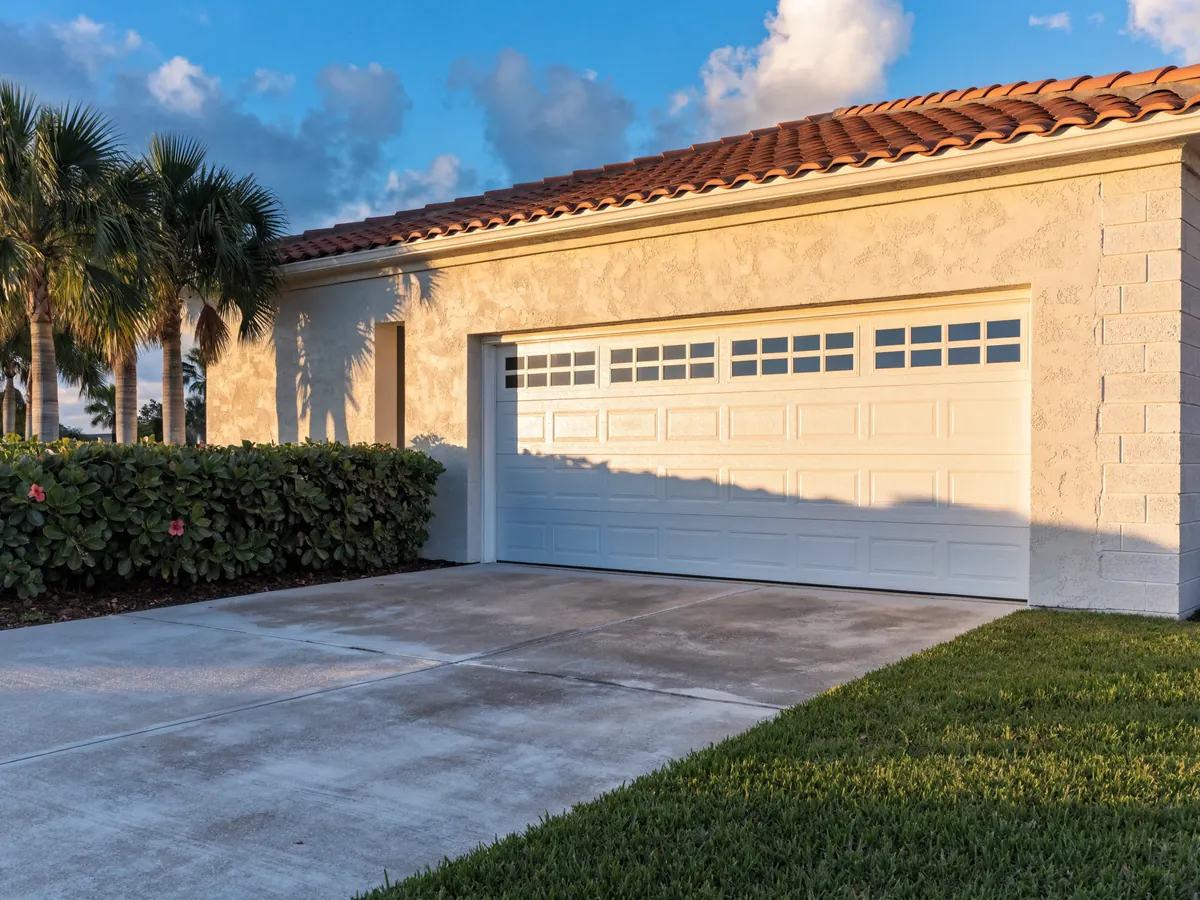
A steel garage door is the most common choice in Florida, installed from about $950 for a standard wind-rated single door and up to roughly $3,000 for an insulated double with a decorative finish. Impact-rated steel doors start around $1,800. Steel is strong, cheap and low maintenance, and its weaknesses here are dents and rust at any scratch through the finish, which humidity and salt air find quickly.
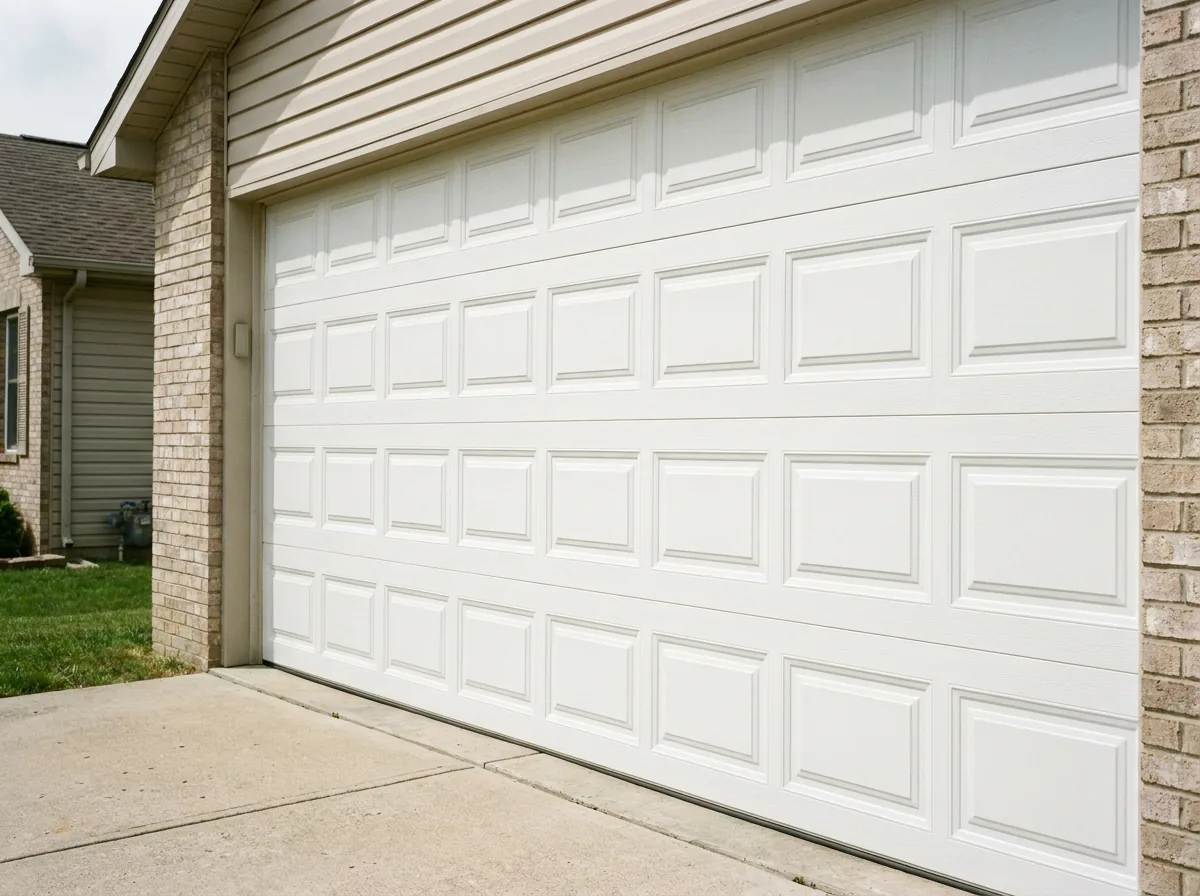
Steel is the default garage door material in Florida because it is the cheapest way to meet the wind rating the Florida Building Code requires at your address. Every new steel door carries a design pressure rating, a Florida Product Approval outside Miami-Dade and Broward, and a Miami-Dade NOA inside them. The rating changes the door: heavier gauge skins, horizontal struts across the back of each section, more track brackets and heavier hardware. An impact-rated steel door adds a large missile test on top of the pressure rating and starts around $1,800 installed.
The number that matters when comparing steel doors is the gauge, and lower means thicker. A 24 gauge door is noticeably more dent resistant than a 27 or 28 gauge builder-grade door, and in a Florida garage that doubles as the storage room and the workshop the difference is worth paying for. Insulation matters here for a different reason than up north: a polyurethane core stiffens the sections and keeps a west-facing garage cooler in August, which is easier on the opener and on anything you store in there.
The thing to understand about steel in humidity and salt air is that the galvanized coating and the factory paint are the protection. Once a scratch goes through to bare steel, rust starts at that point and spreads under the finish. Within a few miles of either coast, from Jupiter down to Homestead and from Naples up to Clearwater, that is the failure mode we see most, and it shows up first on the bottom section and at the hinge screws.
What it is good at
- Lowest installed cost of any material that meets the Florida wind rating
- Wind-rated and impact-rated versions from every major manufacturer, with Florida Product Approval and Miami-Dade NOA options
- Available insulated, which stiffens the door and keeps the garage cooler in summer
- No refinishing, unlike wood
What it is bad at
- Dents, and a dented steel section usually has to be replaced rather than repaired
- Rusts at any scratch through the galvanizing, which is a real problem near the coast
- A thin builder-grade door flexes in wind and dents from an ordinary knock
Steel questions
What gauge steel garage door should I get in Florida?
For a family home, 24 or 25 gauge. Builder-grade doors in many 2000s subdivisions are 27 or 28 gauge, which is thinner, dents from an ordinary knock and flexes more in wind. The price difference at purchase is far smaller than the cost of replacing a dented section later, which starts at $250.
Is a wind-rated steel door the same as a hurricane door?
No. A wind-rated door is built to resist the design pressure at your site, and every new door in Florida must be at least that. An impact-rated door is also tested against large missile impact, and that is what most people mean by a hurricane door. Wind-rated steel starts at $950 installed and impact-rated steel starts around $1,800. In Miami-Dade and Broward the door needs a Miami-Dade NOA either way.
How do I stop a steel door rusting near the coast?
Keep the factory finish intact, rinse the door with fresh water when you rinse the car, and touch up scratches the week you notice them rather than the year. Ask for galvanized or stainless hinges, brackets and fasteners, because the hardware rusts long before the panel does, and a rusted bottom bracket is a safety problem because it holds the cable under spring tension.