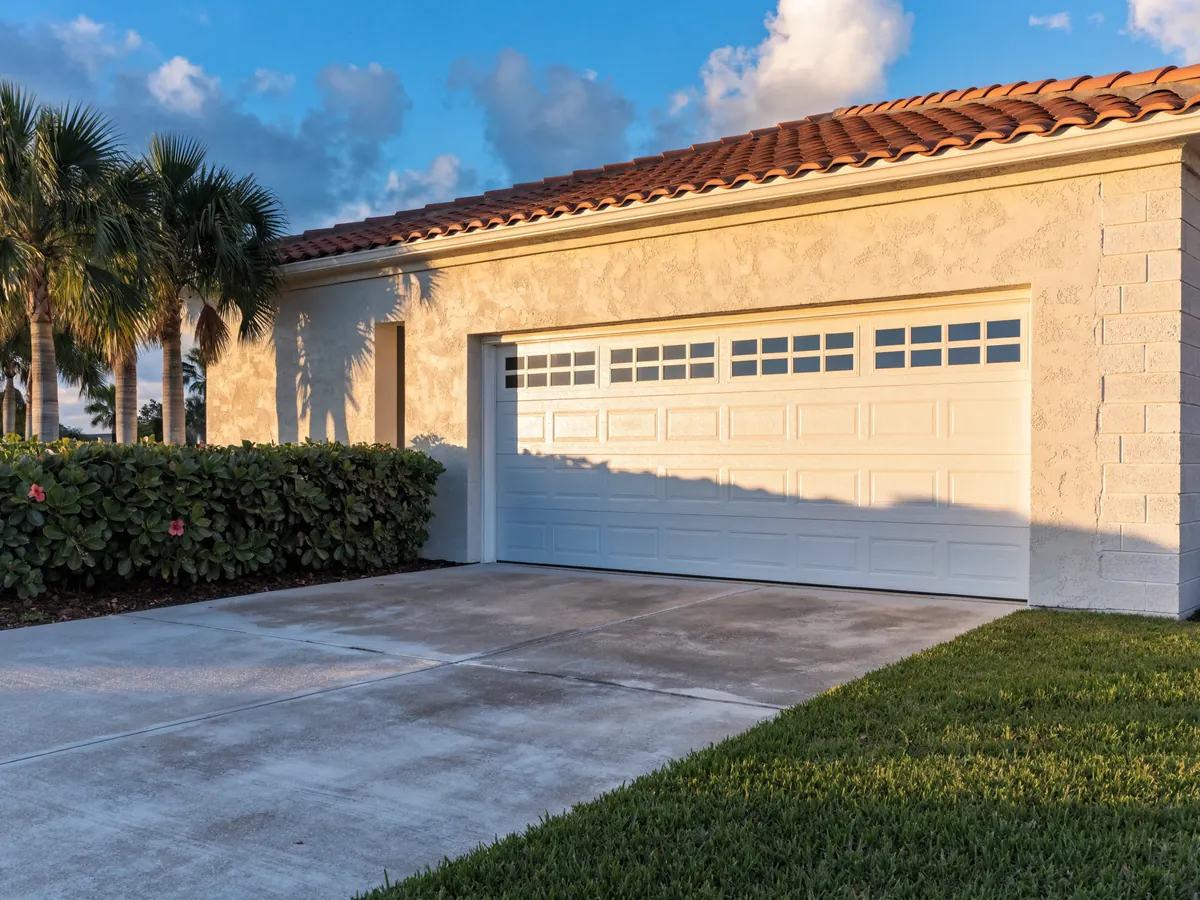
A fiberglass garage door costs roughly $1,400 to $3,800 installed in Florida. Fiberglass cannot rust, is light, and takes a wood grain finish convincingly, which makes it a common answer for a coastal house that wants the look of wood without termites or refinishing. Its weaknesses here are UV fading on a sun-facing driveway and cracking on a hard impact, and a cracked panel is a replacement, not a repair.
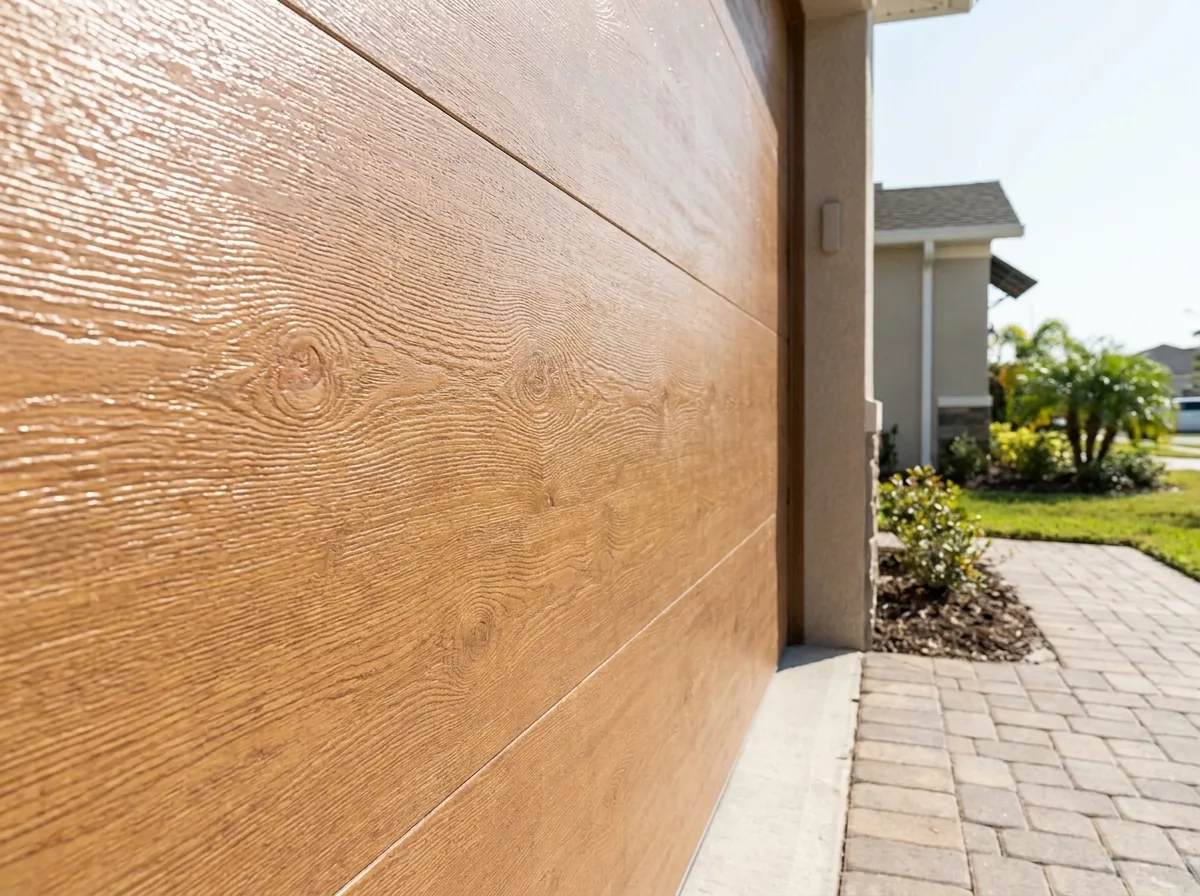
Fiberglass sits between aluminum and wood. Most fiberglass doors are a molded fiberglass skin bonded to a steel frame with a foam core, so the skin cannot rust and the frame carries the wind rating. From the street a good wood grain fiberglass door reads as timber, and termites have no interest in it, which is why it comes up so often in Melbourne, Palm Coast, Venice and other coastal towns where a real wood door would be a maintenance project.
The Florida caveat is sun. Fiberglass fades and chalks under UV faster than a factory-finished steel door does, and a dark stained finish on a west-facing driveway in Cape Coral or Port St. Lucie will look noticeably lighter in ten years. A lighter colour and a deep overhang slow it down; a good quality topcoat slows it more. Ask the manufacturer what the finish warranty actually covers, because fading is often excluded.
It also cracks rather than dents. An impact from a car bumper or a dropped ladder that would leave a dent in steel can crack a fiberglass skin, and once cracked the section is replaced rather than repaired. The rating question is the same as every other material: wind-rated fiberglass doors with Florida Product Approval are available, impact-rated versions are fewer, and in Miami-Dade and Broward the door needs a Miami-Dade NOA.
What it is good at
- Cannot rust, and termites do not eat it, so it suits the coast and the wood look together
- Light, which is easy on springs and opener
- Convincing wood grain finishes without wood maintenance
- Does not dent the way steel does
What it is bad at
- Fades and chalks under Florida sun, fastest on a south or west facing driveway
- Cracks on a hard impact, and a cracked panel is a replacement, not a repair
- Fewer wind-rated and impact-rated models than steel, so the choice is narrower
Fiberglass questions
Does fiberglass fade in the Florida sun?
Yes, faster than factory-painted steel. A dark stain on a west-facing door will lighten visibly over about ten years. Lighter colours, a deep overhang and a good topcoat slow it. It is cosmetic, not structural, but it is the complaint we hear most on fiberglass.
Is fiberglass well insulated?
That depends on the core, not the skin. Ask for the R-value rather than assuming. A polyurethane cored fiberglass door keeps a garage noticeably cooler in summer and is stiffer in wind; a hollow one does neither.
Can I get a hurricane-rated fiberglass door?
Wind-rated fiberglass doors with a Florida Product Approval are available from the major manufacturers. Impact-rated fiberglass is a shorter list, and in the HVHZ the door needs a Miami-Dade NOA. We check the approval for your address and wind zone before we quote, because the same model can be approved at one pressure and not another.