
Belt Drive vs Chain Drive Garage Door Opener in Florida
Choose a belt drive if there is a bedroom or living space beside or above the garage, because the noise difference is dramatic and a belt shrugs off Florida heat. Choose a chain drive if the garage is detached or nobody sleeps near it, because nothing lasts longer for less money. In Florida a chain drive runs $275 to $450 installed and a belt drive $350 to $600, and battery backup adds $60 to $150 to either and is worth it in a state that loses power after storms.
The one question
Is there a bedroom or living space beside or above the garage?
Yes: belt drive. No: chain drive.
That decides it for the large majority of Florida homes, and everything below is detail.
The comparison
| Chain | Belt | |
|---|---|---|
| Installed price | $275 to $450 | $350 to $600 |
| Noise | Loud | Very quiet |
| Maintenance | Light lubrication once or twice a year | None on the belt |
| Humid salt air | Surface rust if neglected | No effect |
| 100°F garage | Fine | Fine |
| Durability | Highest | High |
| Typical life | 10 to 15 years | 10 to 15 years |
| Battery backup | Optional, $60 to $150 | Usually included or $60 to $150 |
| Best for | Detached garages, workshops | Attached garages, living space nearby |
Why the noise difference is so big
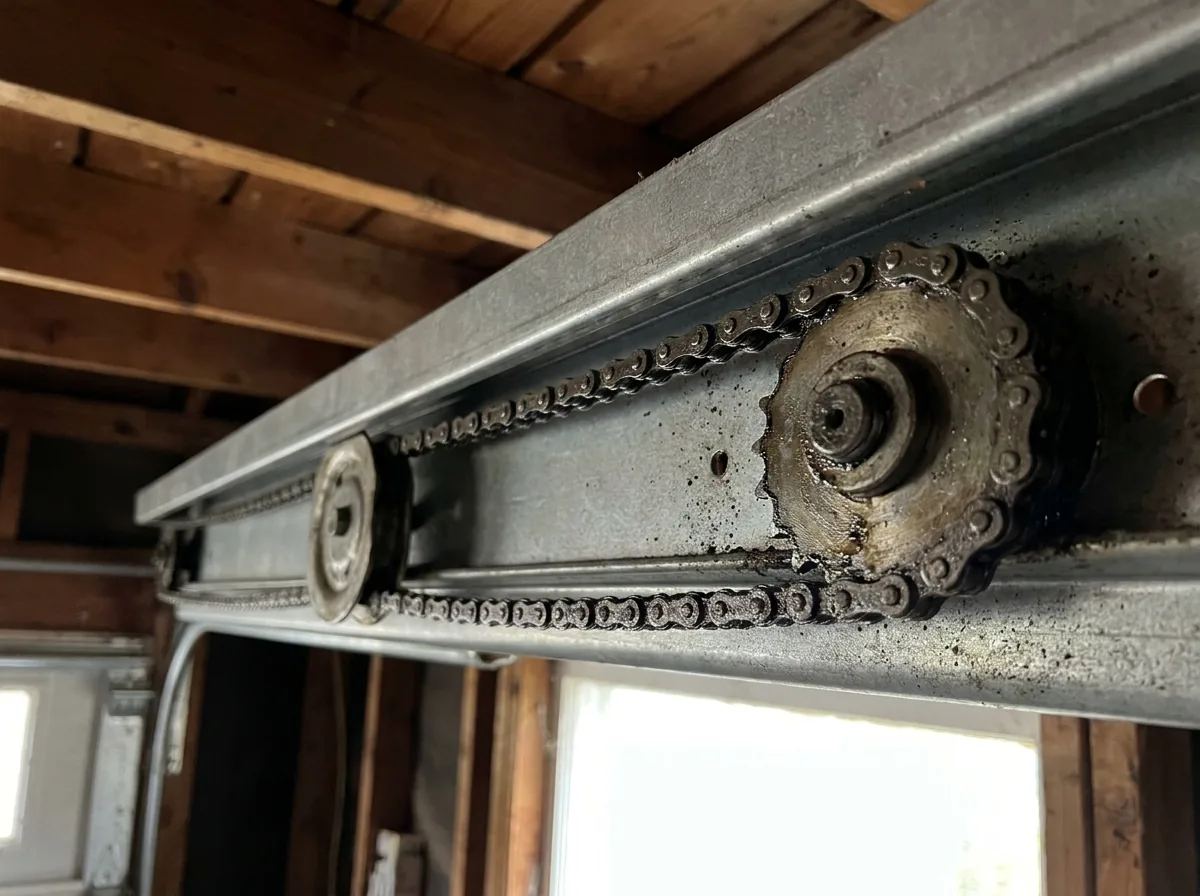
A chain drive is metal chain running against a metal rail. The noise is not just airborne, it is vibration transmitted through the mounting into the trusses and the block. In a room that shares a wall or a ceiling with the garage you feel it as much as hear it.
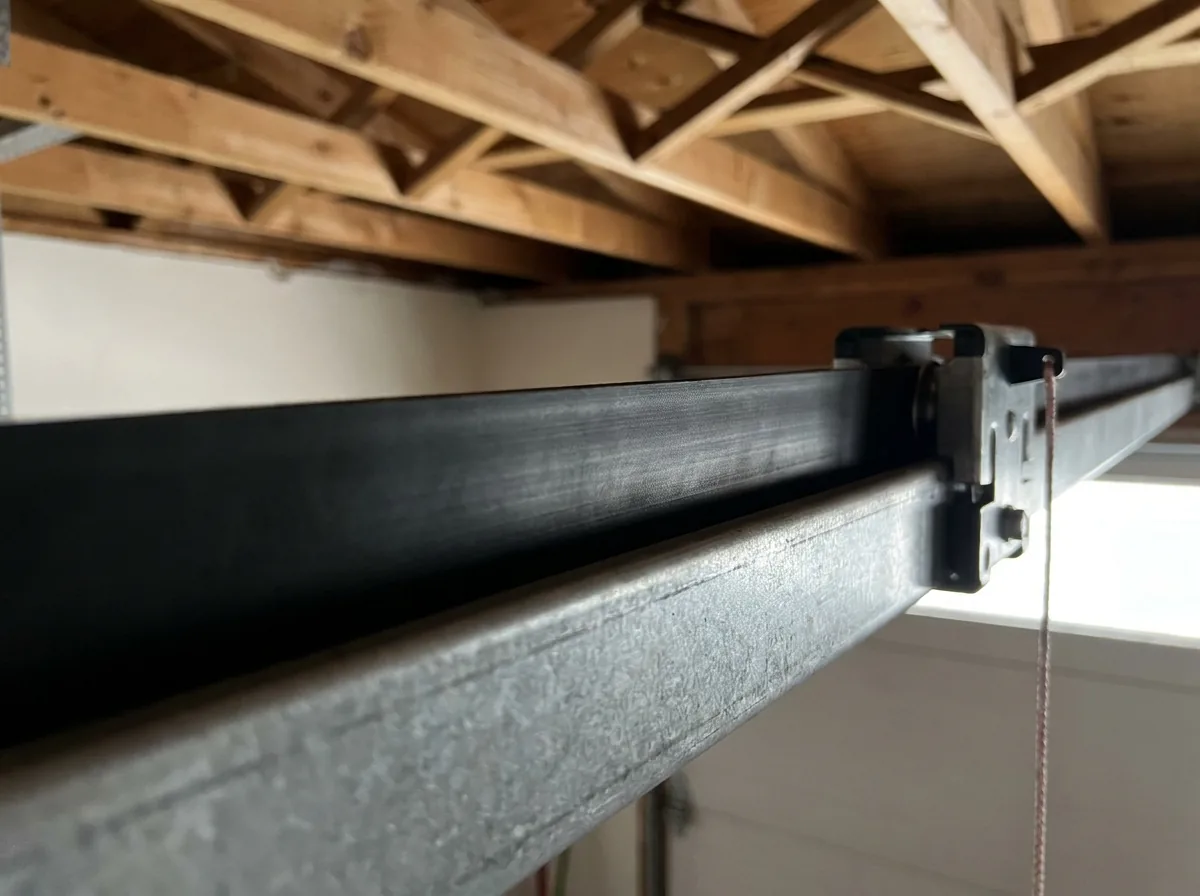
A belt is steel-reinforced rubber. It does not clatter and it transmits far less vibration into the framing. The mechanism is otherwise identical.
That structural transmission is why isolating the mounting helps a chain drive but never fully fixes it, and why people who try to solve chain noise with rubber isolators usually end up buying a belt drive anyway.
Where this matters most in Florida
Almost every Florida house has an attached garage, and the bedroom next to it is common in both housing eras.
In a single-story ranch, the kind built across Hialeah, Hollywood, St. Petersburg and older Orlando from the 1950s to the 1970s, the garage typically shares a wall with a bedroom or the kitchen. A chain drive on the other side of that wall is a decision people regret.
In two-story builds from the 1990s onward, in Weston, Wesley Chapel, Lake Nona, Parkland and most of the newer subdivisions, the bonus room or a bedroom sits directly over the garage. That is the loudest possible place to put a chain drive.
In a detached garage, a workshop, or a golf cart garage where nobody sleeps nearby, a chain drive is fine and it is the better value.
What heat and humidity do to each
The summer garage in Florida reaches 100°F and more. That heat does not bother a belt, which is steel cord inside rubber, and it does not bother a chain. What it does bother is the electronics. Logic boards and capacitors age faster in a hot garage, and the plastic drive gear in older units softens and strips. Those failures happen on both drive types and they are the reason opener repair at $95 to $300 is a summer job for us. Our article on summer heat problems covers the pattern.
Humidity is where the two differ. Within a few miles of either coast a chain that is never touched picks up surface rust, gets noisier, and wears the sprocket. A wipe of light lubricant once or twice a year, the same visit as a tune-up, keeps it fine. A belt needs nothing.
What the extra money buys
The premium is roughly $75 to $150.
For a garage beside or under a bedroom, that is one of the highest value upgrades available anywhere in a house. For a detached garage, it buys you almost nothing.
Battery backup, which matters more here than anywhere
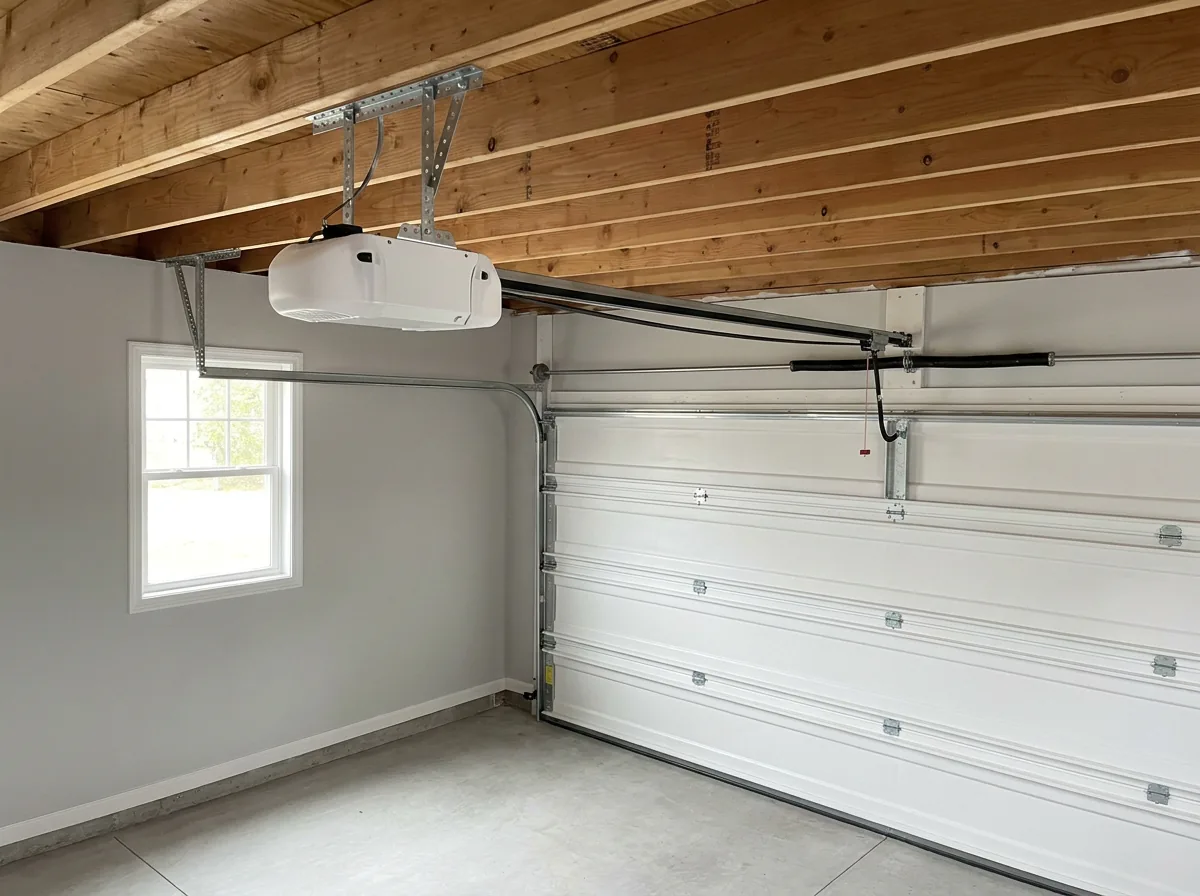
Power goes out in Florida. After a named storm it can stay out for days, and a heavy door with no power means pulling the manual release and lifting by hand, which on an impact-rated double door is real work.
Battery backup adds $60 to $150 to any opener and gives you dozens of cycles on a charge. It is included on most belt drives now. We recommend it on every attached garage in the state, and our article on battery backup and power outages explains how long a battery actually lasts and how to test it before hurricane season. Learn the manual release either way.
The other drive types, briefly
Screw drive, $300 to $500. Few moving parts and strong lift, but the lubricant on the screw thins in heat and thickens when it cools, so it is temperature sensitive in a way that shows up in a hot garage. See the screw drive guide.
Direct drive, $400 to $600. The motor rides the rail, so there is a single moving part. As quiet as a belt with usually a longer warranty. Fewer models available. See the direct drive guide.
Jackshaft, wall mount, $450 to $800. Mounts beside the door on the torsion shaft and needs almost no headroom. Not really a competitor to the others: it is the answer for a low headroom garage in an older single-door house, or when you want the ceiling clear for storage. See the jackshaft guide and our article on low headroom openers.
Features to consider alongside
WiFi control. Check whether you left it open, and let a delivery in. A smart opener installed runs $350 to $750, or a controller can be added to an existing opener for less. Our article on whether a smart opener is worth it goes through the trade-offs.
Soft start and stop. Reduces both noise and wear on the door hardware. Standard on most belt and direct drives.
Brand. LiftMaster and Chamberlain make both drive types with battery backup; Genie belt drives are also common here. The drive type matters more than the badge.
Related reading
- Chain drive openers, buyer’s guide
- Belt drive openers, buyer’s guide
- Garage door opener installation cost
- Garage door opener quit working
Related questions
Is a belt drive strong enough for a heavy door?
For a residential door, yes. Steel-reinforced belts handle standard, insulated and impact-rated double doors without difficulty, provided the springs are carrying the weight as they should. On a genuinely heavy custom wood door, a chain or a jackshaft is still the more durable answer.
Does Florida heat wear out a belt faster?
Not in our experience. A residential belt is steel cord inside rubber and it usually outlives the motor driving it, even in a garage that sits at 100°F all summer. The part that does suffer in that heat is the logic board and, on older units, the plastic drive gear, and those fail the same way on belt and chain units.
Does a chain drive rust in Florida?
Within a few miles of either coast, yes, it can. A chain that is never lubricated picks up surface rust in humid salt air, gets noisier, and wears the sprocket. A wipe of light lubricant once or twice a year keeps it fine. A belt needs none of that.
Is battery backup worth $60 to $150?
In Florida, yes. After a storm the power can be out for days, and a battery gives you dozens of cycles so you can get the car out without pulling the manual release on a heavy door. It is standard on most belt drives now and available on almost every unit.
How much quieter is a belt really?
Enough that people who fit one after living with a chain almost always describe it as the difference between hearing the garage and not hearing it. In a bedroom that shares a wall or a floor with the garage it is the single biggest quality of life difference in the whole system.