Garage Door Opener Quit Working: Dead Motor or a Cheap Fix?
A garage door opener that has quit entirely is most often one of four things: no power reaching it, a GFCI outlet tripped by a storm, a failed capacitor, or a stripped drive gear. If the motor hums but the door does not move, the gear or the capacitor has gone. If nothing happens at all, start at the outlet. Opener repair in Florida runs $95 to $300, and a new opener installed runs $275 to $600.
Get your car out first
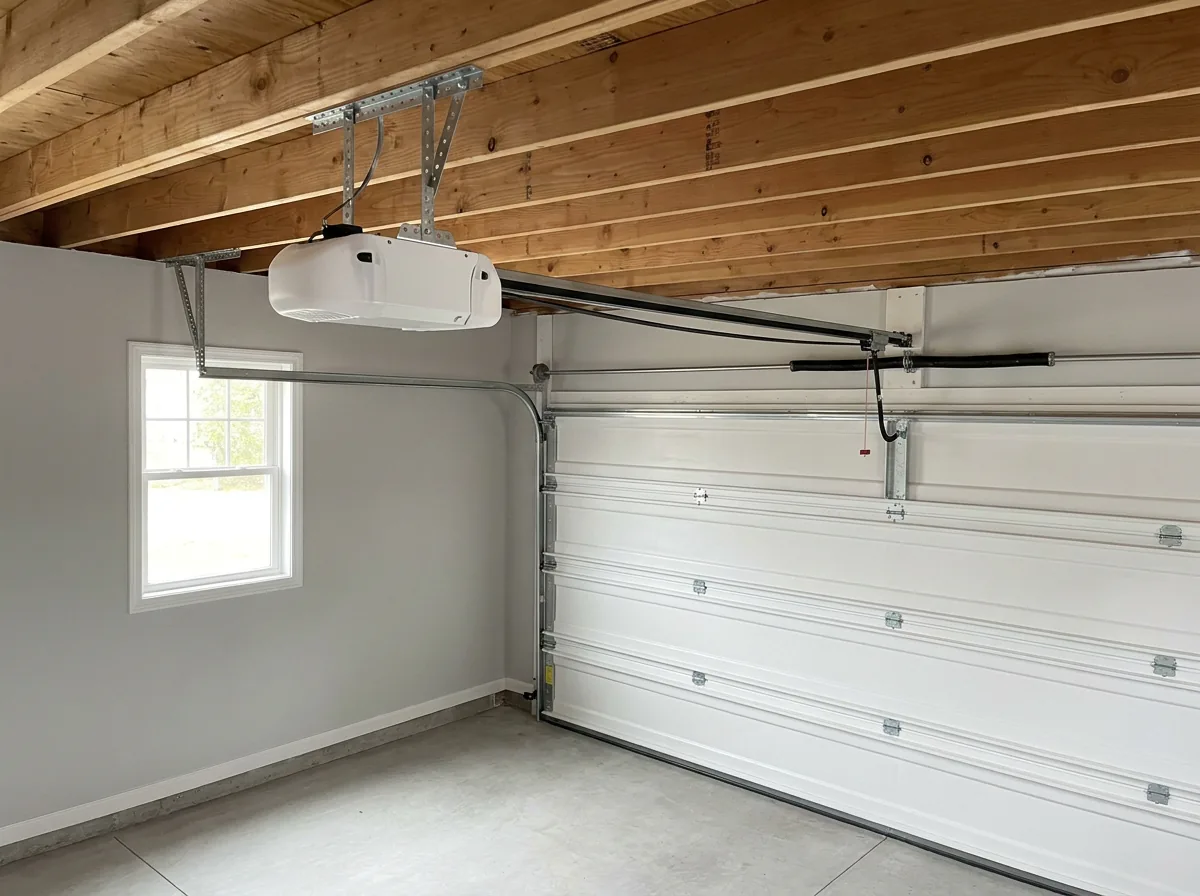
If the door is shut and you need to be somewhere, pull the red release cord hanging from the trolley on the rail. That disconnects the door from the opener, and the door will now lift by hand.
One warning. A balanced door lifts easily and stays where you put it. If the door is very heavy or slams back down, the spring has failed and the opener was only masking it. Do not stand under it and do not try to prop it alone. That is a spring call, not an opener call, and it is the one dangerous scenario on this page. Our guide on a car trapped in the garage covers that situation step by step.
Work out which kind of dead it is
There are three, and they point at completely different faults.
Nothing at all. No light, no sound, no response from any control. Power problem.
Light works, motor does nothing. Power is fine. The problem is in the controls, the logic, or the safety circuit.
Motor hums or runs but the door does not move. Power and logic are fine. Something mechanical has failed between the motor and the door.
Identify yours before reading further.
Nothing at all: start at the outlet
In Florida this is the most common way an opener dies, and it is usually not the opener.
Is the power out? After an afternoon storm it may be out on your street and not the next one. Check a light in the house.
Has the GFCI tripped? Garage outlets are GFCI protected, and the reset button may be on that outlet, on another outlet in the garage, or near the panel. Storms, humidity and the surge when power comes back all trip them. An opener that died overnight during a storm and has no light at all is this until proven otherwise.
Is the opener plugged in? Vibration walks plugs out of ceiling outlets over years.
Has a breaker gone? Check the panel and look for one sitting between on and off.
Did lightning hit nearby? Florida records more lightning strikes per square mile than any other state, and the corridor between Tampa and Orlando is the busiest part of it. A strike does not have to hit the house to put a surge through the opener. If the opener was fine before a storm and is completely dead after it, with the outlet live, the transformer or the logic board has taken the surge.
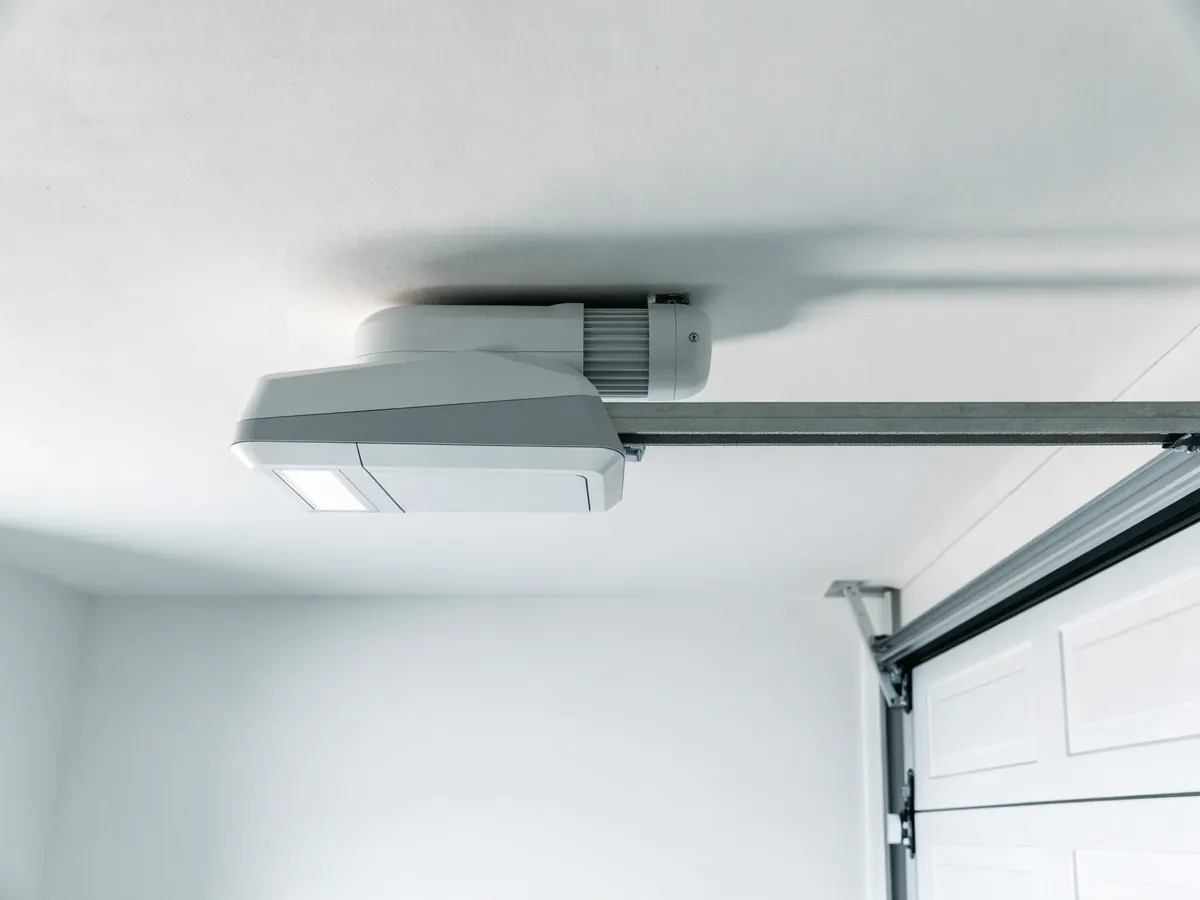
If the outlet is live and the opener is getting power and doing nothing, the transformer or the board has failed.
Light works, motor does nothing
Power is fine, so the opener is choosing not to run.
Is it in lock or vacation mode? Many wall controls have a lock button that disables remotes, and some disable everything. Look for a lit indicator on the wall control.
Are the safety sensors happy? The sensors only block downward travel, so if the door will go up but not down, that is sensors. Our guide on what a flashing opener light means covers this in full.
Does the wall button work when remotes do not? Then the problem is the radio receiver or the remotes, not the motor. Our guide on a remote that stopped working is the next stop.
Do neither work? Disconnect the two wall control wires at the motor unit and briefly touch them together. If the opener runs, the wall control or its wiring is the fault. If nothing happens, the fault is inside the unit.
Motor hums but nothing moves
This is the most common mechanical way an opener dies, and it is usually the cheapest to fix.
A stripped drive gear. On chain and belt drive units built by Chamberlain, which includes a great many LiftMaster and Craftsman models, a plastic worm drive gear sits between the motor and the drive shaft. It is a wear part, and a garage that spends every summer above 100°F softens that plastic and shortens its life. The symptom is exactly this: a motor that runs, sometimes with a grinding note, and a trolley that does not move. Look for white plastic shavings on top of the motor housing. A gear and sprocket kit is an inexpensive part and worth doing on almost any unit.
A failed capacitor. The capacitor gives the motor the kick it needs to start. Heat is what kills capacitors, and Florida garages supply plenty of it. When it fails the motor hums, gets hot and does not turn. Also inexpensive, and also worth doing.
A broken trolley or carriage. The trolley is what the arm attaches to. If it has cracked, the chain or belt moves and the door does not.
A snapped chain or belt. Visible from the floor.
The door is disconnected. Somebody pulled the release cord during the last outage and never reconnected it. Pull the cord again with the door closed and run the opener, and the trolley should re-latch. This happens after every storm season.
The thing people get wrong
A very large share of the openers we are called out to have not failed at all. The door failed and took the opener down with it.
An opener is not designed to lift a garage door. The springs lift the door. The opener gives the balanced door a nudge and holds it in place. When a spring fatigues, the door gets heavier, and the opener starts doing work it was never built for. It strips gears, burns capacitors and overheats.
The thirty second test. Close the door. Pull the release cord. Lift the door by hand to waist height and let go. Stays put: the door is balanced, and your opener is the problem. Drops or shoots up: the spring is wrong, and the opener is a symptom. Do this before you spend money on any opener.
Faults, checks and costs
| What you see | What to check | What it costs |
|---|---|---|
| Completely dead after a storm | GFCI reset, breaker, power on the street | Nothing, if it is the GFCI |
| Completely dead, outlet live | Transformer or board taken out by a surge | Opener repair $95 to $300, or a new opener at $275 to $600 if the board is not worth it |
| Light on, no motor, door goes up not down | Safety sensors | Realignment in a tune-up, or opener repair from $95 |
| Hums, does not move, plastic shavings | Stripped drive gear | Opener repair $95 to $300, gear kit at the low end |
| Hums, gets hot, does not turn | Failed capacitor | Opener repair, low end of the range |
| Runs fine, door heavy by hand | Fatiguing spring | Spring replacement $150 to $350 per spring |
| Over fifteen years old, second failure this year | Age and heat | New opener $275 to $600; smart opener with battery backup $350 to $750 |
Every price is a starting price for a standard single door. The full list is on our prices page, and our guide on opener installation cost explains what moves the replacement number.
Repair or replace
Worth repairing at almost any age: gear and sprocket kits, capacitors, limit switches, safety sensors, remotes, wall controls, chains, belts and trolleys.
Usually not worth repairing on an older unit: the logic board. Boards for discontinued models get scarce and the price climbs. When a board on a unit past fifteen years costs more than half of a new opener, the honest answer is a new opener, and we will say so rather than sell you the board.
Replace regardless if the unit predates 1993. Openers from before then have no photo eye safety sensors, which federal law has required on residential units since 1993. Our guide on old opener safety explains the rest of what is missing.
Two Florida additions when you do replace. Put a surge protector on the opener outlet, because the next storm is coming. And choose a unit with battery backup, which adds $60 to $150 and means the door still runs when the power is out, which after a storm is exactly when you need it. Our guide on battery backup and power outages covers how long a backup lasts.
We serve the whole state, from Palm Beach and the Treasure Coast to Central Florida, same day, seven days a week.
Related questions
My opener hums but the door does not move. What is that?
Almost always a stripped drive gear or a failed capacitor. The motor is being told to run and is trying, but nothing is transmitting that motion to the door. On Chamberlain built units, including many Craftsman and LiftMaster models, a plastic worm drive gear is a known wear item, a hot Florida garage shortens its life, and it is the first thing to check. Look for white plastic shavings on top of the motor housing.
Is it worth repairing an old garage door opener?
It depends on the part. A gear kit, a capacitor, a limit switch or a sensor pair are all worth doing at almost any age. A logic board on a unit over fifteen years old usually is not, because boards for discontinued models are scarce and expensive and the rest of the unit has spent those years in the heat too.
How long should a garage door opener last in Florida?
Ten to fifteen years is normal here. Units that reach twenty elsewhere rarely do in a garage that sits above 100°F every summer, because heat ages the capacitor, the plastic gear and the logic board. What kills them early anywhere is a door that is out of balance, because the opener then spends its life lifting weight the spring is supposed to be carrying.
The opener died and the door is stuck closed. How do I get my car out?
Pull the red emergency release cord hanging from the trolley. That disconnects the door from the opener and lets you lift it by hand. If the door is heavy or fights you, stop, because that means the spring is the real problem and a heavy door can come down hard.
Can lightning kill a garage door opener?
Yes, and in Florida it does regularly. The strike does not have to hit the house. A surge on the line takes out the transformer or the logic board, and the unit is dead with a live outlet. A plug-in surge protector rated for the opener is cheap insurance, and we fit one on every install if you ask.
Should my new opener have battery backup?
In Florida, yes. It adds $60 to $150 and means the door still opens and closes during the outage after a storm, which is exactly when you need to get the car out or the house shut. It also spares you the manual release in the dark.