Garage Door Battery Backup for Florida Power Outages
A garage door opener battery backup is a rechargeable battery in the motor head that runs the door when the power is out, typically for a day or two of normal use. It adds $60 to $150 to any opener we install, from a $275 to $600 chain or belt drive to a $350 to $750 smart opener, and most current belt drive and wall mount models offer it. When the battery is flat or the opener has none, the manual release cord is the fallback.
Why this matters more in Florida
Power outages after storms are a fact of the season. A tropical storm passing fifty miles offshore drops lines across a county, and a hurricane can leave neighborhoods dark for days. The garage door is the door most Florida families use to come and go, and it is the door that stops working when the power does.
A battery backup keeps it working. It is not a hurricane feature, exactly. It does nothing during the storm, when the door should be closed and locked anyway. It earns its keep in the days after, when you need to get the car out for ice and gas and the power is not back.
How a battery backup works
The battery sits in a compartment in the opener’s motor head, or in a small case beside it, and the opener charges it from wall power whenever the power is on. When the power drops, the opener switches to the battery without you doing anything. The door opens and closes as usual, sometimes a little slower, and the opener’s light may dim or stay off to save power.
Most current units use a sealed lead acid battery about the size of a paperback book. Some newer openers use a lithium pack. Either way the battery is a consumable: it charges and discharges over a few years, and it is replaced when the opener says it is weak.
| Feature | What it does on battery |
|---|---|
| Door travel | Runs, sometimes slower |
| Safety sensors | Run, door will not close without them |
| Wall console and remotes | Run |
| Opener light | Dim, brief, or off, depending on the model |
| WiFi and camera on smart units | Model dependent, sometimes off to save power |
| Cycle count from full | Commonly rated around 20 in 24 hours; check your model |
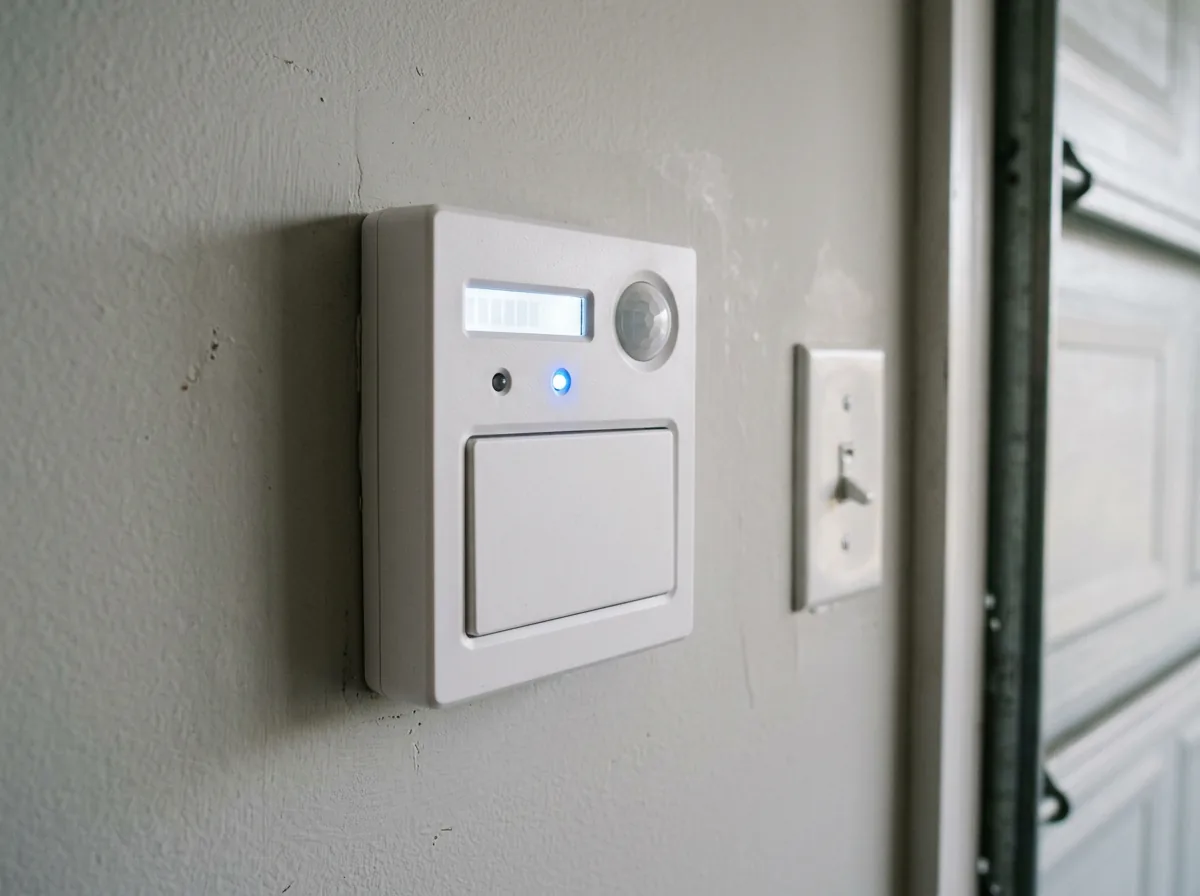
The opener tells you the battery’s state. A status light on the motor head, a message on the wall console, and on smart openers a notification on your phone. When it says the battery is weak, it is weak, and the next outage is a bad time to find out.
What it costs
Battery backup adds $60 to $150 to any opener we install. That is the battery and the compartment on units where it is an option, and it is on our price list with the openers themselves:
| Opener | Installed price | With battery backup |
|---|---|---|
| Chain drive | $275 to $450 | Add $60 to $150 |
| Belt drive | $350 to $600 | Add $60 to $150 |
| Screw drive | $300 to $500 | Add $60 to $150, where offered |
| Direct drive | $400 to $600 | Add $60 to $150 |
| Jackshaft wall mount | $450 to $800 | Add $60 to $150 |
| Smart WiFi opener | $350 to $750 | Battery backup and camera options included in the range |
Opener installation runs $275 to $600 for a unit with a standard rail. Smart opener installation runs $350 to $750 for a WiFi unit with battery backup and camera options. The difference between chain and belt is covered in belt vs chain drive openers.
A replacement battery a few years in is a small part. We price it on the invoice when we fit it, and it is usually done on a tune-up visit rather than as its own call.
Which openers have it
Battery backup is a designed-in feature, not a universal add-on. The opener needs the compartment, the charging circuit and the firmware to switch over, and only openers built with those accept a battery.
In practice:
- Belt drive openers from LiftMaster, Chamberlain and Genie offer it on most current mid-range and up models, either built in or as an add-on battery that drops into the compartment.
- Jackshaft wall mount openers from the same brands commonly include it, because the wall mount is sold as a premium unit.
- Smart WiFi openers usually include it or offer it, and the app reports the battery state.
- Budget chain drive openers often do not have the compartment. A cheap opener with no backup option is the common reason a homeowner cannot add one later.
- Older openers, anything more than about ten years old, almost never take a battery. If the unit is that age and the outage problem matters to you, the answer is a new opener with backup, and an opener that old is usually near the end of its logic board and gear life anyway in a Florida garage. See summer heat garage door problems.
If you are not sure about your opener, the model number on the motor head and a look for a battery door on the side or the back answers it. We can check it on any opener repair call, $95 to $300 for the repair itself.
Heat and the battery
A Florida garage reaches 100°F and more in summer, and heat is the thing that shortens a battery’s life. A battery that would last five years in a mild climate lasts fewer here, and a battery that spends its life at the top of a hot garage lasts the least. There is not much to be done about the location, since the battery lives in the opener, but there are two habits that help.
Test it. Most openers let you unplug the unit and run the door on battery to confirm it works. Do it in May, before the season, and again after any long outage that drained it.
Replace it when it warns. An opener that beeps every thirty seconds is telling you the battery is done. People silence it and forget it, and the next outage is the reminder.
The manual release is the fallback
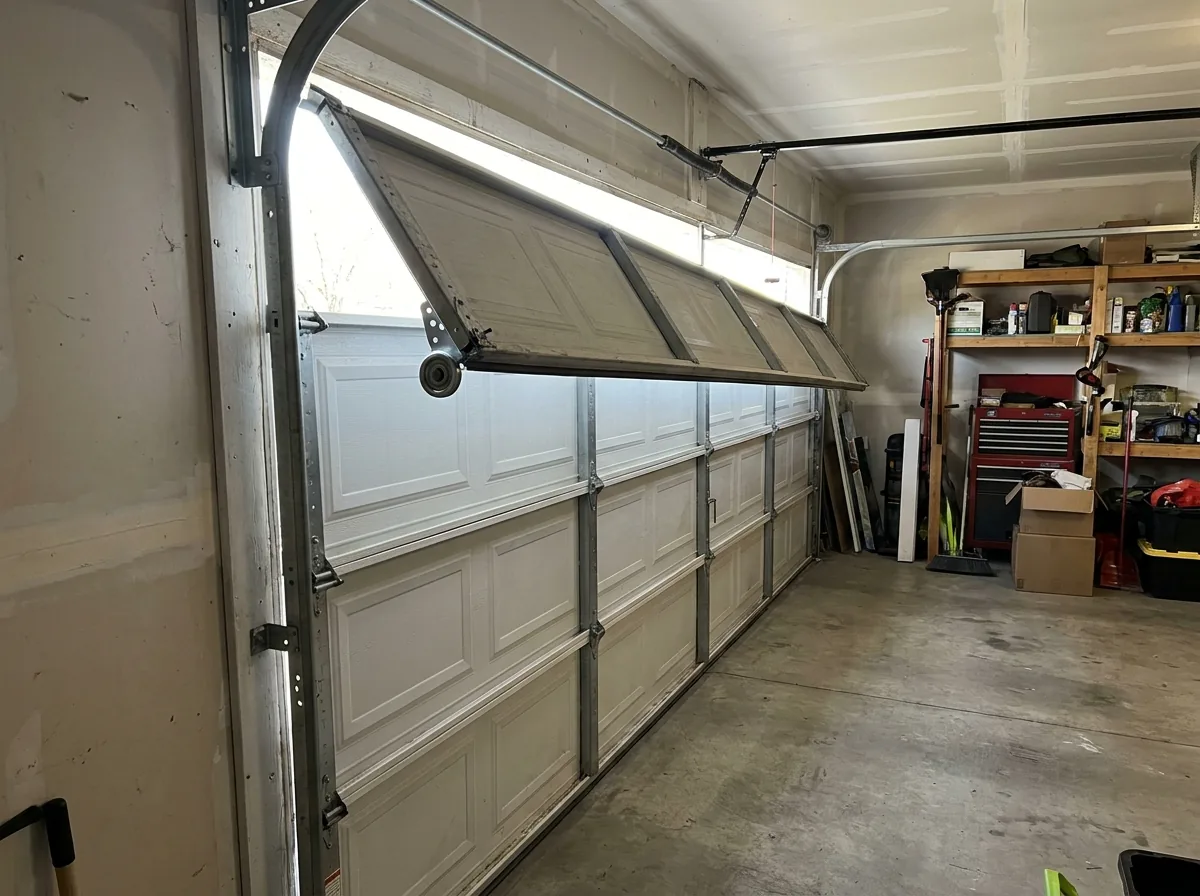
Whatever opener you have, the manual release is what gets the door open when the battery is flat, the opener has no battery, or the opener has failed for another reason. It is the red cord hanging from the trolley on the rail.
With the door closed, pull the cord. The trolley disconnects from the door and you lift the door by hand. A door with intact springs lifts with moderate effort and stays where you put it. Lower it the same way, and engage the slide lock if you are leaving. When the power returns, reconnect by pulling the cord toward the motor or running the opener until the trolley picks the door up again, depending on the model.
Two cautions. Do not pull the release with the door open and a spring broken, because the door can come down under its own weight. And if the door will not lift by hand, or feels far heavier than it should, stop: a spring or cable has gone and forcing it will make the repair bigger. The full walkthrough is in how to use the garage door manual release.
A battery backup means you rarely use the release. It does not mean you never will, so it is worth knowing where the cord is before the lights go out.
Before the season
If you are choosing an opener this spring, the battery backup is the one add-on we recommend to every Florida customer without being asked. It is $60 to $150 once, it works without setup, and the first outage pays for it. If you already have an opener that takes one and it is empty, that is a ten minute job on a tune-up. And if you are planning a new door before June, the checklist in prepare your garage door for a hurricane has the battery on it for a reason.
Related reading
- Is a smart garage door opener worth it?
- Garage door opener installation cost
- Garage door opener quit working
- Garage door storm damage: what to do
Related questions
How many times will a battery backup open the door?
Manufacturers rate them in cycles over a period, and the common figure is around 20 open and close cycles in 24 hours from a full charge. A heavy door, a hot garage or an older battery reduces that. Check the rating for your model rather than assuming.
How long does the battery itself last?
A few years in normal use, and less in a Florida garage that reaches 100°F in summer, because heat shortens battery life. The opener warns when the battery is weak, usually with a beep or a status light. Replace it when it warns, not after the next outage.
Can I add a battery backup to my existing opener?
Only if the opener was built to take one. Openers with a battery compartment and the charging circuit accept a battery as an add-on. Older openers without the circuit cannot be retrofitted, and the option then is a new opener with backup built in.
Does the battery run the safety sensors and the light?
The safety sensors, yes, because the door will not close without them. The light usually runs at reduced brightness or not at all to save power, and WiFi features on a smart opener may or may not run on battery depending on the model.
Is it worth it if I have a generator?
Often still yes. A generator has to be running and connected to the opener's circuit, which is not the first thing most people power. The battery works the moment the power drops, with nothing to set up, and it is $60 to $150 once.