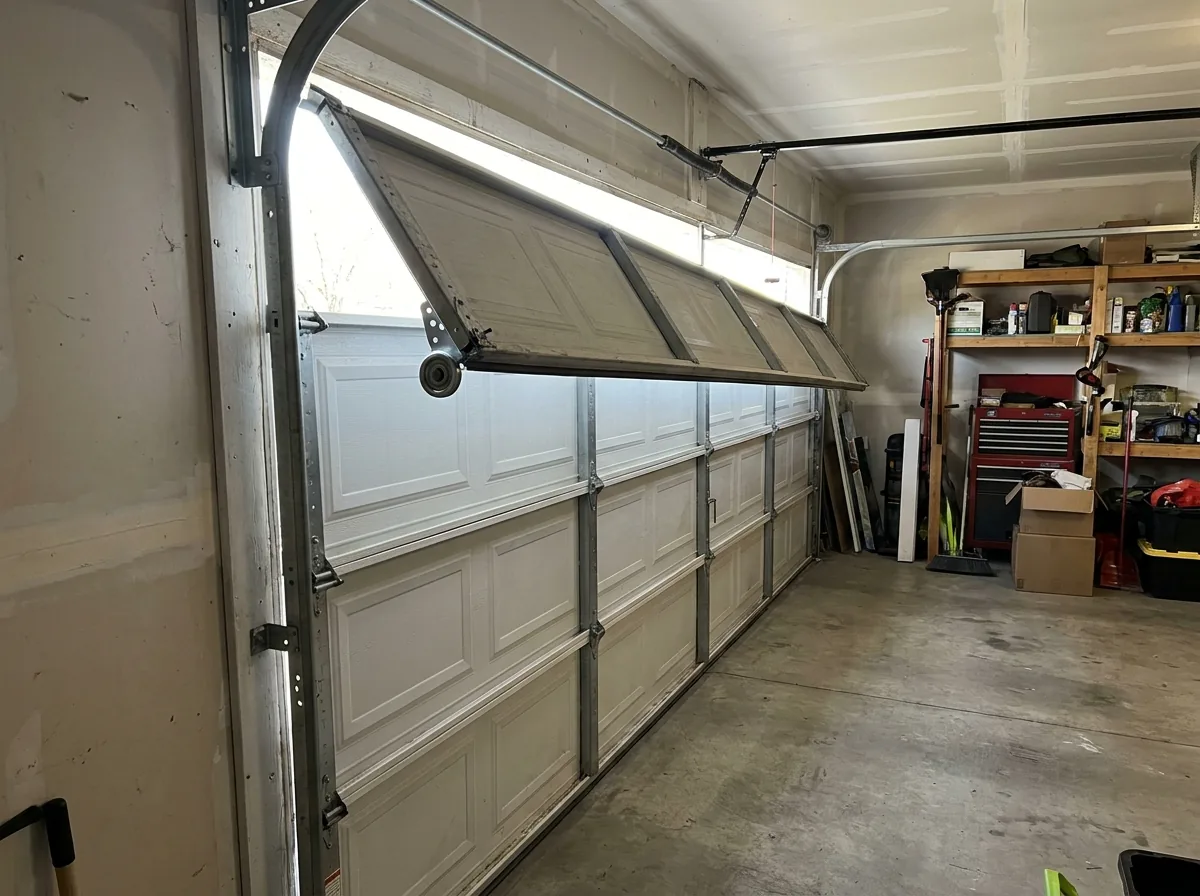
Standard Garage Door Sizes in Florida: 16x7, 9x7, 8x7
The most common garage door in Florida is the 16 foot by 7 foot double on a two car garage. Singles are 8 by 7 on 1950s to 1970s houses and 9 by 7 on newer ones, three car garages usually pair a 16 by 7 or 18 by 8 double with a 9 by 7 single, golf cart doors run about 5 to 6 feet wide, and RV doors are 10 to 12 feet wide by 12 to 14 feet high. A new wind rated door installs for $950 to $4,200 and a hurricane rated one for $1,800 to $6,500, and the price rises with size because a bigger door needs more reinforcement to hold the same wind rating.
The size on most Florida houses
Double: 16 feet wide by 7 feet high. Two car garages with a single 16 by 7 door are the norm across Florida, from 1980s Coral Springs and Brandon to 2000s Wesley Chapel and Port St. Lucie. If you have a two car garage and have never measured, this is almost certainly what you have.
Single: 9 by 7 on newer houses, 8 by 7 on older ones. The 1950s to 1970s ranch houses in Hialeah, older Kendall, Hollywood east of I-95, St. Petersburg and the older Orlando neighborhoods were built for narrower cars, and an 8 foot single is what most of them have. Newer singles on townhouses in Doral and Kendall’s western edge are 9 feet, sometimes with an 8 foot height.
Everything else is a variation on those.
The full standard range
Single doors
| Size | Where you see it in Florida |
|---|---|
| 8 x 7 | 1950s to 1970s ranch houses, older townhouses. Tight for a modern SUV |
| 9 x 7 | The national default and the newer single |
| 10 x 7 | Wider single, trucks, the single on some three car garages |
| 8 x 8 | Older stock with taller openings, uncommon |
| 9 x 8 | 2000s and newer builds, taller vehicles |
| 10 x 8 | Trucks, vans, roof racks |
Double doors
| Size | Where you see it in Florida |
|---|---|
| 15 x 7 | Less common, some 1970s builds |
| 16 x 7 | The two car garage default |
| 16 x 8 | 2000s and newer builds, taller clearance |
| 18 x 7 | Wide double, larger lots |
| 18 x 8 | Wide and tall, common on newer three car garages and estate lots |
Heights are effectively 7 or 8 feet. Seven is the historic default. Eight became standard on newer construction because vehicles got taller, and it is what you need for a lifted truck, a van or a roof rack. A 12 foot or taller door is an RV door, covered below.
Three car garages
Three car garages are common in Florida builds after about 2000, and in the higher value neighborhoods of Palmetto Bay, Weston, Palm Beach Gardens and Naples they are the norm. The usual layout is a double and a single: a 16 by 7 or 18 by 8 beside a 9 by 7, sometimes on the same wall and sometimes with the single turned to the side. Three singles in a row is the older layout and still shows up on 1990s estate lots.
Two doors means two spring systems, two openers and two rating labels. Our prices are per door, so a three car garage with a spring failure on the double and a slow opener on the single is quoted as two jobs on one visit.
Golf cart doors and RV doors
Golf cart doors. The Villages and many 55 plus developments across Central Florida, Tampa Bay and Southwest Florida build a separate golf cart bay beside the car garage. The door is narrow, usually 5 to 6 feet wide by 7 feet high, and it cycles several times a day because the cart is the daily vehicle. That cycle count matters: a spring rated for 10,000 cycles lasts 7 to 10 years on a door used three times a day and far less on one used ten times a day, which is why we suggest high cycle springs on golf cart doors.
RV doors. Davie, Wellington, the rural edges of Apopka and Lehigh Acres and plenty of newer estate lots have an RV bay. The door is typically 10 to 12 feet wide and 12 to 14 feet high. It is a much heavier door on a taller track, it needs a heavier torsion setup and often a commercial style opener, and it needs a wind rating like any other. Everything about it is quoted per door, not from the standard price list.
How to measure, properly
Four numbers, not one. Get all four before you call anyone.
1. Width of the opening. Measure the finished opening at its widest point, wall to wall. Not the old door.
2. Height of the opening. Floor to the underside of the header, at the highest point of the floor. Garage floors slope for drainage, so measure at more than one point and use the shortest.
3. Headroom. From the top of the opening to the ceiling, or to the lowest obstruction such as a storage rack, a pipe, an air handler or a light. Standard torsion track wants about 12 inches. Extension springs want about 10. Under that you are into low headroom track or a wall mounted opener, which our low headroom opener guide covers.
4. Side room. From each side of the opening to the nearest wall or obstruction. You need roughly 3.75 inches each side for standard track, and a little more for some hardware. A jackshaft opener needs about 8 inches on one side.
Also worth noting: backroom, the depth from the opening into the garage. You need the door height plus about 18 inches for the door to sit fully open, more with a rail opener.
Write all of those down. Any competent company will ask for them, and one that quotes a door without asking is guessing.
Older Florida openings that are not standard
Florida’s older housing is younger than most of the country’s, so non standard openings are less common here than they are in older cities elsewhere. They still exist, and we see them every week.
Openings under 8 feet wide. 1950s garages built for cars far narrower than anything sold today. Common in Hialeah, Shenandoah and older St. Petersburg.
Heights under 7 feet. A 6 foot 6 opening is not unusual in a converted garage or a re-enclosed carport.
Almost no headroom. Flat roofed 1960s houses in South Florida often have the header close to the ceiling. This is what low headroom track and jackshaft openers exist for.
Openings that are not square. A slab settles less than a deep foundation, but a concrete block opening can still be out by an inch, and a stock door forced into it will bind or leave a gap the afternoon rain finds.
None of this is a problem. All of it is a reason to measure rather than order from a size chart. A custom width or height door is made to order, it costs more than the equivalent stock size, it takes longer, and it still needs a rating and a permit. We quote it in writing before anything is ordered.
Size and the wind rating
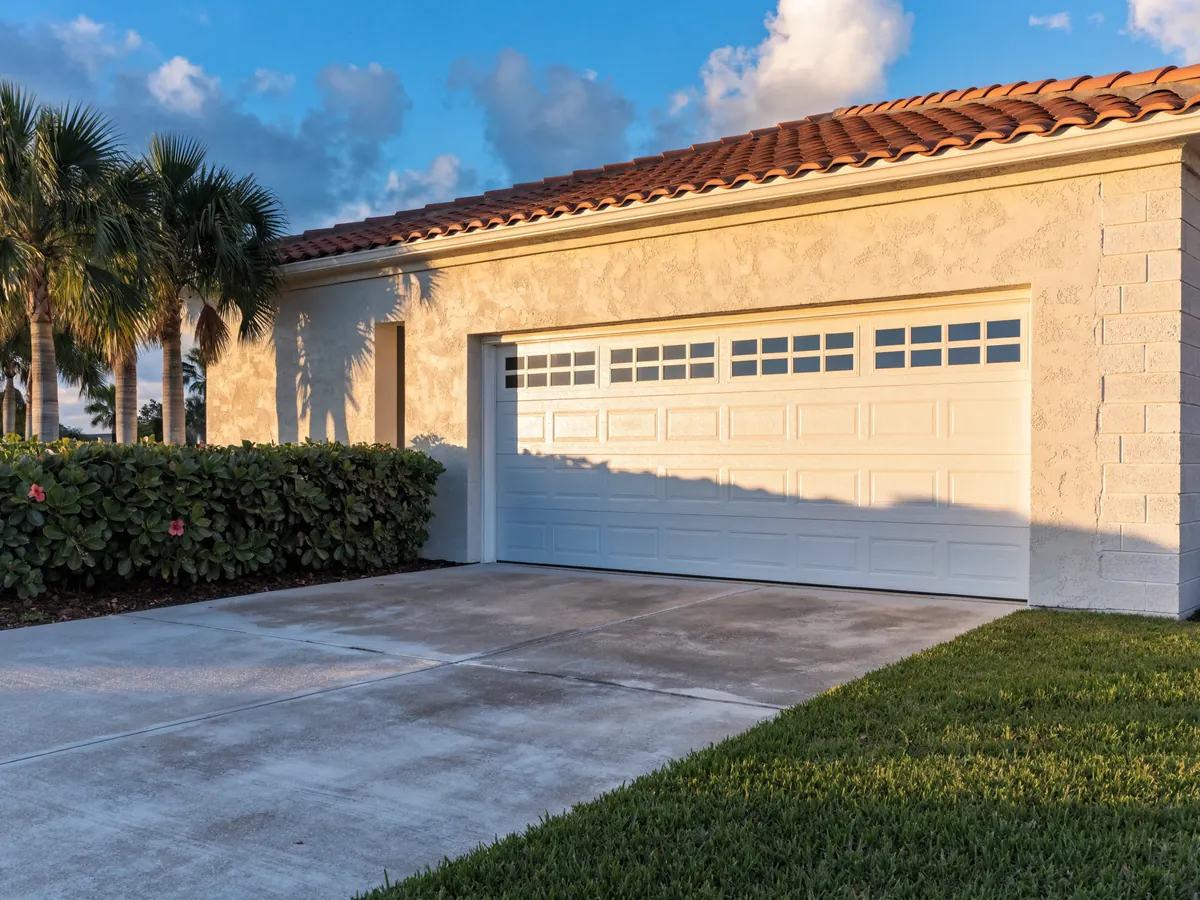
This is the part of sizing that is specific to Florida. The Florida Building Code requires the door to be rated for the design wind pressure at the site, and the rating on the label applies to a model at a tested size. A 16 by 7 door has more than twice the area of a 9 by 7, and to hold the same pressure it needs more struts, heavier sections and more fixings into the jamb. That is why the price rises with size faster than the extra steel alone would suggest, and why a wide door in Miami-Dade or Broward, which need a Miami-Dade NOA, costs more again.
Our guide to wind rated versus impact rated doors explains how to read the label on the door you have. If you are in the HVHZ, Miami-Dade County or Broward County, the approval on the label has to be an NOA.
Does size change the repair price?
Yes, and this is worth knowing before you get quoted.
A double door is a bigger job than a single across the board. It is heavier, so it runs on two springs and often a bigger pair. It has more rollers, more hinges, more track, more struts. Nearly every price on this site is stated as a starting price for a standard single door, and a 16 by 7 double will sit above that starting point for the same repair. Springs are $150 to $350 per spring, and a double with two springs that have cycled the same number of times is usually a both springs job, which adds $120 to $250 rather than doubling. Our guide to how much a garage door weighs explains why the weight drives the spring size.
An 8 foot high door carries longer track and, on a torsion setup, a longer shaft, which is why an 8 foot door costs more than a 7 foot door of the same width.
A quick word on insulation and size
Size is fixed by your opening. Insulation is a choice about the door’s construction, and it is available in every standard size. In Florida the case for it is the heat: an insulated door keeps the garage, and the room above or beside it, cooler. It is also heavier, and the spring has to match the door’s actual weight. Fitting an insulated door on springs sized for the old uninsulated one is a genuine and common installation error, and it destroys springs early. Our guide on insulated versus uninsulated doors covers when the extra cost returns something here.
What we charge
New garage door installation starts at $950 for a standard wind rated steel single and typically runs $950 to $4,200 installed, permit included in the quote. Hurricane rated door installation, meaning an impact rated door or an HVHZ door with the right approval, starts at $1,800 and typically runs to $6,500.
That range is wide because a 9 by 7 steel door on a sound opening and an 18 by 8 insulated impact door on an opening that needs a new jamb are genuinely different jobs. You get a written estimate with the actual numbers before anything is ordered, the prices page carries every starting price, and the buyer’s guide compares the materials.
Every price on this site is a starting price for a standard single door.
Related questions
What is the most common garage door size in Florida?
16 feet wide by 7 feet high, the double on a two car garage. For singles, 9 by 7 on newer houses and 8 by 7 on 1950s to 1970s houses. If you are guessing without measuring, those are the safest guesses, but guessing is not a good way to buy a garage door.
Do I measure the door or the opening?
The opening. A garage door is sized by the rough opening it fills, not by the panel you can see. Measure the width and height of the finished block or framed opening, then check headroom above it and side room on each side, because those decide which hardware will fit.
What size is a golf cart garage door?
Usually 5 to 6 feet wide by 7 feet high, on a separate bay beside the car garage in The Villages and many 55 plus communities. It cycles several times a day, so its springs wear out faster than the main door's and high cycle springs are worth asking about.
Does a bigger door cost more to repair?
Yes. A 16 by 7 double is heavier, runs on two springs and has more rollers, hinges and track than a single. Every price on this site is a starting price for a standard single door; springs are $150 to $350 per spring and doing both together adds $120 to $250.
Does the size affect the hurricane rating?
Yes. The rating on the label applies to a model at a tested size, and a wider door needs more struts and heavier sections to hold the same design pressure. A 16 by 7 impact rated door costs more than a 9 by 7 for that reason, and a new rated door of any size needs a permit with the rating on it.
What if my opening is not a standard size?
Custom doors are made to order in almost any dimension. Expect a higher price than the equivalent stock size, a longer lead time, and the same rating and permit requirements as any other door. We measure, quote in writing and order nothing until you approve the numbers.