How to Use the Garage Door Manual Release After a Storm
The red manual release cord disconnects the garage door from the opener so you can move the door by hand, which is how you get the car out during a power outage after a storm. Only pull it with the door fully closed. If a spring is broken, releasing a raised door lets 130 to 350 pounds fall, so leave the door where it is and call for help instead.
What the cord does
The opener is connected to the door through a trolley that rides along the rail. The manual release, the red cord with the handle, disconnects the door arm from that trolley.
Once released, the door is free of the opener and can be moved by hand. That is exactly what you want during a power outage or when the opener has failed. In Florida, where the power goes out after almost every named storm and after plenty of ordinary summer thunderstorms, this is the one garage door skill everyone in the house should have.
The one safety rule
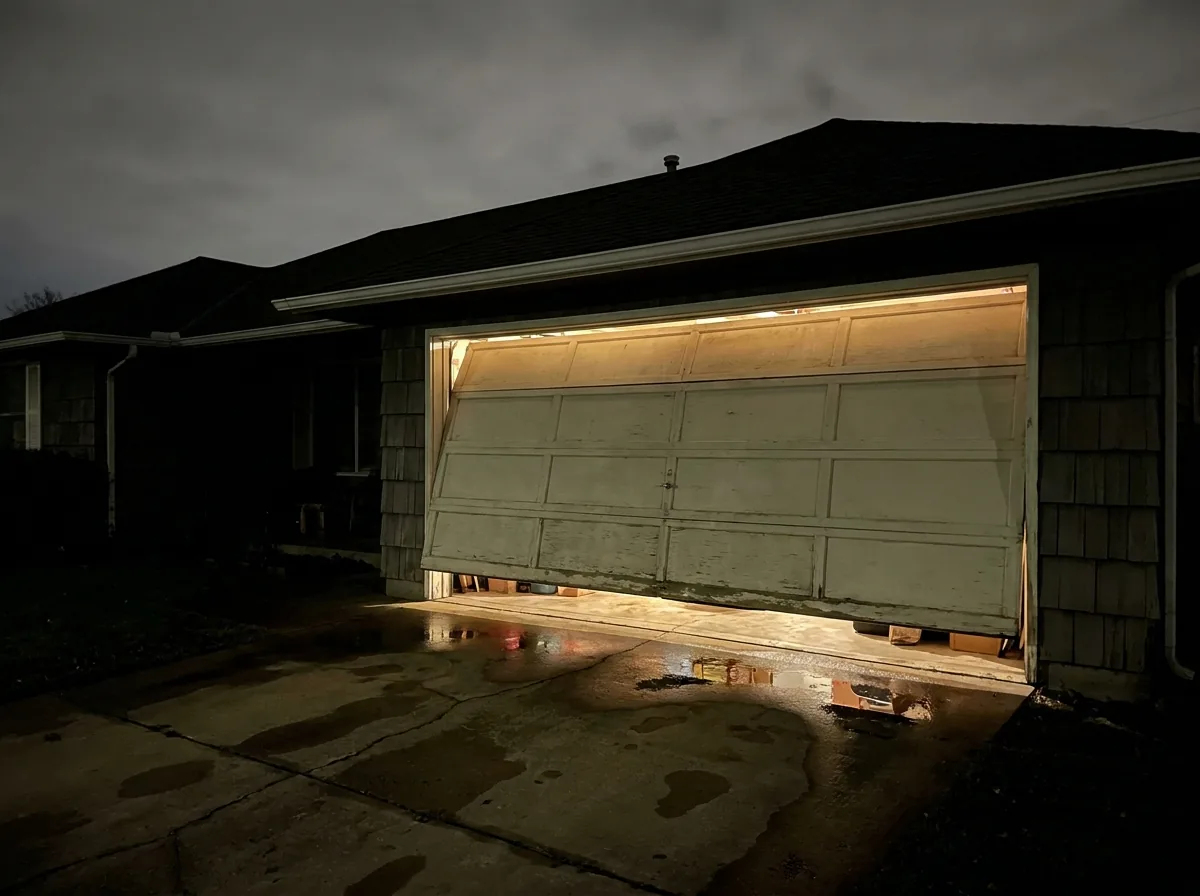
Only pull it with the door fully closed.
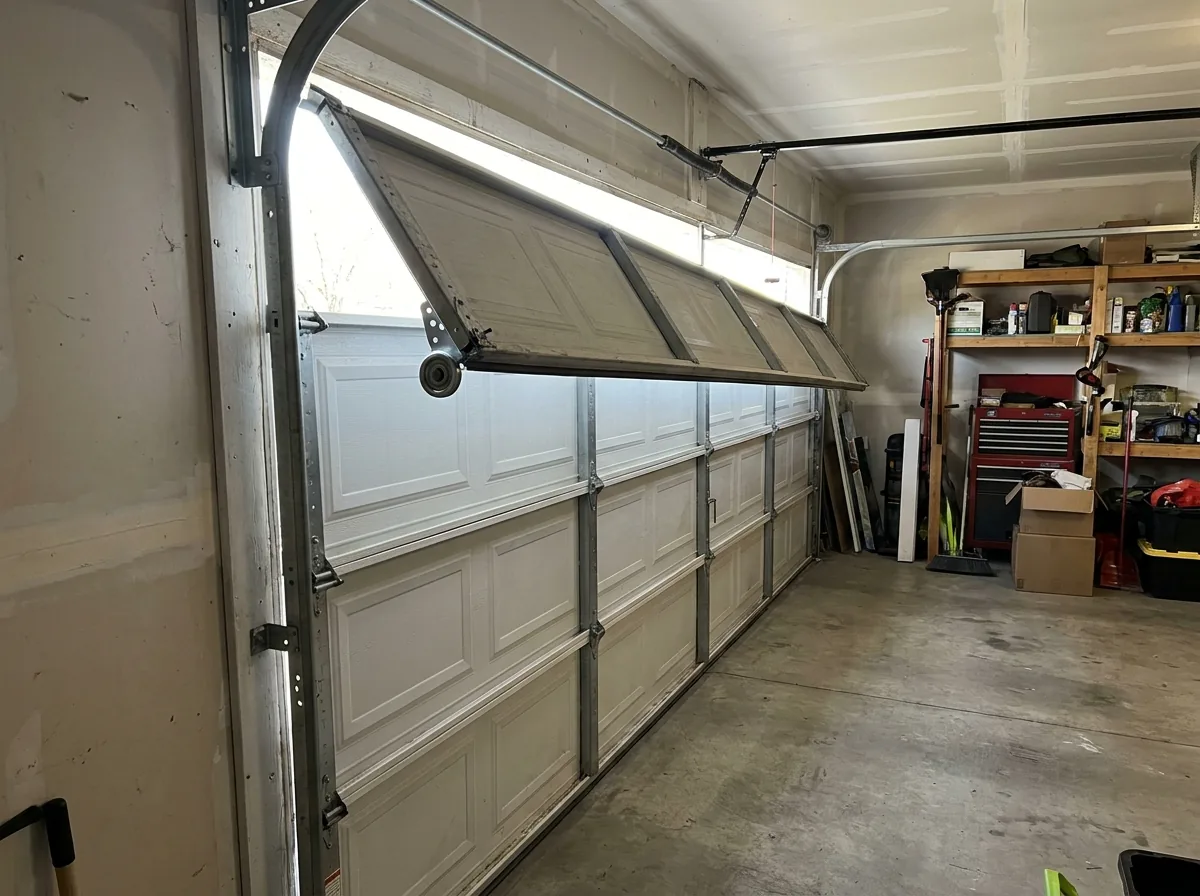
With working springs, a released door is balanced and stays wherever you put it. With a broken spring, the springs are no longer holding anything, and the only thing keeping a raised door up is the opener. Disconnect it and 130 to 350 pounds come down.
If the door is up and you suspect a spring has gone, do not pull the release. Bring the door down with the opener if it will, or leave it alone and call us. Our guide on what to do with a broken spring covers the safe options.
Before the season, not during it
The worst time to learn where the cord is and how it feels is at night with a flashlight in your teeth. Do this once in April or May, when a tune-up is due anyway:
- Close the door with the opener.
- Pull the cord and lift the door by hand. Note how heavy it feels.
- Let go at waist height. A balanced door stays put.
- Close it, re-engage, and run a full cycle.
If it is heavy, or sinks when you let go, the springs are worn and you have found out on a calm afternoon instead of the morning after a storm. Our guide on preparing your garage door for a hurricane has the rest of the pre-season list.
During an outage, step by step
| Step | What to do | What to watch for |
|---|---|---|
| 1 | Make sure the door is fully closed | A door stopped partway up needs the opener or a technician, not the cord |
| 2 | Pull the cord down and back until it clicks | On some models the lever swings toward the motor |
| 3 | Lift the door by hand, both hands, from the center | It should feel like twenty or thirty pounds |
| 4 | Lift it all the way, and keep hold until it is fully up | A door left halfway can roll down |
| 5 | Back the car out, then lower the door by hand | Do not leave the opening unattended with the door up |
| 6 | Engage the slide lock if the door has one | Only while the opener is disconnected |
The door has no lock of its own once it is released. The trolley was the lock. If the outage runs long and you are leaving the house, either re-engage the trolley by hand or use the slide lock, and make sure everyone in the house knows which you did. Our guide on garage door locks explains why a slide lock and a connected opener must never be engaged at the same time.
Re-engaging when the power returns
Close the door fully by hand. Then press the wall button. The carriage travels along the rail and clicks back into the trolley as it passes.
Some models require pushing the release lever back toward the door first. If yours does not re-engage after a full cycle, check the lever position.
Once re-engaged, run the door through a full open and close and watch that it stops where it should. Power outages and surges sometimes scramble travel limits on older openers, and a door that now hits the floor hard or stops short is a limit problem, not a door problem. That is opener repair territory, $95 to $300.
Where the cord should hang
No lower than six feet from the floor.
Children pull hanging cords, and a door with a broken spring that is released while up will fall. In older South Florida and St. Petersburg houses with low headroom, the rail sits close to the door top and the cord often ends up within a child’s reach. Shorten it. Keep a step stool nearby if you need one.
If your garage has an exterior emergency release, a small keyed cylinder near the top of the door with a cable to the trolley, think about whether you need it. It is a way in as well as a way out. Most Florida garages have a side door and a door into the house, which is usually the better route.
The fix that means you never do this at 2 a.m.
A battery backup on the opener runs the door through a power outage. It adds $60 to $150 to a new opener, and every smart opener we install, $350 to $750, has battery backup as an option. After a storm, when the power is out and you need to get to a gas station or a shelter, it is the difference between pressing a button and the six steps above.
We explain what the battery does, how long it lasts and which openers take one in our guide on battery backup and power outages.
What to notice while you are down there
Every time you use the release, take ten seconds to check the balance: lift the door to waist height and let go. If it stays, the springs are fine. If it sinks or drops, they are not.
While the door is up by hand, look at the cables on each side. Rust on a lift cable is the most common visible warning we see in Florida, especially within a few miles of either coast, and it means the cable is going to let go. Cable repair is $95 to $300 on a planned visit. A cable that breaks the morning after a storm becomes an emergency call with a $150 to $300 premium on top.
Every price on this site is a starting price for a standard single door, listed on our price list. We cover the whole state, from Southwest Florida to Central Florida, seven days a week.
Related questions
How do I re-engage the opener after the power comes back?
On most openers, pull the door fully closed by hand, then run the opener from the wall button. The carriage travels along the rail and clicks back into the trolley. Some models need the release lever pushed back toward the door first.
Can I open the door from outside during an outage?
Only if the door has an exterior emergency release, which is a small keyed lock near the top of the door with a cable to the trolley. Most Florida doors do not have one. If your garage has no side door and the house has no other way in, a battery backup on the opener is the real answer.
The door is very heavy when I lift it by hand. Is that normal?
No. A balanced door feels like twenty or thirty pounds. If it feels like the full weight, the springs are worn or one has broken. Do not keep forcing it. Call us, because a spring replacement is $150 to $350 per spring and lifting a dead door by hand is how backs and fingers get hurt.
Should the cord hang low so I can reach it?
No lower than six feet from the floor. Children pull them, and a released door with a broken spring drops. If you cannot reach it, keep a short step stool in the garage rather than lengthening the cord.
Can I leave the door released while the power is out for days?
Yes, as long as the springs are good and the door is closed when you are not using it. A released door with a working opener still cannot be lifted from outside if it has a slide lock or the trolley is re-engaged, so if the outage runs long, either re-engage it each night or use the slide lock while the opener is disconnected.