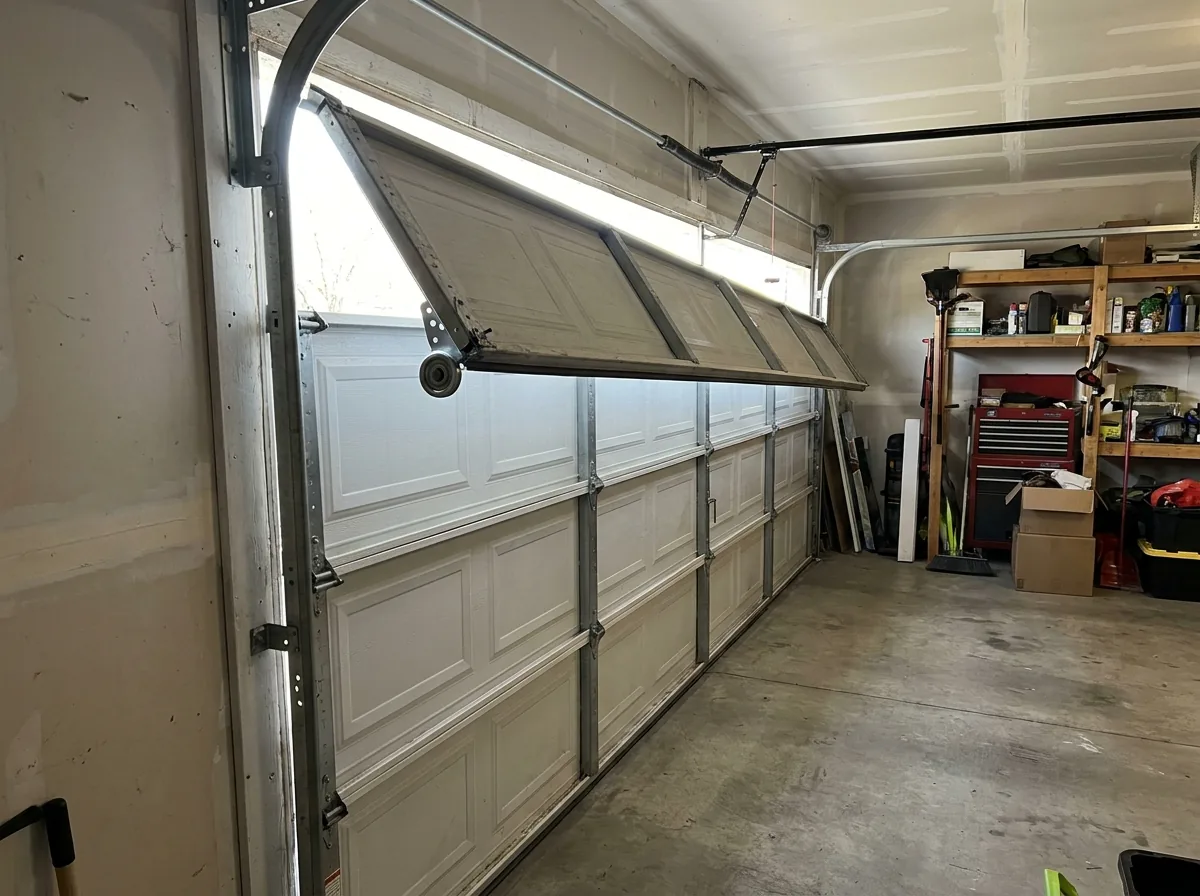
Garage Door Will Not Open: What to Check First
A garage door that will not open is most often a broken torsion spring, a power outage or tripped GFCI after a storm, a dead remote battery, or a lock that has been set. Pull the manual release and try lifting by hand: if the door is extremely heavy or will not move, the spring has failed and the opener must not be used. Spring replacement is $150 to $350 per spring installed; an opener repair is $95 to $300.
Start here: is it the door or the opener
This one test separates almost every cause.
With the door closed, pull the manual release cord, the red handle hanging from the trolley on the opener rail. That disconnects the door from the opener. Now lift the door by hand.
If it lifts with moderate effort and stays put halfway, the door is fine and the problem is the opener, its power, or its controls.
If it is extremely heavy or will not budge, a spring has failed. Stop. Do not reconnect the opener and do not press the button. Skip to the spring section below.
If you have never used the release cord, our guide to the manual release has the steps and the one situation where you should not pull it.
If the door itself is fine
Work through these in order. Most of them cost nothing.
Power. After a summer storm this is the first answer. Check that the neighborhood has power, that the opener is plugged in, and that the garage outlet is live. Florida garage outlets sit on GFCI circuits, and a GFCI trips when water gets to the outlet or anything on it. Find the reset button, which may be on an outlet in the garage, the laundry room, or a bathroom, and press it.
Power outage. If the street is dark, nothing on the opener works until the power is back, unless the unit has a battery backup. Use the manual release. If you are in an area that loses power every storm season, read battery backup and power outages before the next one.
Remote battery. Try the wall button. If the wall button works and the remote does not, it is the remote, and our remote not working guide takes it from there.
Lock. Many wall consoles have a lock or vacation setting that disables the remotes, and many doors still have a manual slide lock on the inside. Both are easy to set without noticing, and the slide lock is the one people forget after a hurricane, because they locked the door before evacuating.
Safety sensors. These stop the door closing, not opening, but a fault can put some openers into a state where they refuse to run at all. Look for a steady light on each sensor, and clear ants, webs and storm water from the lenses.
The trolley. If the motor runs and the rail moves but the door does not, the trolley has come off the carriage or the release has been left disengaged. Re-engaging is usually a matter of running the opener until the carriage clicks back in. If that is your symptom, read opener runs but the door does not move.
Stripped gear. If the motor runs, makes a grinding noise, and nothing moves, the plastic gear kit inside has failed. Heat softens that gear and a door that has been heavy for a while finishes it. It is a common, repairable fault at $95 to $300.
Dead logic board. The light does not come on, or the unit clicks and does nothing. Lightning surges and years of ceiling-height heat kill boards here. Also an opener repair at $95 to $300, unless the unit is old enough that replacement makes more sense at $275 to $600 installed.
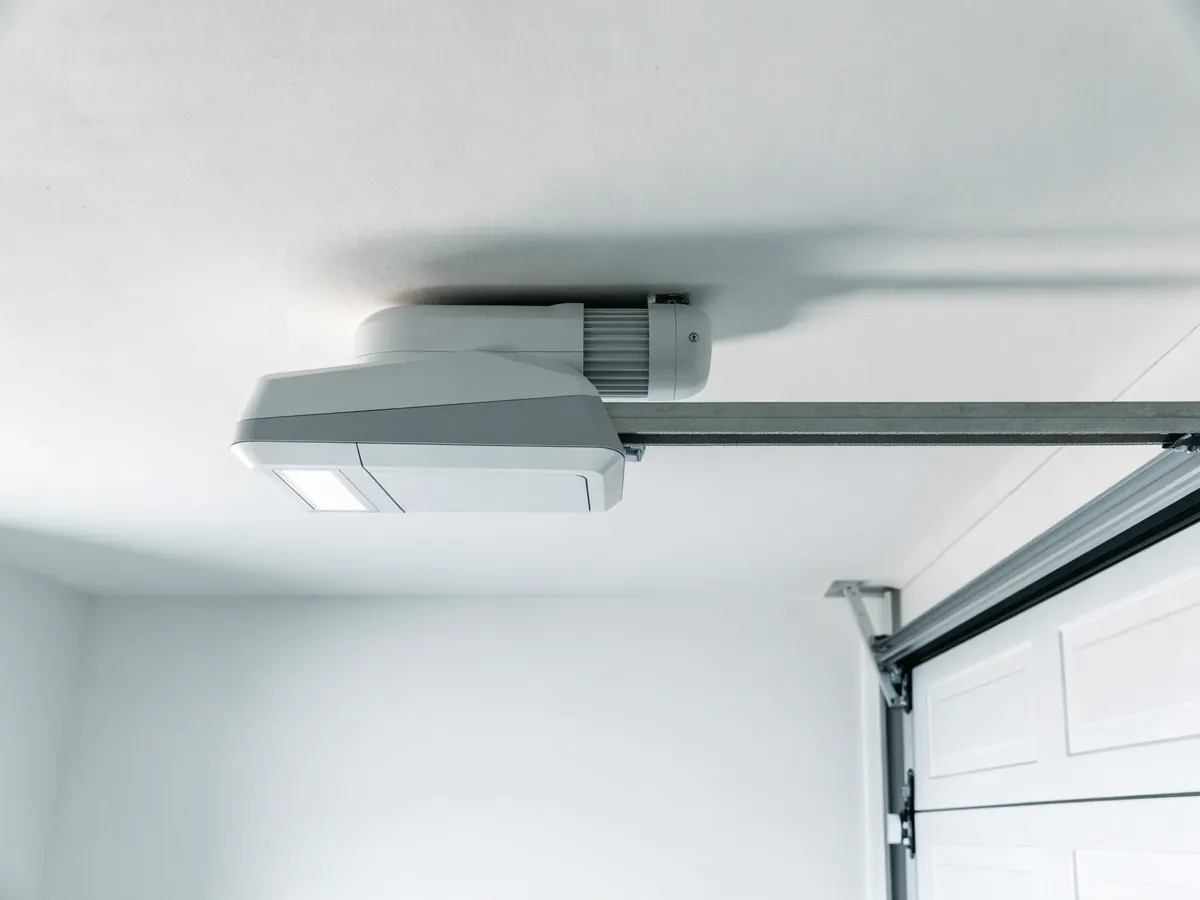
If the spring has failed
You will usually know, because it is loud. A torsion spring failing sounds like a gunshot or something hitting the house, and in a Florida afternoon storm people frequently write it off as thunder until the door will not open the next morning. Our article on the loud bang from the garage explains what you heard.
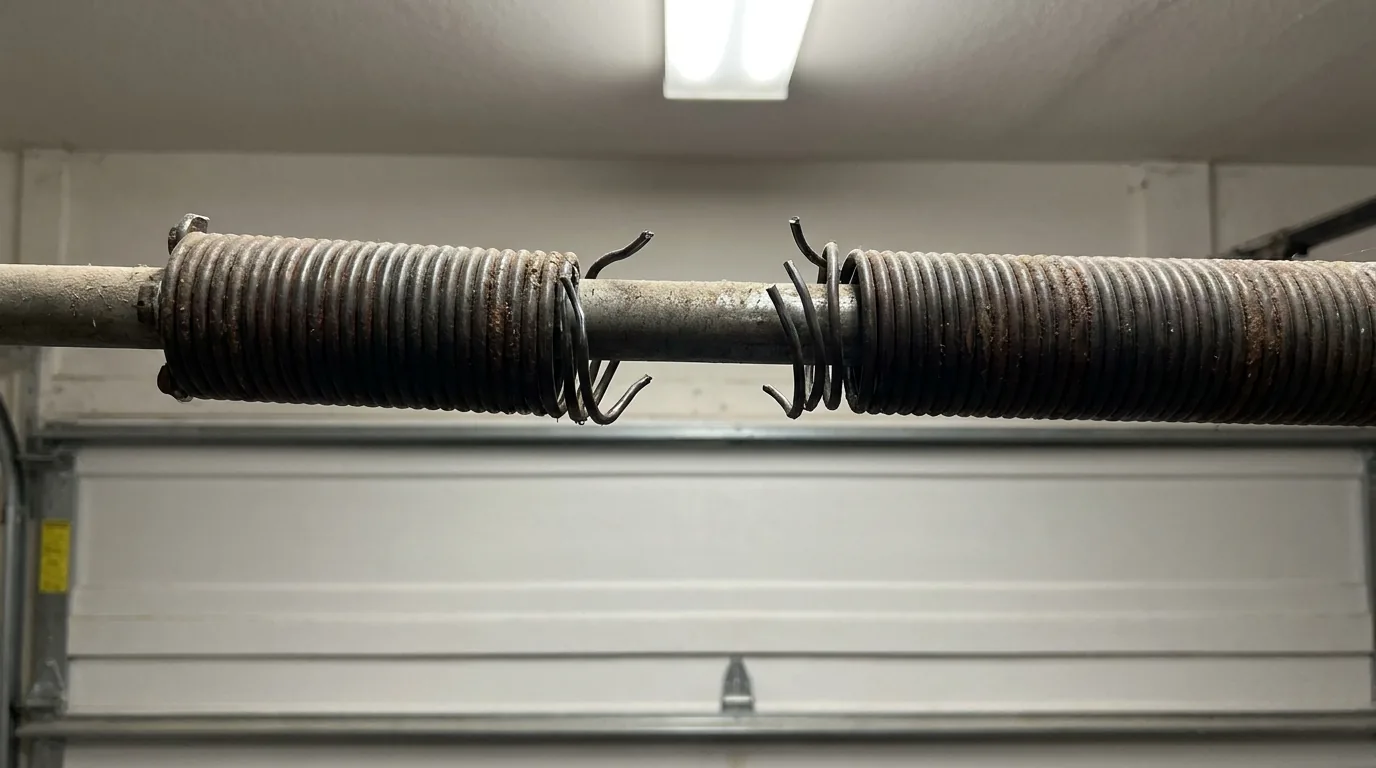
Look at the shaft above the door opening. A broken torsion spring has a visible gap in the coil, usually an inch or two, with the two halves separated.
What to do:
- Do not use the opener. It will strain the motor, crease the top panel and can pull the door off the track.
- Leave the door closed if it is closed. Nothing gets worse overnight.
- If it is open and you must close it, do it with a second person and expect it to be heavy.
- Call the same day, and say if the car is trapped, because it changes the priority.
Spring replacement runs $150 to $350 per spring installed. If your door has two springs and one broke, expect a conversation about replacing both, which adds $120 to $250 rather than doubling the price. It is a genuine recommendation rather than an upsell: the survivor has the same cycle count and usually follows within months. Details in what to do when a spring breaks.
Why Florida doors fail to open more often
Springs do not fail from cold here. They fail from cycle count, and a Florida door cycles hard because the garage is the storage room, the workshop and the second front door. A standard spring is rated for about 10,000 cycles, which is seven to ten years for a light user and closer to five for a family with two cars in a Wesley Chapel or Coral Springs subdivision.
Humidity and salt air pit the spring coils and rust the cables, and pitting is where cracks start. Within a few miles of either coast, springs and cables fail earlier than the cycle rating suggests. Rust and Florida humidity covers what to look for before it fails.
Then the opener side: a garage in Kissimmee or Fort Myers runs above 100°F for months, which cooks logic boards, weakens capacitors and softens the gear. Add a lightning season and a few power surges, and the opener is the second most common reason a door will not open. Summer heat and garage door problems has the full list.
What it costs
| Cause | What to check | What it costs |
|---|---|---|
| Power outage or tripped GFCI | No lights on the opener or console | Nothing; reset the outlet or use the release |
| Remote battery or lock setting | Wall button works, remote does not | Nothing |
| Manual slide lock engaged | Door will not move by hand, no bang was heard | Nothing, slide it back |
| Trolley disengaged | Rail moves, door does not | Nothing to re-engage; part of a service call otherwise |
| Stripped gear kit | Motor grinds, nothing moves | $95 to $300 opener repair |
| Logic board after surge or heat | No light, clicks, or nothing | $95 to $300 opener repair |
| Opener past repair | Pre-1993, no parts, over 15 years old | $275 to $600 opener installation |
| Broken torsion spring | Gap in the coil, door extremely heavy | $150 to $350 per spring; both adds $120 to $250 |
| Frayed cable with the spring | Rust on the cable, door crooked | $95 to $300; $225 to $400 with drum |
| Same-day or after-hours dispatch | Car trapped, door stuck open | $150 to $300 premium, stated before dispatch |
Every number is the same one on our prices page and is a starting price for a standard single door in normal condition.
What not to do
Do not lubricate the track. Track should be clean and dry; grease in it collects the sand and grit that blows into every Florida garage and makes things worse.
Do not adjust or replace the springs yourself. A wound torsion spring stores enough energy to break bones and releases it instantly if it is not unwound under control with winding bars. Why we never recommend DIY torsion spring work explains it without drama.
Do not keep pressing the button hoping it clears. Every attempt on a broken door makes the repair larger.
Same-day help across Florida
We work seven days a week across Miami-Dade County, Broward County, Palm Beach and the Treasure Coast, Tampa Bay, Central Florida, Southwest Florida and North Florida. Call (561) 897-9930 and tell us what happened on the lift test. That one detail tells us whether to bring springs.
Related questions
Why does my garage door open a few inches and stop?
Usually a broken spring: the opener lifts what it can and gives up. It can also be an obstruction in the track or a travel limit that has drifted. Do not keep pressing the button. Every attempt on a door with a broken spring strains the motor and can crease the top section.
The power is out after a storm. How do I open the garage door?
Pull the red manual release cord with the door closed, then lift the door by hand. It should lift with moderate effort if the springs are healthy. When power returns, run the opener until the trolley clicks back into the carriage. If you would rather never do this, a battery backup adds $60 to $150 to any new opener and runs the door through an outage.
Can I open a garage door with a broken spring?
Manually, with a second person, sometimes. The door will be extremely heavy, often 130 to 350 pounds, and it will drop if you let go. Prop it with locking clamps on both tracks, move the car, lower it slowly and leave it closed until it is repaired.
The opener light comes on but nothing happens. What is that?
The motor has power, so the problem is between the motor and the door. Most often a stripped gear kit, a disengaged trolley, or a logic board that has been cooked by a summer at ceiling height. All are opener repairs at $95 to $300 on a unit worth repairing.
Does heat stop a garage door opener from working?
It can. A Florida garage runs above 100°F in summer and the opener is mounted where the air is hottest. Old logic boards and capacitors fail on hot afternoons first, and the plastic gear inside softens and strips faster. A unit that works at dawn and not at 4 pm is telling you it is on its way out.