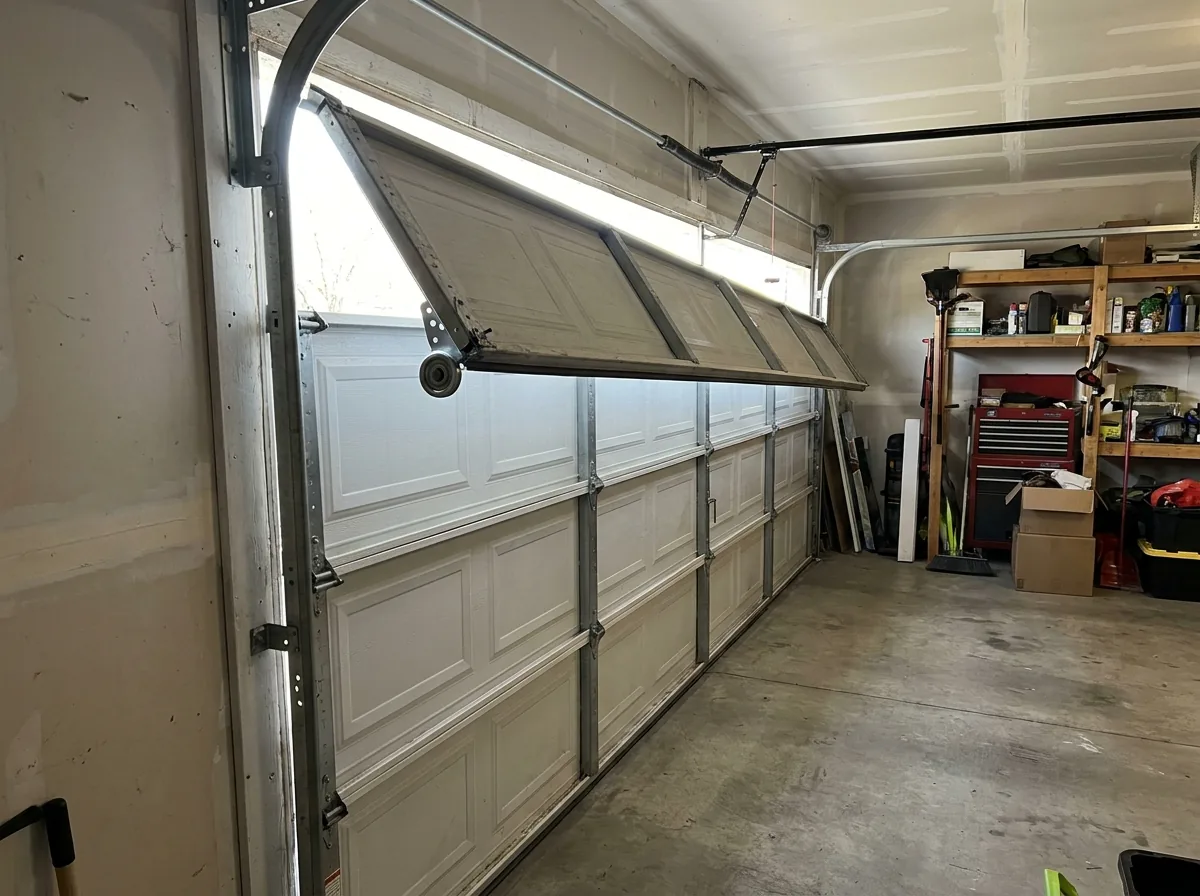
Garage Door Rust in Florida Humidity: What to Watch
In Florida, garage door rust starts on the springs, lift cables, hinges, bottom brackets and torsion tube, fastest within a few miles of either coast. Rust on a cable is the most common visible warning we see, and it means the cable is replaced, not cleaned: cable repair runs $95 to $300, or $225 to $400 with the drums. A tune-up at $85 to $160 catches most of it before it fails, and a bottom bracket rusted through or a cable down to strands is an emergency.
Why Florida doors rust
Humidity most of the year, salt in the air on both coasts, afternoon rain at the bottom seal for half the year, and a garage that is open to all of it several times a day. Steel parts in that environment corrode, and the parts under load corrode fastest because stress and moisture together crack the surface and let rust into the metal.
Within a few miles of either coast the process is fast. A door in Fort Lauderdale east of US 1, in Cape Coral on a canal, in Clearwater near the water or in Melbourne on the Space Coast can show serious rust in a few years. Inland in Orlando or Gainesville it is slower but it is still the main way hardware ages. Salt air specifically is covered in salt air garage door corrosion; this page is about what rust looks like on each part and what to do.
Which parts rust first
| Part | Where the rust starts | What it means |
|---|---|---|
| Lift cables | At the bottom bracket end, where water sits | Replace, in pairs |
| Torsion springs | Surface first, then pitting on the coil | Lubricate; replace when pitted or flaking |
| Bottom brackets | At the slab, where the cable attaches | Replace before it thins; under spring tension |
| Hinges | At the knuckle and the fasteners | Replace as a set when they seize or crack |
| Torsion tube | Under the springs and at the bearings | Clean and lubricate; replace if pitted at the bearing |
| Rollers | Stems and bearings | Replace with sealed nylon rollers |
| Track | The bottom foot of the vertical track | Clean; replace track if rust through |
| Door bottom | The bottom section’s edge and the seal retainer | Repair the retainer; a rusted bottom section is a replacement |
The order is not accidental. The lift cables and the bottom brackets live in the wettest spot on the door, an inch off a slab that gets rain and rinse water every day, and they carry the door’s full weight through the springs. That is where we see the most rust and where rust does the most damage.
Rust on a cable
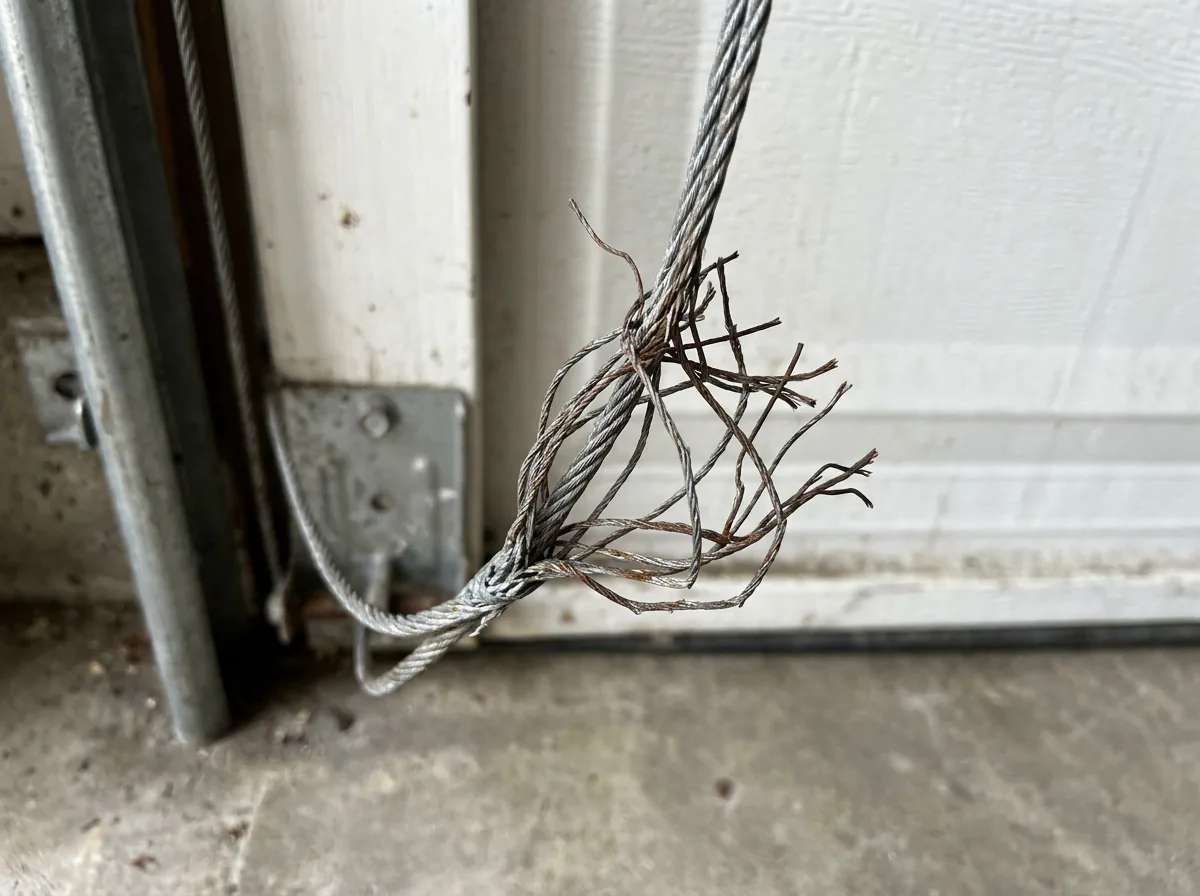
Rust on a lift cable is the most common visible warning we see in Florida. A lift cable is a bundle of steel strands wound together. When the outside rusts, the inside has usually rusted too, in the gaps between strands where water sits and you cannot see it. The cable looks whole and is carrying a fraction of its rated load.
The failure is a snap, usually as the door starts up or comes down, when the strain is highest. One side lets go, the door drops on that side, hangs crooked in the track, and often pulls a roller out. If someone is under it or the car is under it, that is the bad day. The symptoms before it snaps are in garage door crooked or uneven.
What to do: nothing to the cable. Do not clean it, do not lubricate it and hope, and do not keep cycling the door to see if it holds. Rusted cables are replaced, in pairs, because the other side has had the same water for the same years. Cable repair runs $95 to $300. If the drums are pitted or the cable has cut a groove into them, the cable and drum together runs $225 to $400. If the tension only needs resetting after the swap, that is $85 to $140. The full breakdown is in garage door cable repair cost.
Rust on a spring
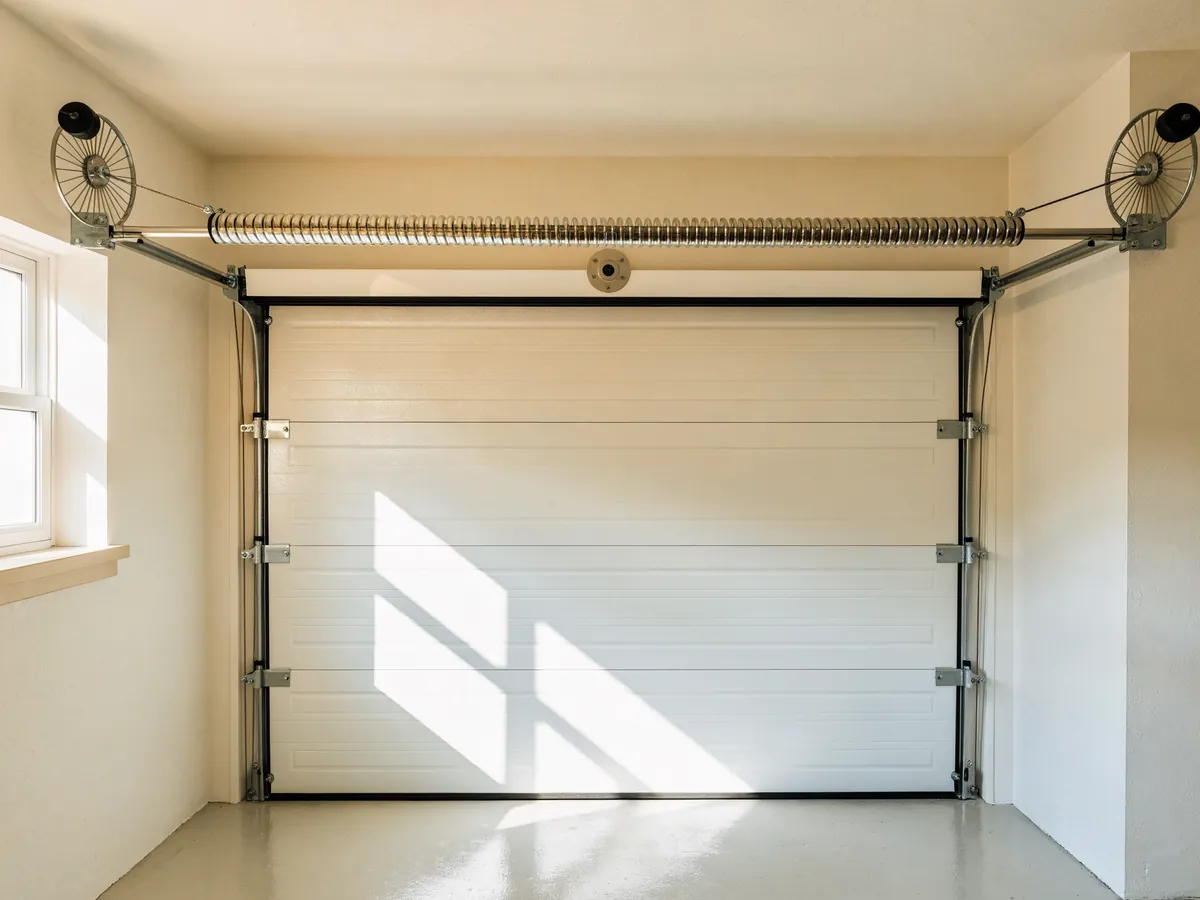
Torsion springs in Florida take on a light orange surface film within a year of installation. That on its own is normal, and a spray of garage door lubricant along the coil two or three times a year slows it down and stops the coils squeaking against each other.
The problem is when the surface rust turns into pitting, small craters in the steel, or flaking where the rust comes off in scales. A spring is a piece of steel flexing ten thousand times, and a pit is where the crack starts. A pitted spring fails early, with the bang and the stuck door you can read about in what to do when a spring breaks.
Spring replacement runs $150 to $350 per spring installed, and doing both together adds $120 to $250 rather than doubling. On a coastal door we recommend both, because the second spring has seen the same air.
Bottom brackets and hinges
The bottom bracket is the steel plate at the bottom corner of the door where the lift cable attaches. It is under full spring tension whenever the door is closed, and it sits an inch off the slab in the wettest spot in the garage. When it rusts thin, the cable pulls through it or the plate cracks, and the result is the same as a snapped cable.
Never unbolt a bottom bracket yourself. It is under tension and it is one of the parts that injures people who do not know that. We replace them on a tune-up when they are thinning, and on a cable job as a matter of course when they are rusted.
Hinges rust at the knuckle and at the screws. A seized hinge makes the door bind and puts strain on the sections either side, and a cracked hinge lets a section move where it should not. Hinges are replaced as a set, and on a door near the coast we replace them with galvanized or stainless.
Galvanized and stainless hardware
Most residential door hardware is galvanized steel: a zinc coating over the steel that corrodes first and protects the steel underneath. Galvanized hardware is fine inland and lasts well anywhere if it is kept lubricated, because lubricant is what keeps water off the zinc.
Near the coast, salt gets through zinc faster than it should. Stainless hardware costs more and is worth it on the parts that carry load and sit low: bottom brackets, hinges, stainless cables, and rollers with stainless stems. The springs themselves are not commonly stainless; the practical answer for a coastal spring is a coated spring plus lubricant, and replacement on cycles before the rust gets into the coil.
When we quote a new door or a hurricane-rated door for an address near the water, the hardware package is part of the quote, and we say which parts are stainless. On the door itself, factory-finished steel with a baked coating holds up well if the coating is not scratched through. Once it is, the scratch is the rust point, and a touch-up in the first month saves a rusted panel later.
Rinsing near the coast
Salt sits on the door and its hardware until rain or a hose takes it off. Rain does the outside of the door. Nothing does the tracks, the hinges and the bottom brackets on the inside unless you do.
Once a month, near the coast, rinse the outside face of the door and its bottom edge with fresh water from a hose. Every three months, rinse the vertical tracks, the bottom brackets and the hinges lightly, wipe them with a dry cloth, and lubricate. Do not soak the springs, the opener or the wall console, and do not use a pressure washer on anything. The lubricant routine is in how to lubricate a garage door.
A door on the coast also benefits from a real look at the bottom seal. A flattened or cracked seal lets water sit against the bottom section every afternoon, and that is where bottom sections rust through from the inside.
When rust is an emergency
Most rust is a maintenance item that a tune-up at $85 to $160 handles, once a year, ideally in April or May. Three things are not maintenance items:
- A cable frayed to visible broken strands. It is about to snap.
- A bottom bracket rusted through or cracked. The cable is about to pull free.
- A spring with a visible crack in the coil. It is about to break, and it will not warn again.
In any of those cases, stop using the door, keep people and the car away from under it, and call. Same-day dispatch carries an emergency premium of $150 to $300 on top of the repair, stated before we leave. It is cheaper than the door coming down.
Related reading
- Garage door maintenance checklist
- Salt air garage door corrosion
- Summer heat garage door problems in Florida
- Best time to replace a garage door in Florida
- Prices
Related questions
Can I clean rust off a garage door cable and keep using it?
No. Rust on a cable means corrosion inside the strands where you cannot see it, and the cable is weaker than it looks. Cables are replaced, in pairs, for $95 to $300, or $225 to $400 when the drums go with them.
Is surface rust on the springs a problem?
Light orange surface rust on a spring is normal in Florida and lubricating it slows it down. Pitting, flaking, or rust that has eaten into the coil is a spring near the end of its life. Springs run $150 to $350 each installed, and both together adds $120 to $250.
Is stainless hardware worth it near the coast?
Within a few miles of the coast, yes, for the parts that carry load: hinges, bottom brackets, rollers with stainless shafts and stainless cables. Inland, galvanized hardware lasts well if it is kept lubricated. We tell you which on the visit.
How often should I rinse a garage door near the ocean?
Once a month with fresh water on the outside face and the bottom of the door, and every three months lightly on the tracks, hinges and bottom brackets, then a dry cloth and lubricant. Never hose the opener or the springs to the point of soaking.
When is rust an emergency?
A bottom bracket rusted through, a cable frayed to visible strands, or a spring with a rust crack. Each of those can let go under load. Stop using the door, keep people away from it, and call. Same-day dispatch carries a $150 to $300 premium, stated before we leave.