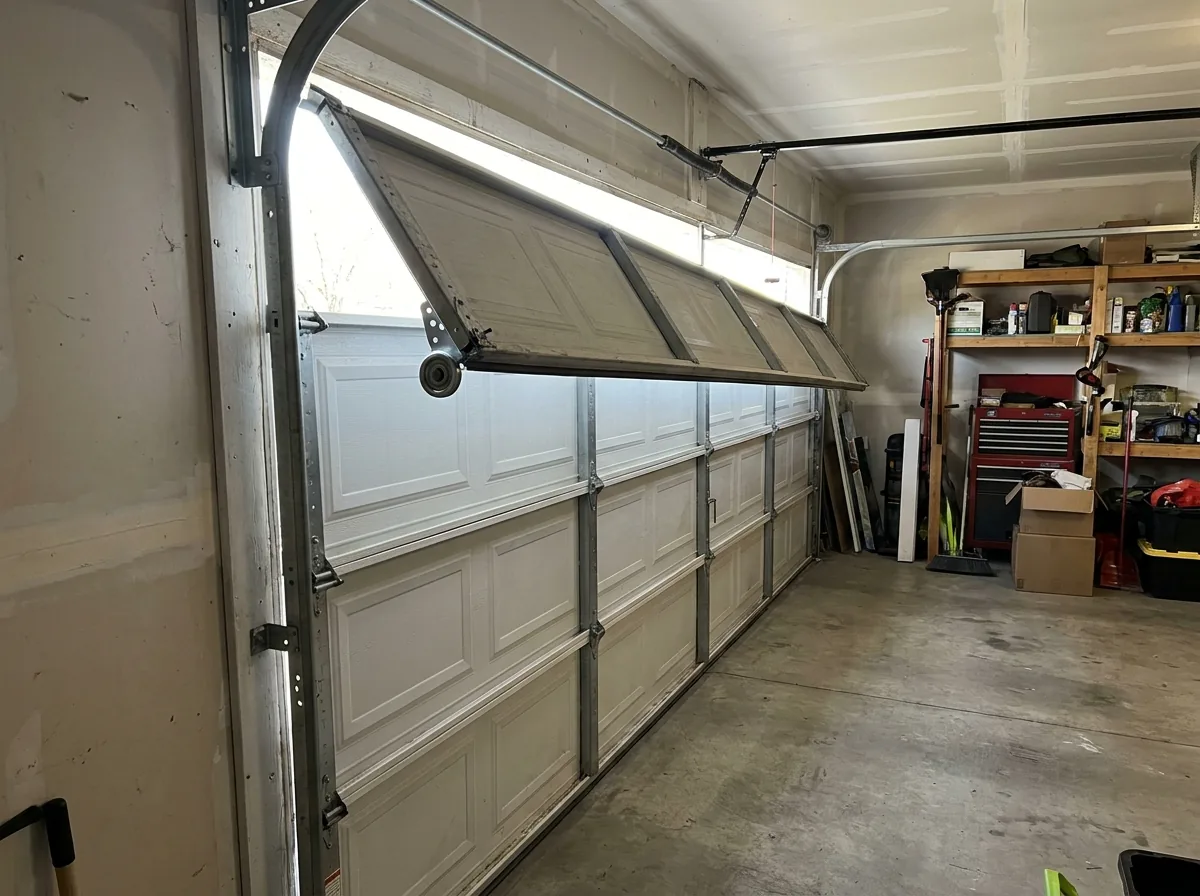
How to Lubricate a Garage Door in Florida Humidity
Lubricate a garage door three times a year in Florida, using a garage door silicone spray or a garage door white lithium spray on the hinge pivots, roller bearings, torsion spring, end bearing plates, the opener rail on chain and screw drives, and the lock. Never lubricate the track, which must be clean and dry, and never use WD-40, which is a solvent that strips the grease already in the bearings. If the noise comes back within a week, a part is worn and a tune-up at $85 to $160 will find it.
Lubrication is the cheapest maintenance a garage door gets, and in Florida it matters more than in most places because the air never dries out. A dry hinge here does not just squeak, it rusts. This is what to use in the heat, where it goes, where it must never go, and the products that make a Florida garage worse.
What to use
A garage door silicone spray or a garage door white lithium spray. Both are sold specifically for this, both come with a straw for reaching bearings, and both handle a garage that sits over 100°F from June to September.
Which one depends on where it is going.
| Product | Heat | Humidity | Attracts sand and pollen | Best on |
|---|---|---|---|---|
| Garage door silicone spray | Fine to well above garage temperatures | Displaces moisture, dries to a film | No | Hinges, roller bearings, lock, anything near the floor |
| Garage door white lithium spray | Fine, clings without running | Good, stays on the steel | A little, over time | Torsion spring, end bearings, opener chain or screw |
| Heavy grease from a tub | Softens and runs in a hot garage | Holds water against steel | Yes, badly | Nothing on a garage door |
| Motor oil, 3-in-1 oil | Thins and drips onto the car | Runs off in weeks | Yes | Nothing |
| WD-40 | Not a lubricant | Strips the existing grease | No, but leaves the part dry | Cleaning rust before lubricating |
Silicone goes on thin, dries, and does not hold grit. In a garage that gets sand tracked in from the driveway and pollen through the door every spring, that is the main advantage. Lithium clings better and is worth keeping for the spring and the opener rail, where you want it to stay in place through months of humidity.
What not to use: WD-40 or any general penetrating oil as the lubricant. It is a solvent, and its job is to displace what is already there. On a garage door that means stripping grease out of bearings. It is fine for cleaning a rusted hinge before you lubricate it. It is not the lubricant.
Where it goes
Hinge pivot points. Where the hinge knuckle turns. One short spray each, along the pin. In humid air the pivots are the first place surface rust shows, and a rusty pivot binds, which puts stress on the section it is fixed to.
Roller bearings. The small bearing at the center of the roller, not the wheel. Spray into the bearing and spin the roller. Sealed bearing nylon rollers need almost nothing; open steel bearings need this every time.
The torsion spring. Spray along its whole length and let it work between the coils. This reduces friction between the coils, and more importantly here it slows the corrosion that shortens spring life. Rust between coils is what we find on most of the springs we replace near the coast.
End bearing plates. The bearings at each end of the torsion tube, and the center bearing if there is one. These are frequently missed and they are a common source of a grinding noise that people blame on the opener.
The opener rail. Chain and screw drives only. A light film along the chain or the screw. Belt drives need nothing on the belt, and lubricant on a belt makes it slip.
The lock mechanism, if the door has one, and the keypad buttons on an outdoor keypad that has gone stiff in the humidity.
Where it never goes
The track.
The rollers are supposed to roll along the track, not slide. Lubricant in the track collects sand, dust and pollen, becomes an abrasive paste, and wears the rollers faster than no lubricant at all. In a Florida garage, with sand on the driveway and pollen for half the year, this happens within weeks.
Clean the track instead: wipe it out with a dry cloth, or with a rag and a little household cleaner if there is build-up, then dry it fully. Near the coast, hose the lower track with fresh water when you rinse the bottom brackets, then dry it.
The method
- Close the door and disconnect the opener with the red manual release cord. Working on a door that can start moving is a bad idea.
- Wipe the track clean and dry, top to bottom.
- Work through the six points above, a short spray each. More is not better. Excess drips onto the car and onto the floor, where it collects sand.
- Wipe up overspray, especially anything that reached the track or the nylon roller wheels.
- Reconnect the opener and run the door twice to distribute everything.
- Listen. If a specific noise remains, you have found the part that needs more than lubrication.
Fifteen minutes, three times a year. The April round matters most, because it goes into hurricane season lubricated and it is the last dry stretch before the daily storms start.
Florida timing
| When | Why |
|---|---|
| April or May | Before hurricane season and before the wet season. Pair it with the full maintenance checklist |
| August | Halfway through the wet season, when humidity has stripped the spring round |
| November | When the rain stops. Sets the door up for the dry season and the busiest driving months |
| After a storm surge | Near the coast only. Rinse with fresh water first, dry, then lubricate |
What lubrication will not fix
It will not fix a spring that has lost tension, a cable that is fraying or rusted, a bent track, a cracked hinge, a seized end bearing, or a roller whose bearing has already failed.
If the door is quieter for a week and then noisy again, the lubricant is masking a worn part rather than solving anything. That is the point at which a garage door tune-up at $85 to $160 is worth booking, because whatever it is will be cheaper now than after it seizes. A tune-up includes the lubrication above plus the balance test, the opener force settings, and a look at the cables and drums under load.
If the door feels heavy when you lift it by hand, that is the springs, and our guide on how long garage door springs last in Florida explains why lubrication cannot help. If it grinds at one spot on every cycle, our roller replacement guide covers the likely cause.
We do tune-ups across the state, from Miami-Dade County to Tampa Bay. Every price on this site is a starting price for a standard single door, and you get a written estimate before any work begins. The full list is on our prices page.
Related questions
How often should I lubricate a garage door in Florida?
Three times a year for a door in daily use, rather than the twice a year advice written for drier climates. Once in April or May before hurricane season, once in the middle of the wet season around August, and once in November when the rain stops. Near the coast, add a fourth round after any storm surge.
Silicone or white lithium in Florida heat?
Both garage door products handle a 100°F garage. Silicone spray goes on thin, dries to a film, and does not hold sand or pollen, which makes it the better choice for hinges, rollers and anything near the floor. Lithium spray clings better on the spring and the opener chain, where you want it to stay put. Skip heavy greases and anything that stays wet, because they collect grit.
What about nylon rollers?
Lubricate the bearing at the center of the roller, not the nylon wheel. Anything on the wheel picks up sand and makes it slip in the track. Sealed bearing nylon rollers need very little, a quick spray at the stem is enough.
Why not WD-40?
WD-40 is a water displacer and solvent, and its job is to remove what is already there. On a garage door that means dissolving the grease in the bearings. The door goes quiet for a week, then runs drier than it did before. Use it to clean a rusty part, then follow it with a real lubricant.
Can lubrication fix a door that opens slowly or feels heavy?
Rarely. Slow and heavy is a spring or opener problem, not a friction problem. If a door feels heavy when you lift it by hand with the opener released, the springs have lost tension, and no spray will bring that back. Our guide on why a garage door opens slowly covers the causes.