Salt Air and Garage Doors on Both Florida Coasts
Salt air corrodes every untreated steel part on a garage door, and on both Florida coasts the parts that fail first are the lift cables at the bottom bracket, the bottom brackets themselves, open roller bearings, hinges and the spring coils. The fixes are sealed nylon rollers, galvanized or stainless hardware, a monthly fresh water rinse, and replacing a rusted cable before it snaps. Cable repair is $95 to $300, and a cable with broken strands or a door hanging crooked is a same-day call.
Florida has more coastline than any state but Alaska, and most of the people in it live within a few miles of the water. On both coasts, from Jacksonville down to Miami and from Naples up to Clearwater, garage door hardware rusts at a pace that surprises anyone who moved here from inland. This is which parts go first, what hardware actually helps, the rinse routine, and the one rusted part that means stop using the door today.
What goes first
In order of how often we find it on service calls.
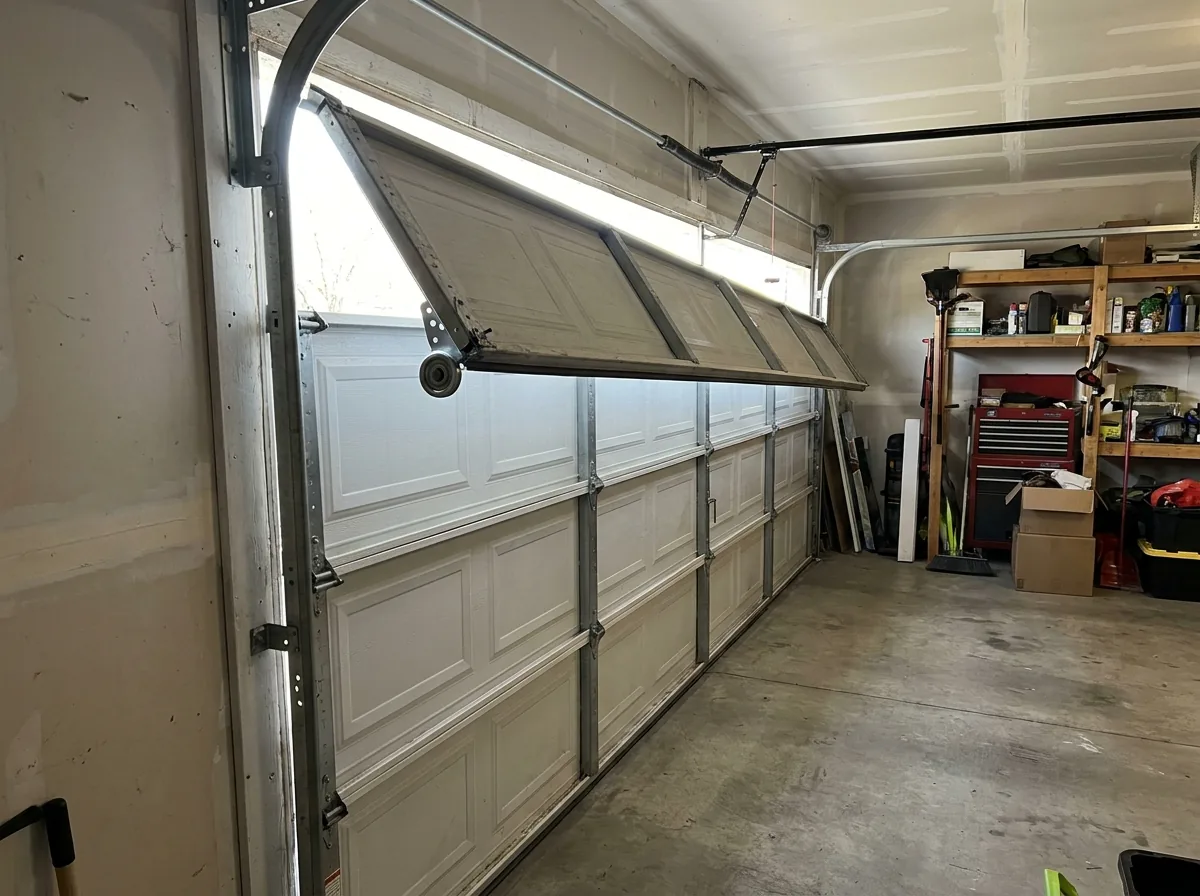
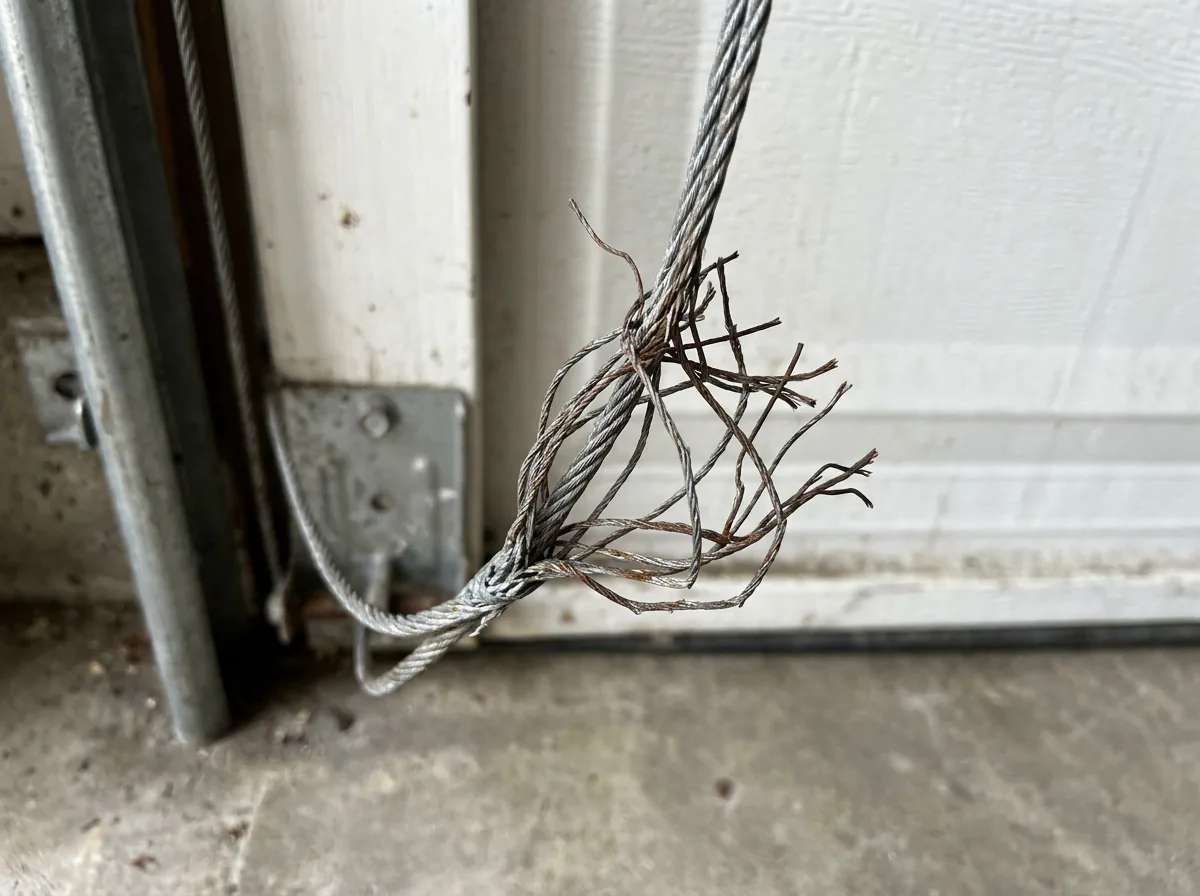
Cables at the bottom bracket. The most common visible warning we see anywhere in Florida. The cable anchors at the bottom bracket, which sits at floor level in the spot where storm water, salt and grit collect every afternoon. The strands rust from the inside of the bundle, then break one at a time, and the door starts to hang crooked. A cable that lets go drops that side of the door and usually takes it off the track.
Bottom brackets. The worst part to lose. It carries the full spring load through the cable, and it corrodes at the bolt holes and at the cable anchor where you cannot see it without lying on the floor.
Roller bearings. Exposed steel bearings pick up salt, corrode, and seize. A seized roller slides in the track, wears a groove, and drags the door. On canal lots in Cape Coral and east of US 1 in Fort Lauderdale we find bearings seized solid in four years.
Hinges. Rust at the pivot binds the hinge, which puts stress on the section it is fixed to and eventually cracks the hinge or the steel around it.
Springs. Corrosion between the coils creates stress concentrations. Springs near the water fail earlier than their cycle count alone would predict, and rust flakes on the floor under the torsion tube is the sign.
The torsion tube and drums. Pitting on the tube and rust in the drum grooves, which chews the cable that wraps it.
The panel itself. Steel corrodes wherever the factory finish is scratched through, and it spreads under the coating from there. The bottom section takes the worst of it.
Both coasts, and where it is worst
| Area | What we see |
|---|---|
| Atlantic coast: Miami, Fort Lauderdale, Hollywood, Pompano Beach, Delray Beach, Jupiter | Constant onshore wind. Fastest cable and bracket corrosion in the state east of US 1 |
| Treasure Coast and Space Coast: Port St. Lucie, Melbourne | Same wind, 1960s to 1980s housing with original hardware still hanging |
| Gulf coast: Cape Coral, Fort Myers, Naples, Bonita Springs, Venice, Bradenton | Canal lots and still, wet air. Bearings and springs rust as fast as the east coast. Surge from Ian and Helene reached doors directly |
| Tampa Bay coast: Clearwater, St. Petersburg | Older housing, 2024 surge damage, bottom brackets and cables that sat in salt water |
| North Florida coast: St. Augustine, Palm Coast, Jacksonville beaches | Slower than South Florida, still well ahead of inland |
| Inland: Orlando, Lakeland, Gainesville, Ocala | Humidity rust only. Hardware lasts years longer |
Salt does not need to reach the door as spray. Onshore wind carries it a few miles and it settles on every hinge and in every track. After a storm surge, the bottom of the door has been in salt water, and the corrosion that follows in the next year is severe.
The hardware that helps
| Part | Standard | Near the coast, ask for |
|---|---|---|
| Rollers | Steel wheel, open bearing | Nylon wheel, sealed bearing, stainless stem |
| Hinges | Zinc plated steel | Galvanized or stainless |
| Bottom brackets | Zinc plated steel | Galvanized, checked yearly |
| Cables | Galvanized aircraft cable | Stainless cable |
| Springs | Oil tempered black | Galvanized or coated |
| Bolts and lags | Zinc plated | Stainless or hot dip galvanized |
| Panel | Steel with factory finish | Aluminum or fiberglass, or steel with the finish kept intact |
Sealed bearing nylon rollers are the single most useful upgrade. The bearing is protected and the wheel cannot rust. Our roller replacement guide covers types and life.
Galvanized against stainless. Zinc plating is a thin electroplated coat and it is gone within a couple of years at the coast. Hot dip galvanizing is a thick zinc layer that lasts many years. Stainless does not rust at all in this environment, costs more, and is what we recommend for cables, hinges and the fasteners into the jamb within a mile of the water. For bottom brackets, galvanized is usually adequate if they are looked at every year.
Galvanized or coated springs resist coil corrosion at modest extra cost, and they matter more here than the cycle rating does for most doors. Our guide on how long garage door springs last in Florida explains why.
An intact factory finish. On a steel door, the coating is the protection. Touch up scratches promptly with matching paint rather than leaving bare steel exposed. For a new door near the water, aluminum or fiberglass removes the panel from the problem, and our guide on the best garage door material for Florida weighs it.
A bottom seal in good condition. It keeps water off the bottom section and away from the brackets.
The rinse routine
Monthly if you are near the water, and always after a storm surge or a week of onshore wind.
- Hose the bottom two feet of the door, the bottom brackets, the bottom rollers and the lower track with fresh water. Not a pressure washer, which drives water into the bearings and strips the finish
- Leave the door up to dry if you can
- Lubricate springs, hinges and roller bearings with a garage door silicone or lithium spray once it is dry. Our lubrication guide covers which product
- Look at the bottom brackets specifically. Light surface discoloration is normal. Flaking, pitting or rust at the bolt holes is not
- Look at the cables where they anchor at the bracket and where they wrap the drum, for broken strands, kinks and rust bloom
- Touch up any scratches in the door finish
When a rusted cable is an emergency
This is the part that matters most, because the cable is the one corroded part that fails suddenly and takes the door with it.
Stop using the door and call the same day if:
- You can see broken strands anywhere on either cable
- The door hangs crooked, one side lower than the other
- One cable has gone slack or has jumped off the drum
- The door slammed down on one side, or jammed partway with a bang
- The cable is rusted through at the bottom bracket, even if the strands look intact above it
A cable in that condition is carrying the full spring load on whatever steel is left. When it goes, the door drops on that side, twists in the track, and usually bends the track on the way down, which turns a $95 to $300 cable repair into an off-track repair at $140 to $600 plus panel work. If your car is inside and you need the door today, our emergency repair is the repair price plus a $150 to $300 call-out premium, stated before we dispatch.
Book it this week if:
- The cable shows rust discoloration but no broken strands
- The bottom bracket is flaking or pitted
- The door has started to sound different on one side
Cable and drum together is $225 to $400, and near the water we replace both cables at once, because the second one has been sitting in the same salt as the first. Our guide on garage door cable repair cost covers what the visit includes.
What it saves
A door in a coastal location that is never rinsed or serviced typically needs its first significant repair years earlier than an inland one, and the failures cluster: rollers, then a cable, then a derailment.
The routine above costs a hose, a can of lubricant and half an hour a month, plus a tune-up at $85 to $160 every April if you would rather we did the inspection. We do them across both coasts, from Broward County and Palm Beach and the Treasure Coast to Southwest Florida and North Florida. Against a cable that lets go with the car inside, that is not a difficult trade.
Every price on this site is a starting price for a standard single door, and you get a written estimate before any work begins. The full list is on our prices page.
Related questions
How far inland does salt air reach?
Far enough that if you can smell the ocean from the driveway, it is reaching your garage. The worst of it is within a mile of the water and on canal lots, but hardware a few miles inland in Boca Raton, Melbourne, Sarasota or Clearwater rusts noticeably faster than in Orlando or Lakeland. Onshore wind carries it, and a storm surge brings it to the door directly.
Is the Gulf coast as bad as the Atlantic coast?
Yes. The Gulf is warmer and the humidity is higher, and Cape Coral, Naples, Venice and St. Petersburg see the same failures we see in Fort Lauderdale, Jupiter and Palm Coast. The east coast gets more wind off the water; the west coast gets more still, wet air. Steel does not care which.
Should I get an aluminum door instead of steel near the water?
For the panel, aluminum and fiberglass are a real improvement because neither rusts. The hardware still can, so the specification of rollers, hinges, springs and fasteners matters just as much either way. Our buyer's guide covers the trade-offs.
Is a rusted cable an emergency?
If you can see broken strands, if the door hangs crooked, or if one cable has gone slack, yes. Stop using the door. The cable carries the full spring load, and when it lets go the door drops on one side and usually comes off the track. Surface discoloration with no broken strands is a repair to book this week rather than a same-day call.
Is a corroded bottom bracket urgent?
Yes. The bottom bracket anchors the lift cable and carries the full tension of the spring system. One that is flaking, pitted, or rusted at the bolt holes should be replaced rather than watched, and it is not a part to touch yourself.