Garage Door Jamb Replacement in Florida: Rot, Termites, Water
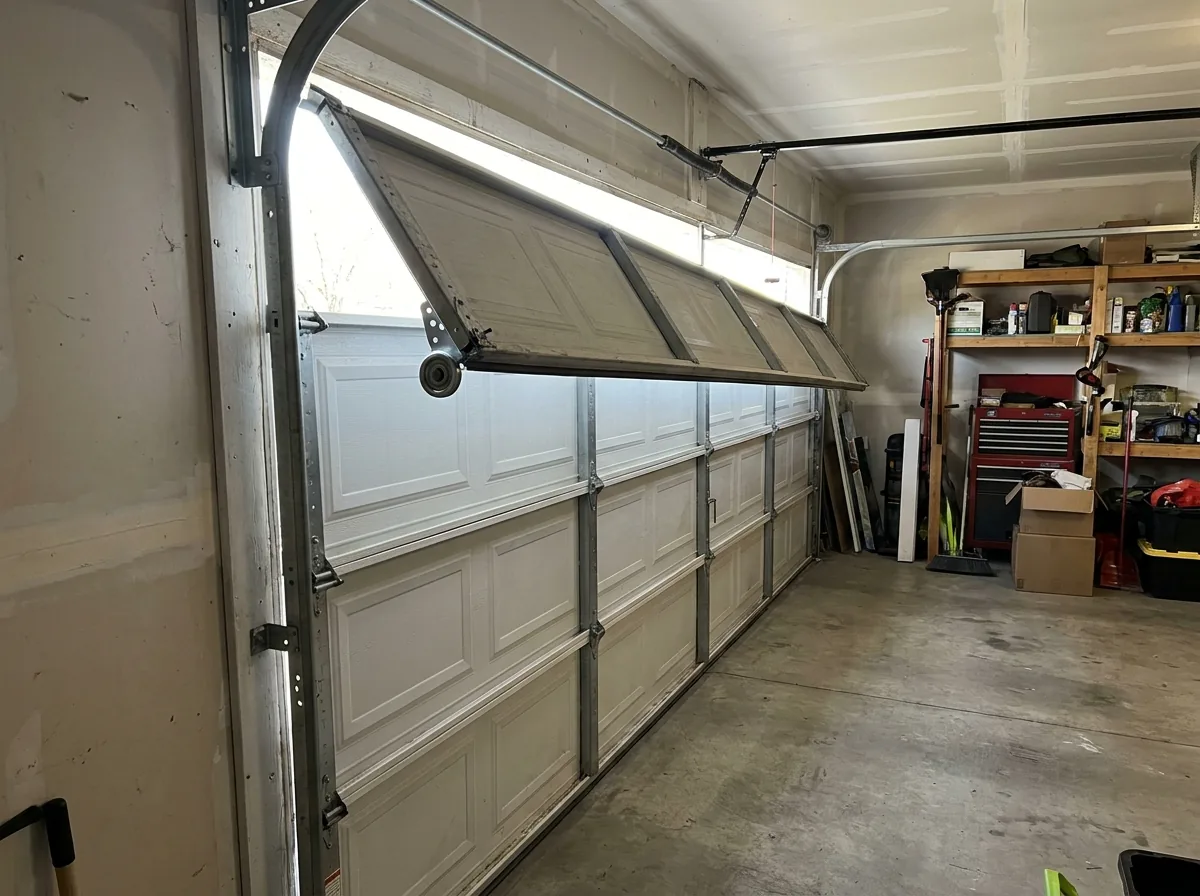
The garage door jamb is the wood frame lining the opening. It carries the track brackets, the weatherstrip and the door's seal against the outside. In Florida it fails from the bottom up, because that is where the afternoon storm water sits for half the year, and termites find the wet wood first. Jamb work is quoted on the job at $45 to $120 per hour plus materials, and it has to be done before a new door goes in, not after, because a rated door has to fasten into sound wood.
The jamb is the wood frame lining your garage opening: a leg up each side and a header across the top. It looks like trim. It is not, and in Florida water sits against the bottom of it every afternoon from June to October and termites arrive before the paint bubbles.
What the jamb actually does
Three things depend on it.
The track brackets screw into it. The vertical track on each side of your door is fixed to the jamb, and everything the door does mechanically runs through those fixings. Soft wood means brackets that work loose, and loose brackets mean a door that drifts out of alignment and eventually comes off its track.
The door’s wind rating depends on it. A wind-rated or impact-rated door earns its Florida Product Approval or Miami-Dade NOA as a system: the door, the track, the brackets and the fasteners into a specified jamb. The approval documents say what the jamb has to be and how the brackets attach. A door bolted to rotten wood is not the door that was tested, whatever the label says. Our guide on wind-rated against impact-rated doors covers what the rating means.
The weatherstrip nails to it, and the door closes against it. The rubber or vinyl strip that seals the sides and top of your door is fastened to the jamb. It cannot seal against wood that has gone soft or lost its straight edge.
Why Florida eats jambs from the bottom
Every jamb we replace has failed from the ground up.
The bottom six to twelve inches of the jamb sits at the exact point where the driveway meets the slab. That is where the afternoon storm runs off the driveway and pools, where the sprinklers hit twice a week, and where a failed bottom seal on the door lets water sit against the wood from the inside. For half the year, that wood is never fully dry.
Then the termites. Subterranean termites come up from the soil looking for damp wood in contact with the ground, and a jamb at slab level with water at its base is exactly that. Drywood termites do not need the water and will take a dry jamb in Miami, Naples or Tampa just as happily. Either way, the first sign is often a track bracket that pulls loose, because the wood behind the paint has been eaten hollow.
Compounding factors we see constantly:
- A driveway resurfaced higher than it used to be, so the jamb bottom sits below grade
- A downspout discharging next to the opening, or sprinklers aimed at the garage wall
- Untreated pine jambs on 1950s to 1970s houses that were never going to survive this
- A torn or flattened bottom seal on the door, which is the cheapest part on the whole opening
CBS against frame
Which house you have changes the job.
| Concrete block and stucco (CBS) | Wood frame with stucco | |
|---|---|---|
| Where it is common | South Florida, both coasts, most houses before the 1990s | Central Florida, newer inland subdivisions, many 2000s builds |
| What the jamb is | A pressure treated buck fastened to the block face | A framed jamb tied into the wall studs |
| What rots | The wood buck. The block behind it is fine | The jamb, and sometimes the studs and sill behind it |
| Termite risk | The buck only, unless there is wood elsewhere at grade | The buck and the wall framing behind it |
| Typical repair | Cut off the bad section or replace the leg, refasten to block | Replace the leg, inspect and possibly repair the framing behind |
On a CBS house in Hialeah, Hollywood, Cape Coral or Bradenton, a jamb replacement is usually a contained job. On a frame house in Clermont, Wesley Chapel or the newer parts of Orlando, we look behind the jamb before we quote, because it is sometimes the visible end of a wet stud.
How to check yours
Two minutes, a screwdriver and a flashlight.
The screwdriver test. Push the tip into the wood at the bottom of each leg, hard enough that you would expect it to resist. Sound wood resists and the tip barely marks it. Rotten wood accepts the screwdriver with no resistance and what comes away is damp and stringy. Termite damaged wood sounds hollow when tapped and the tip may go straight through paint that looked perfect.
Test at floor level, at six inches, at a foot, and at the lowest track bracket, so you know how far up the damage has gone.
Look for the secondary signs.
- Paint bubbling, flaking or lifting in the lower two feet
- Track brackets that move if you push them, or screws standing proud
- Daylight visible around the sides of the closed door
- Weatherstrip that has come loose or no longer touches the door
- Mud tubes running up from the slab, or piles of fine pellets at the base, which are termite signs and worth a call to a pest company as well as to us
Check both sides and the header. People check the side they park next to and miss the other.
Repair or replace the leg
Repair the bottom if the damage is confined to roughly the lowest foot and everything above the screwdriver test comes back solid. The bad section is cut out and a new piece of pressure treated lumber is spliced in and refastened.
Rot runs further up the grain than it shows at the surface, and termites run further still, so a good repair cuts back well past the visible damage.
Replace the whole leg if more than about a third of it is soft, if the damage has reached the height of a track bracket, or if the wood has moved enough that the leg is no longer straight. A jamb that is out of true means a door that never seals properly no matter what weatherstrip goes on it.
Do the jamb before the door, not after
This is the part worth paying attention to if you are planning a new door, and especially a hurricane-rated one.
A new garage door is fitted to the opening you have. Its track brackets screw into your jamb, with the fasteners and spacing the approval calls for. Its weatherstrip seals against your jamb. If that jamb is rotten:
- The brackets go into soft wood and work loose within a season
- The door drifts out of alignment, and misalignment is the most common cause of a door coming off its track
- The rating on the permit describes a door that no longer exists as installed
- The weatherstrip cannot seal, and water keeps getting in around a door you just paid for
We would rather quote the jamb and the door together and have you understand why, than fit a good door onto bad wood and be back within a year. Our guide on garage door permits in Florida covers what the inspector looks at.
What it costs
Jamb work is quoted on the job because the variables are real: how many legs, how much of each, whether the track has to come off, and on a frame house, what is behind it. Where we quote labor by the hour it is $45 to $120 per hour, plus materials, and you get the number in writing before we start.
Done alongside a new door installation, which is $950 to $4,200 for a standard wind-rated steel door with the permit included in the quote, the jamb costs less than as a separate visit, because the track is coming off anyway. A hurricane-rated door is $1,800 to $6,500. We do both across the state, from Miami-Dade County to Southwest Florida.
How to stop it happening again
Use pressure treated lumber or a composite. Pressure treated is the standard answer and it is what we fit. PVC and composite jambs cost more, and neither rot nor termites touch them.
Keep the bottom seal working. A failed door seal lets water in that then sits against the jamb from the inside, which is how jambs rot on the face you never look at. The seal is a cheap part, and it is on the monthly wet season checklist.
Move the sprinklers and the downspout. If either one hits the garage wall or discharges next to the opening, that is the actual cause.
Look at it every April. The screwdriver test alongside the rest of a tune-up at $85 to $160 catches this while it is still a repair rather than a replacement.
Every price on this site is a starting price for a standard single door, and you get a written estimate before any work begins. The full list is on our prices page.
Related questions
What is a garage door jamb?
The wood frame that lines the opening on both sides and across the top. The vertical track brackets screw into it, the weatherstrip nails to it, and the door closes against it. It is structural in the sense that the door's track hangs off it and the door's wind rating depends on it, so its condition is not cosmetic.
How do I know if my jamb needs replacing?
Push a screwdriver into the wood near the bottom on each side. Sound wood resists. Rotten wood takes the tip with almost no pressure and comes away damp and fibrous. Termite damage feels hollow and the surface paint may look fine. Also look for track brackets pulling loose, daylight around the closed door, and mud tubes or frass at the base.
Can I replace just the bottom of a rotten jamb?
Sometimes. If the rot is confined to the lower foot and the rest is sound, a splice repair works and costs less. But rot travels up the grain further than it shows, and termites travel further still. If more than about a third of the leg is soft, or the damage reaches a track bracket, replace the whole leg.
Do I need a new jamb before a new garage door?
If the existing one is rotten, yes. A wind-rated or impact-rated door's approval documents specify what the track brackets fasten into and with what, and soft wood does not meet it. Fitting a new door to a rotten jamb means brackets that loosen, a door that goes out of alignment, and a seal that fails, which is the whole point of the new door undone.
Is a jamb on a concrete block house different?
Yes. On a CBS house the jamb is a pressure treated buck fastened to the block, and it is the wood that rots while the block behind it is fine. On a frame house the jamb is tied into the wall framing, and rot or termites in the jamb can be a sign of the same in the studs behind it, which is a bigger job.