Garage Door Maintenance Checklist for Florida Homes
In Florida, give your garage door a full check in April or May, before hurricane season starts on 1 June: run the balance test and the reversal test, lubricate the hinges, roller bearings, springs and end bearings, tighten the hardware, and look at both cables for rust. Through the wet season, check the bottom seal and the photo eyes once a month. Within a few miles of either coast, rinse the bottom of the door and the bottom brackets with fresh water monthly. A professional tune-up costs $85 to $160.
A garage door in Florida does not have an off season. It cycles all year, the garage sits at 100°F for four months, the humidity never lets the steel dry out, and the same door is the largest opening in the house when a hurricane arrives. That changes the calendar. Instead of two checks a year, you want one thorough round before the season and a short monthly look through the wet months.
Why the calendar is different here
Three things drive it.
Hurricane season runs 1 June to 30 November. A door that is out of balance, loose in its track or missing hardware is the door most likely to fail under wind pressure, and when a garage door fails the house pressurizes and the roof is at risk. That is why the Florida Building Code treats the door as structural, and why the full check belongs in April or May rather than whenever you get around to it.
The wet season means water at the seal every day. From June to October most of the state gets an afternoon storm. Water runs to the bottom seal, sits against the bottom brackets, and wicks into a wood jamb. Nothing on the door dries out fully until November.
Salt air shortens everything. Within a few miles of either coast, springs, cables, hinges and bottom brackets rust at a pace that surprises people who moved here from inland states. Rust on a cable is the most common visible warning we see on service calls.
April or May: the full check
Do this once a year, before the season. Disconnect the opener first by pulling the red manual release cord with the door closed.
The balance test. Lift the door to waist height by hand and let go. A correctly balanced door stays put. If it drops or drifts up, the springs are not matched to the door, and everything else on this list is secondary to fixing that. Springs are $150 to $350 per spring installed, and replacing both together adds $120 to $250 for the second one.
The reversal test. Reconnect the opener, lay a two by four flat on the floor in the opening and close the door onto it. The door should touch, stop and reverse. If it does not, the down force is set too high and the door will not reverse on a child, a pet or a car bumper either.
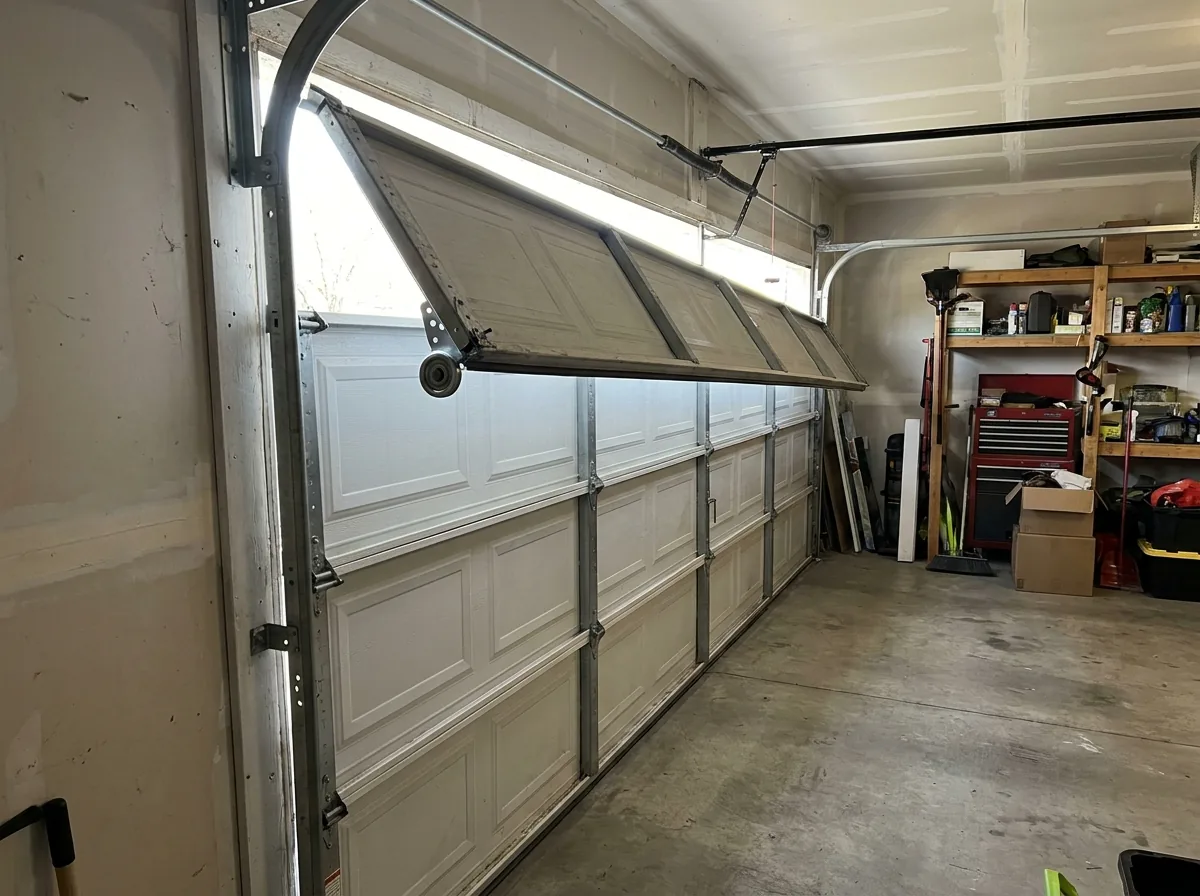
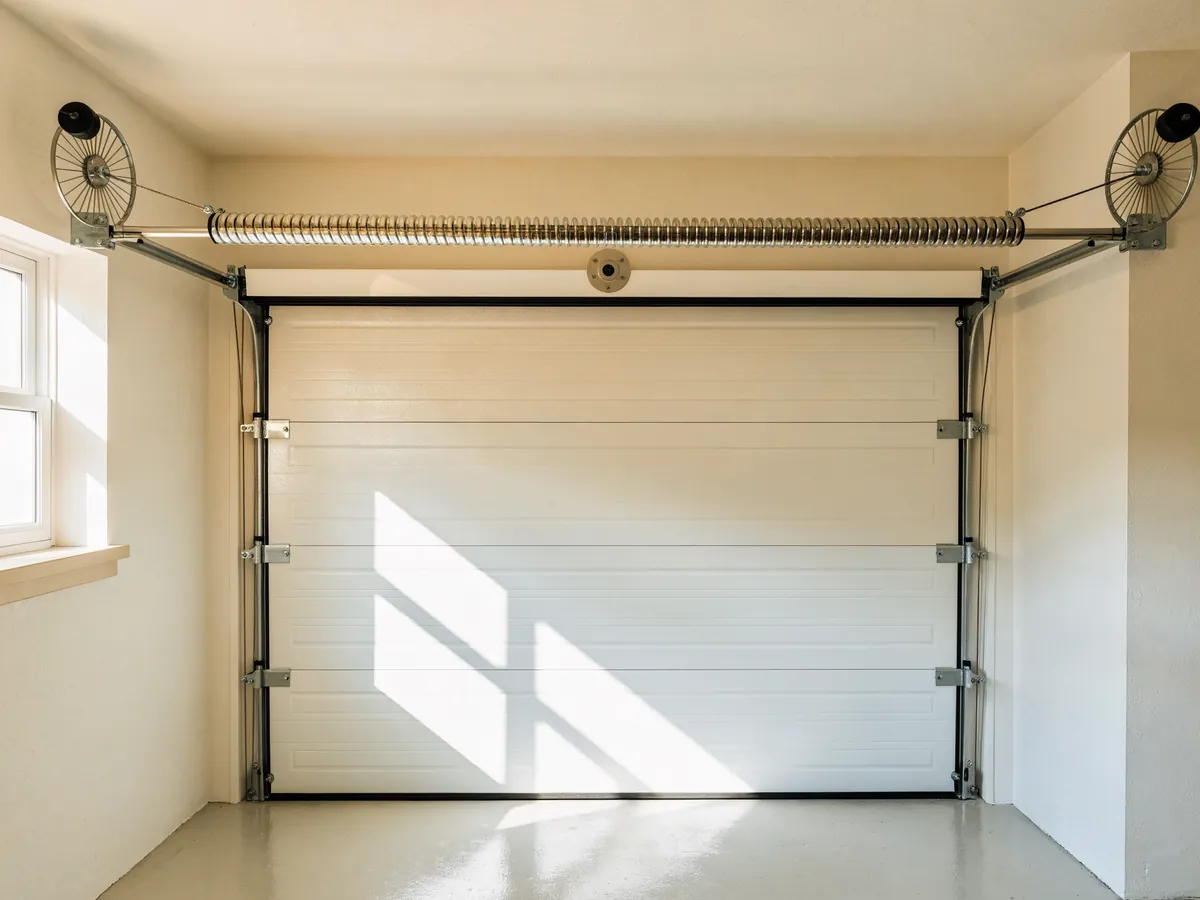
Springs. Look for gaps in the coil, rust bloom, and coils that have started to separate unevenly. Do not touch them.
Cables. Look at the top where the cable wraps the drum and at the bottom where it anchors to the bracket. Rust at the bracket end and broken strands at the drum are the two failure points. A rusted cable is not a wait and see item. Cable repair is $95 to $300, and cable and drum together is $225 to $400.
Rollers. Spin each one. A roller that will not turn is sliding in the track instead of rolling, and it is wearing the track while it does it.
Hinges. Look for cracks at the end hinges, which carry the rollers, and for rust at the pivot.
Track. Sight along it. Straight, evenly spaced from the door, and every bracket tight. Loose brackets let the track spread, and a spread track is how a door comes off.
Lubrication. Garage door silicone or lithium spray on hinge pivots, roller bearings, the spring, and the end bearing plates. Never the track. Our guide on how to lubricate a garage door in Florida humidity covers which product survives the heat.
Tighten everything. Hinges, track brackets, opener mount. Snug, not overtightened into sheet metal.
Bottom seal. Intact and flat on the slab across the whole width. This is the part that decides whether the wet season stays outside.
Photo eyes. Steady lights on both, brackets firm, lenses clean, no more than six inches off the floor.
Manual release. Pull it and lift the door by hand once, so you know it works before a power outage makes you find out.
The Florida calendar
| When | What | How long |
|---|---|---|
| April or May | Full check above, or a professional tune-up at $85 to $160 | 45 minutes |
| June to November, monthly | Seal, photo eyes, cables, hardware, listen for new noise | 10 minutes |
| Monthly near the coast | Fresh water rinse of the bottom two feet and the bottom brackets | 5 minutes |
| Three days before a named storm | Close, lock, brace if you have a kit, confirm the manual release works | 20 minutes |
| After any storm | Look for bent panels, twisted track, water in the garage, slack cable | 10 minutes |
June to November: the monthly look
Ten minutes, door closed, opener disconnected.
- Bottom seal. Look for a gap you can see daylight through, and for a wet line inside the garage after yesterday’s storm. A flattened or torn seal lets water sit against the brackets all summer.
- Photo eyes. Wipe both lenses. Mud daubers and spiders build on them through the summer and a single web across a lens will stop the door closing. Our guide on why a garage door will not close starts here for a reason.
- Cables. Any new rust, any strand sticking out, any slack on one side. Stop using the door if you see slack.
- Listen. Run the door once. A new grinding, popping or squealing sound since last month is a part asking for attention before it fails.
- Hardware. Push on the track brackets and the opener mount. Summer is when the door cycles most, with school out and the family in and out all day, and vibration loosens bolts.
Near the coast: the salt rinse
Once a month, more after a storm surge or a week of onshore wind, hose down the bottom two feet of the door, the bottom brackets, the bottom rollers and the lower track with fresh water. Let it dry with the door up if you can. Salt on steel is only a problem while it stays there.
Near either coast, ask for galvanized or stainless hardware and sealed nylon rollers at the next repair. Our guide on salt air and garage door corrosion covers which parts go first and what the better hardware costs.
What never to touch
The torsion springs, the lift cables and the bottom brackets. They carry the full tension of the spring system even with the door closed, and they injure people every year. Look, do not touch, and call if what you see looks wrong. Our guide on why you should never replace a torsion spring yourself explains what actually happens when it goes wrong.
What a tune-up adds
The checklist above catches most problems. A garage door tune-up at $85 to $160 adds the things you cannot do from the floor: weighing the door against the spring, setting the opener force and travel limits, checking the drums and cables under load, replacing worn rollers and hinges, and telling you honestly whether the door will see the season out. We do these across the state, from Miami-Dade County to Tampa Bay and North Florida, and April and May book up, so call early.
Every price on this site is a starting price for a standard single door, and you get a written estimate before any work begins. Our prices page has the full list.
Related questions
When is the best time to service a garage door in Florida?
April or May. Hurricane season opens on 1 June, and a door that has been balanced, lubricated and tightened in the spring is the door you want when the first storm is three days out. It is also the last stretch of dry weather before the daily afternoon rain starts.
How often should I check the door during the wet season?
Once a month from June to November. Water sits at the bottom seal every afternoon for half the year, the photo eyes collect spider webs and mud dauber nests, and hardware works loose because the door cycles more in summer. A ten minute look each month catches most of it.
What should I never touch myself?
The torsion springs, the lift cables and the bottom brackets. All three are under the full tension of the spring system, even with the door closed, and all three cause serious injuries. Everything else on this list is safe to do with the opener disconnected.
Does the checklist replace a professional tune-up?
It covers most of it. What we add is measuring the spring against the door weight, setting the opener force and travel limits correctly, checking the cables and drums under load, and catching wear that is hard to see from the floor. A tune-up costs $85 to $160 and once a year alongside your own checks is a sensible arrangement.
Do I need to rinse the door if I am not right on the beach?
If you can smell the ocean from the driveway, yes. Salt carries a few miles inland on the sea breeze on both coasts. Canal front lots in Cape Coral and Fort Lauderdale and anything east of US 1 get the worst of it, but hardware in Boca Raton, Jupiter, Melbourne, Sarasota and Clearwater rusts noticeably faster than hardware in Orlando or Lakeland.