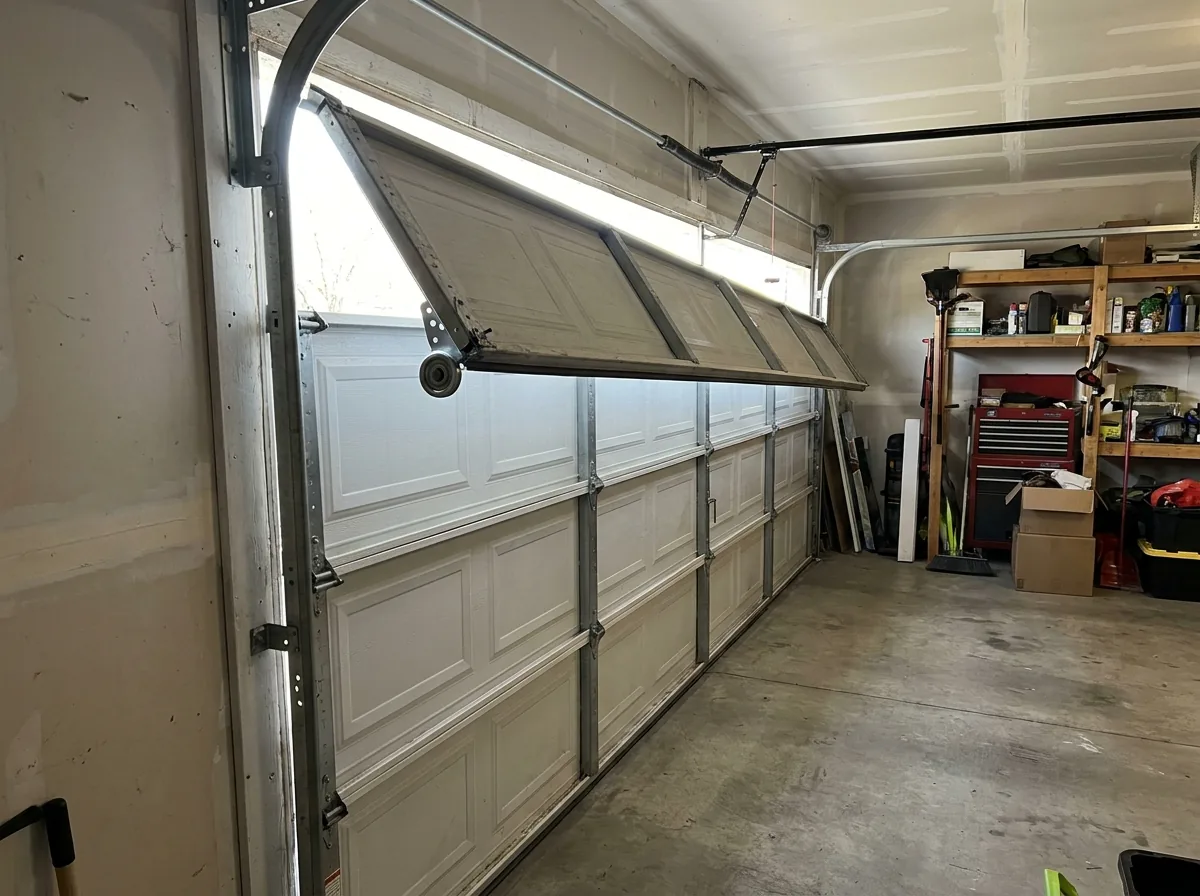
Garage Door Will Not Close: The Six Usual Causes
A garage door that will not close is most often a photo eye safety sensor problem: a blocked beam, misaligned sensors, afternoon sun on the lens, or a wire corroded at floor level. In Florida the sensors also collect ants, spider webs and water from the daily storm. The other causes are a travel limit set wrong, an obstruction in the track, seized rollers, and a down force setting that is too low. Sensor realignment is part of a $85 to $160 tune-up; replacing a sensor pair is an opener repair at $95 to $300.
Start with the sensors, because it is usually the sensors
Two photo eyes sit near the floor on each side of the opening, about six inches up. One sends an infrared beam and the other receives it. Break the beam and the door will not close, or it starts down, stops and reverses. Our article on safety sensors explained goes deeper; this is the short version.
Check, in this order:
Is anything in the way? A trash can, a bike wheel, the garden hose, a palm frond that blew in, a leaf caught in the bracket. It takes very little.
Are the lenses dirty? Dust, pollen, spider webs and, in Florida, ants. Ants love the warm housing and the beam reads a line of them as an obstruction. Wipe both lenses with a dry cloth and clear the housing.
Are they wet? After an afternoon storm, water runs under the bottom seal and splashes the lenses. Dry them and try again. If the door only misbehaves after rain, the sensors are your answer.
Are they aligned? Each sensor has an indicator light. On most brands, a steady light on both means aligned; a flickering or dark light on one means they are not pointing at each other. They knock out of alignment easily, usually by a bumper, a bin or a bike.
Is the sun on them? Direct low sun into the receiving lens washes out the beam. If the fault is time of day dependent and the garage faces west, this is why. A small shade over the receiving eye fixes it.
Are the wires intact? The wire runs along the wall at floor level, which is exactly where it gets caught, stapled through, chewed, and in a humid garage corroded at the terminals. Look for green on the bare copper at the sensor and at the motor unit.
Realigning sensors is a five minute job and it is included in every tune-up at $85 to $160. If you are being quoted an opener replacement for a door that reverses on closing, ask what the sensors were found to be doing.
The other five causes
Down travel limit set wrong. If the limit tells the door to travel further than the slab allows, the opener meets resistance and reads it as an obstruction, then reverses. It is adjustable on the motor unit and it drifts on older units. Florida slabs also settle and driveways get resurfaced, so the floor the door was set to is not always the floor it has now.
Down force set too low. The opener has a force setting for how hard it may push. Set too low, an ordinary bit of friction stops it. Set too high, it becomes dangerous, so this is worth setting correctly rather than simply turning up. On a hot afternoon a marginal force setting is what makes the door reverse at 4 pm and behave at 7 am.
Obstruction in the track. A bent section of track, a loose bracket, rust flaking at the bottom of the vertical track where water sits, or sand and debris. The door will usually stop at the same point every time, which is the clue. Track repair is an off-track repair from $140.
Worn or seized rollers. A roller that will not turn drags. On the way down, gravity is helping, so this shows up as a door that goes down roughly, jerks and stops. Humidity seizes roller bearings early here, and on a coastal door the rollers rust solid.
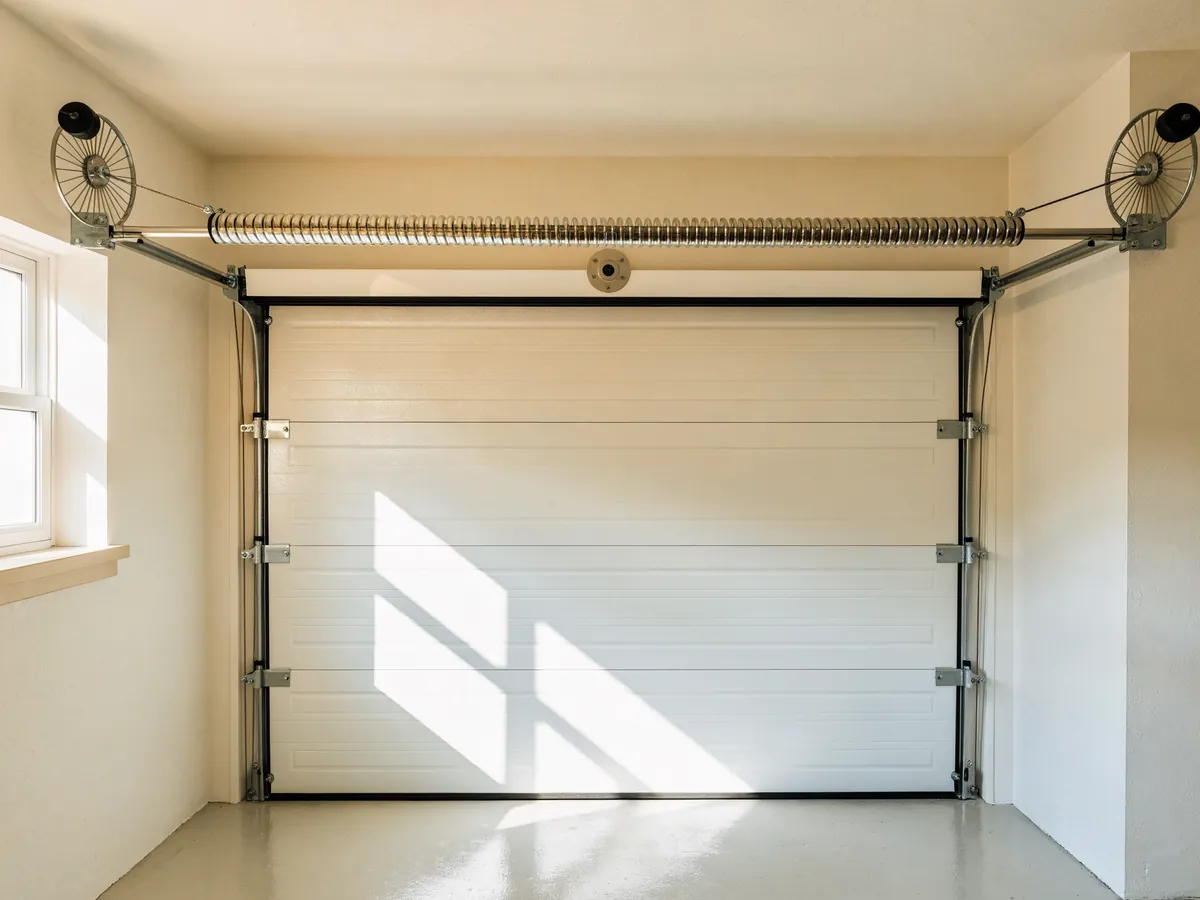
The door is out of balance. A door with tired springs is heavier than the opener expects. On the way down it can run ahead of the trolley, the arm loads up and the opener trips the force limit. Pull the release and lift the door halfway by hand: if it will not stay, the springs are the root cause at $150 to $350 per spring.
The test that tells you which
Pull the manual release with the door closed and move the door by hand, slowly, through its whole travel.
Smooth all the way, stays where you leave it. The door is fine, so it is the opener, the sensors or the settings.
Rough at one point. You have found the obstruction or the bad roller.
Wants to fall or fly up. The spring balance is wrong, and that is the root cause.
What each fix costs
| Cause | What to check | What it costs |
|---|---|---|
| Blocked, dirty or wet sensor | Object, ants, webs or water on the lens | Nothing, a dry cloth |
| Sensors out of alignment | One indicator light dark or flickering | Part of a $85 to $160 tune-up |
| Sun on the receiving eye | Fails only in the afternoon, west facing garage | A shade over the eye |
| Damaged or corroded sensor wire | Green terminals, stapled or chewed wire | $95 to $300 opener repair |
| Failed sensor pair | Both lights dark with clean lenses and good wire | $95 to $300 opener repair |
| Limit or force setting | Door reverses at the slab or on hot afternoons | Part of a tune-up or $95 to $300 opener repair |
| Track obstruction or rust | Stops at the same height every time | $140 to $600 off-track repair |
| Seized rollers | Roller slides instead of turning | Tune-up plus rollers |
| Springs out of balance | Door will not hold halfway by hand | $150 to $350 per spring |
Every figure is the same one on our prices page, and each is a starting price for a standard single door in normal condition.
If the door is stuck open tonight
An open garage is an open house, and in most Florida neighborhoods the garage holds the bikes, the tools and the door into the kitchen. If the sensors will not let the door close, try holding the wall button down until the door reaches the floor; that overrides the sensors on most openers. If that does not work, pull the manual release and close it by hand, then slide the manual lock across or clamp the track above a roller.
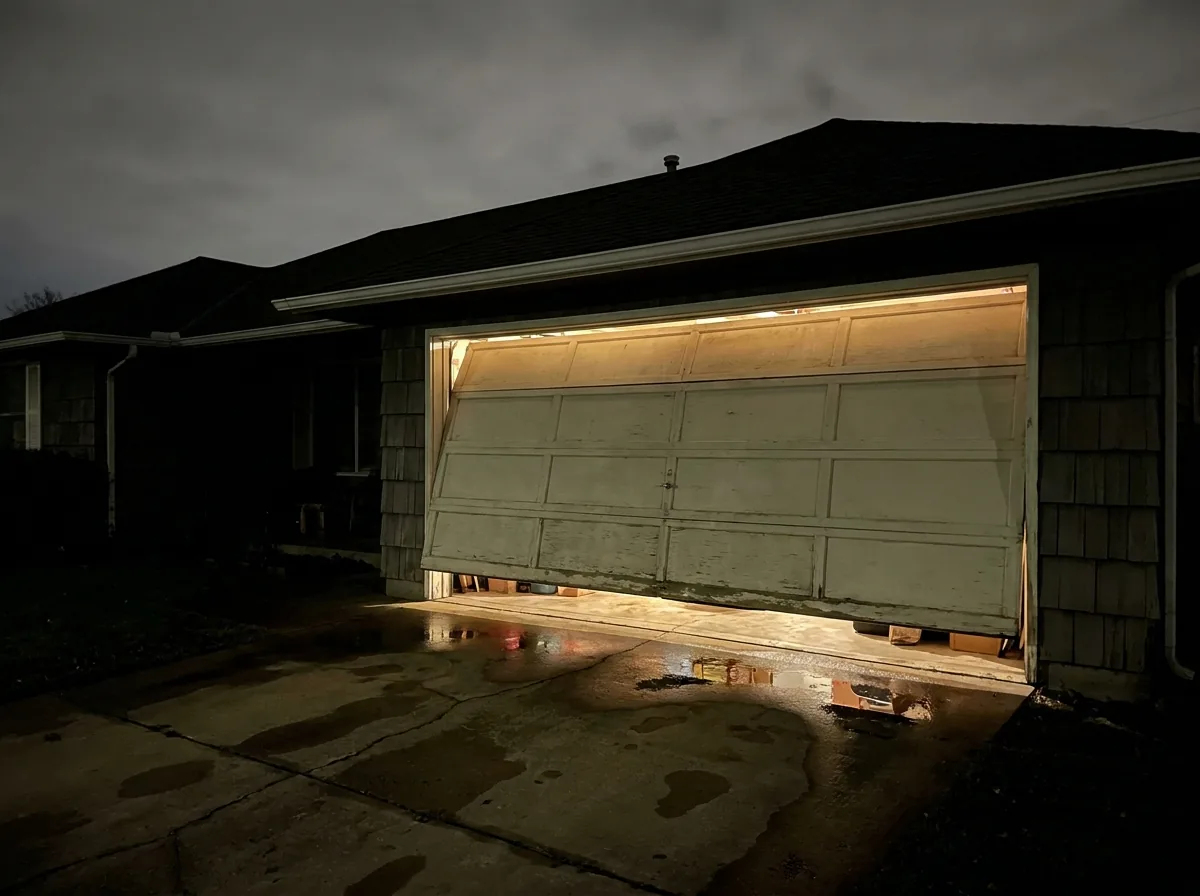
We treat a door that will not close as a same-day call, and the emergency premium of $150 to $300 is stated before we dispatch, so you can decide whether it can wait until morning. Our guide to emergency repair cost explains when the premium applies.
Where we work
Same-day service across Central Florida, Tampa Bay, Southwest Florida, Miami-Dade County, Broward County, Palm Beach and the Treasure Coast and North Florida. Call (561) 897-9930 and tell us what the two sensor lights are doing. It saves a trip.
Related questions
Why does my garage door close a few inches then go back up?
Almost always the safety sensors or the down travel limit. The opener thinks it hit something. If the sensor lights are steady and the lenses are clean, the limit is probably set so the door presses into the slab and the opener reads that as an obstruction. Both are adjustments, not parts.
Why does my garage door only refuse to close in the afternoon?
Direct low sun into the receiving sensor washes out the infrared beam. If the fault is time of day dependent and your garage faces west, that is very likely the cause. A short length of PVC pipe or a purpose made shade over the receiving eye fixes it for a few dollars.
Can I close the door if the sensors are broken?
Most openers let you close by holding the wall button down continuously until the door reaches the floor, which overrides the sensors. Use it once to secure the house, not as a permanent arrangement. The sensors are there because doors have killed children and pets.
Do afternoon storms affect the safety sensors?
Yes. The sensors sit about six inches off the slab, exactly where water runs under the bottom seal in a heavy storm. Water on the lens scatters the beam, and repeated wetting corrodes the wire terminals green. If the door misbehaves after every storm and behaves the next morning, the sensors are the answer.
Is a door that will not close a security problem tonight?
Yes. An open garage is an open house. If you cannot get the door down using the hold-to-close method, pull the manual release and close it by hand, then slide the manual lock or put a clamp on the track. We treat a door stuck open as a same-day call.