Torsion vs Extension Springs: Which Does Your Door Have?
Torsion springs mount on a horizontal shaft above the door opening. Extension springs stretch along the horizontal tracks on each side. Torsion is safer, lasts longer, balances the door better and is standard on new Florida doors, including every hurricane rated door we install. Either type replaces for $150 to $350 per spring installed, and doing both together adds $120 to $250 rather than doubling.
Which do you have
Stand inside the garage with the door closed and look up.
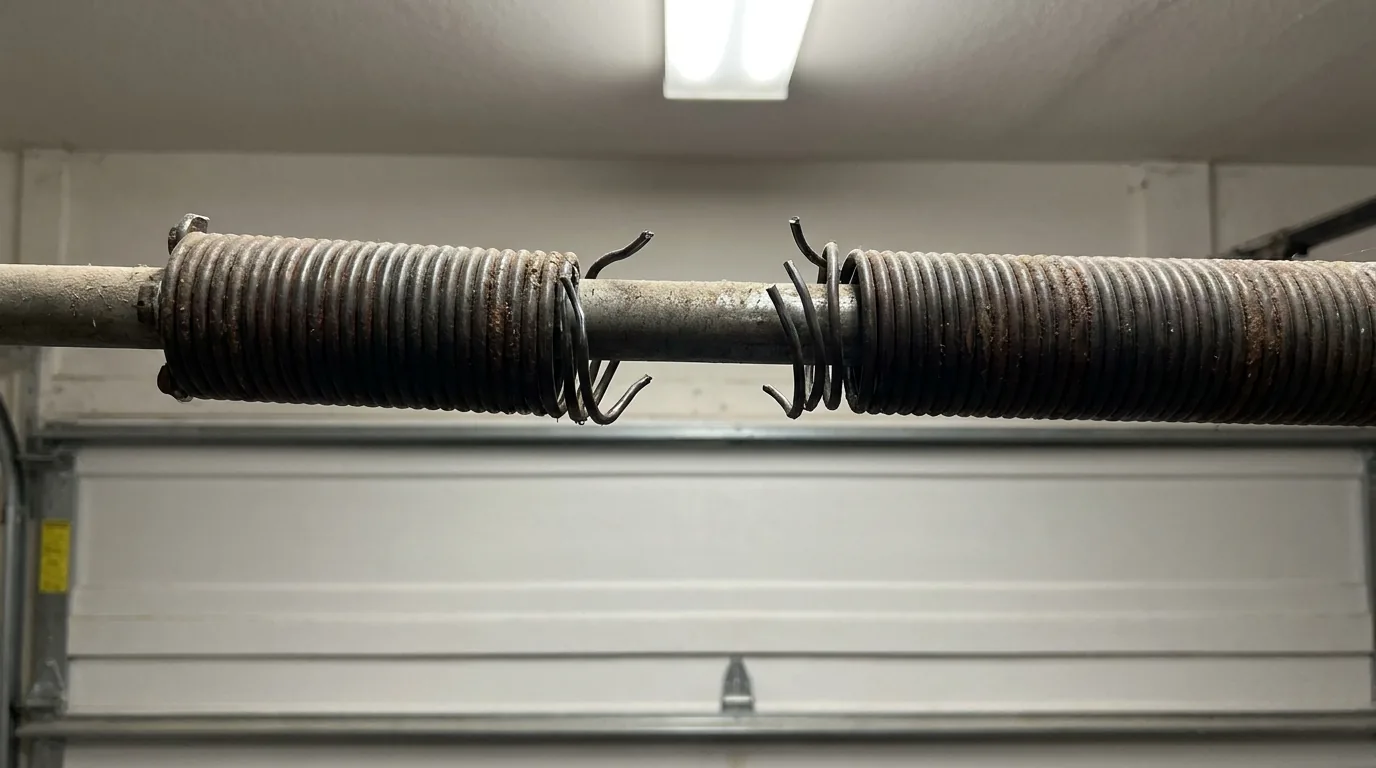
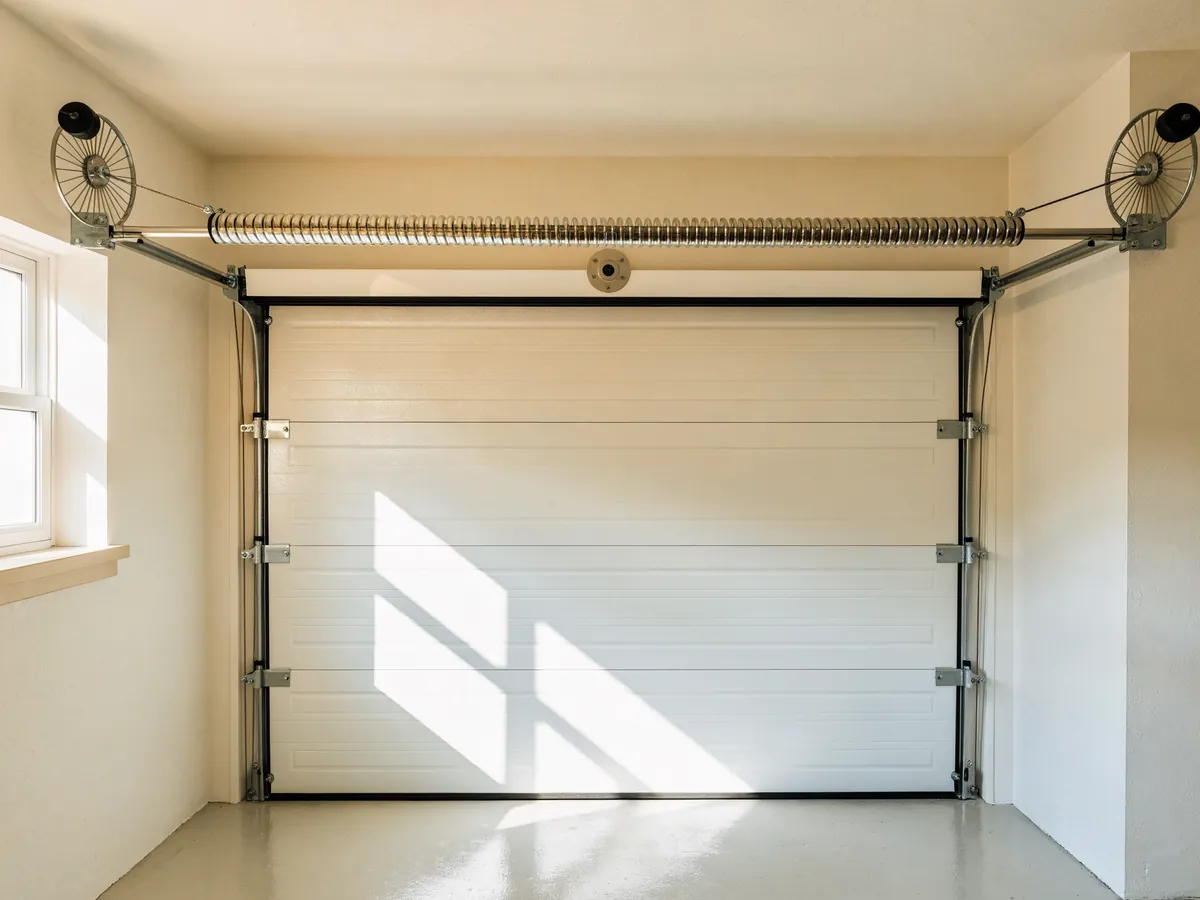
A metal shaft running horizontally across the wall above the door opening, with one or two springs wound around it: torsion.
Long springs stretched along the horizontal tracks on each side, parallel to the ceiling: extension.
That is the whole test. On a Florida house built after about 1990 you will almost always find torsion. On a 1950s to 1970s single in Hialeah, St. Petersburg or the older parts of Fort Lauderdale you may find either, and on a door that was replaced in the 1980s with a low roof above it, extension is common because it needed no headroom.
How each one works
Torsion. The spring is wound around a shaft. Opening the door unwinds it, and that unwinding turns drums at each end of the shaft that wind up the lift cables. The force is applied centrally and evenly across the door.
Extension. The springs stretch as the door closes and contract as it opens, pulling through a pulley system on each side. The force is applied at the two edges of the door, and the two springs age at slightly different rates, which is why an extension door so often hangs a little crooked.
Why torsion is better
Safety. When a torsion spring breaks, it is contained on the shaft. It makes a loud bang and the door stays put. When an extension spring breaks, the stored energy sends the pieces across the garage unless a safety containment cable is threaded through the coil. That cable is why extension installations have them, and it is the first thing we check on an older extension door.
Balance. Central force distribution means a torsion door hangs more evenly and is smoother through its travel. The opener works less hard, which matters when the opener is already fighting summer heat.
Life. Torsion springs are typically rated for about 10,000 cycles, which is 7 to 10 years on a door used three or four times a day. Extension springs run roughly 7,000 to 10,000 and lose tension less predictably as they age. Our guide to how long springs last puts numbers on the cycle count for a Florida garage.
Headroom. Torsion needs clearance above the door; extension needs side room along the tracks. Which one you have often comes down to what the garage allowed when the door was fitted.
Opener options. A wall mounted jackshaft opener drives the torsion shaft directly and cannot be fitted to an extension system at all. In a low headroom garage that is a real constraint, and our low headroom opener guide explains it.
Rated doors. Every hurricane rated door we install comes with torsion springs sized to the door. A wind rated or impact rated door is heavier than the unrated door it replaces, because of the struts and the heavier sections, and the spring has to be matched to that weight.
Florida wear: cycles, humidity and salt
Springs do not fail from cold here. They fail from cycle count, and Florida doors cycle hard because the garage is the storage room, the workshop and the second front door. A family that goes in and out through the garage eight times a day uses up a 10,000 cycle spring in three to four years.
The second Florida factor is corrosion. Humidity and salt air attack the coil surface, fastest within a few miles of either coast, and a pitted coil breaks earlier than a clean one. Extension springs are exposed along their whole length and tend to show the rust first. Torsion springs rust too, and so does the shaft they sit on. A light coat of a garage door lubricant on the coils twice a year slows it down. Rust on the lift cable is the most common visible warning we see, and our guides to rust and Florida humidity and salt air corrosion show what to look for.
The costs
| Florida price | |
|---|---|
| Spring replacement, either type, per spring installed | $150 to $350 |
| Both springs done together | Adds $120 to $250 over one |
| Cable replaced at the same time | $95 to $300 |
| Cable and drum together | $225 to $400 |
| Tension adjustment only | $85 to $140 |
| Conversion, extension to torsion | Quoted in writing per door |
Extension springs are always replaced as a pair; a new spring on one side against a tired one on the other guarantees a crooked door. On a torsion door with two springs, the one that has not broken has cycled exactly as many times as the one that has, which is why the both springs price exists. Our spring replacement page, our spring replacement cost guide and the prices page carry the full list.
Conversion from extension to torsion is a real job: a shaft, drums, bearing plates, new cables and the springs themselves, plus the headroom to fit them. We quote it per door, in writing, and it costs more than a straight spring replacement because most of the hardware is new.
When conversion makes sense
Convert if you plan to keep the door for years, if you want a wall mounted jackshaft opener, if your extension springs have no safety containment cables, or if the door has never hung evenly.
Do not convert if the door itself is near the end of its life, or if it is unrated and you are in a part of the state where replacing it with a rated door is on the horizon anyway. Put the money towards the replacement instead, and specify torsion on the new one, which is what a rated door comes with. Our guide on repair or replace sets out the arithmetic.
Conversion needs headroom above the opening. In a low headroom garage a rear mounted low clearance torsion kit exists, and it costs more.
What neither of them is
Neither is a DIY job. Both store enough energy to cause serious injury and both release it instantly if handled wrong. Extension springs are not the safer option because they look less dramatic; an unrestrained extension spring letting go is the injury we hear about most. Our article on why not to replace a torsion spring yourself explains what the winding bars are doing and why the job goes wrong so fast.
If a spring has just broken, do not run the opener. The springs carry the weight of the door, not the motor. Read what to do with a broken spring and call. Spring replacement is a same day job seven days a week, and the emergency premium of $150 to $300 for after hours dispatch is stated before anyone is sent. An annual tune-up at $85 to $160, best in April or May before the season, is when we check the springs, the containment cables and the balance on either system.
Related questions
Do extension springs need safety cables?
Yes, and this is not optional. A safety containment cable runs through the middle of each extension spring so that if it breaks, the pieces stay on the cable instead of flying across the garage. If your door has extension springs with no cables through them, have them fitted.
Is converting to torsion worth it?
On a door you plan to keep for years, usually yes. Torsion springs last longer, balance the door more accurately, and are required if you ever want a wall mounted jackshaft opener. On a door that is close to replacement, or that is unrated and due to be replaced with a rated one, put the money towards the new door.
Which is cheaper to replace?
Either type is $150 to $350 per spring installed in Florida, and both springs together adds $120 to $250 rather than doubling. Extension springs are always replaced as a pair. Over the life of the door the cost is comparable, and torsion balances better.
Why do garage door springs break in Florida if there is no cold?
Cycle count and corrosion. A standard spring is rated for about 10,000 cycles, which is 7 to 10 years on a door used three or four times a day and far less on a door that is the family's front door. Humidity and salt air pit the coil, fastest near either coast, and a pitted coil breaks sooner.
Which type rusts faster?
Extension springs show rust first because the whole coil is exposed along the track, but torsion springs and the shaft they sit on rust too. A light coat of garage door lubricant on the coils twice a year slows it. Rust on the lift cable is the most common visible warning we see on either system.
Can I fit a jackshaft opener to extension springs?
No. A wall mounted jackshaft opener drives the torsion shaft directly and cannot be fitted to an extension spring system. Conversion to torsion is part of that job and should be on the written quote.