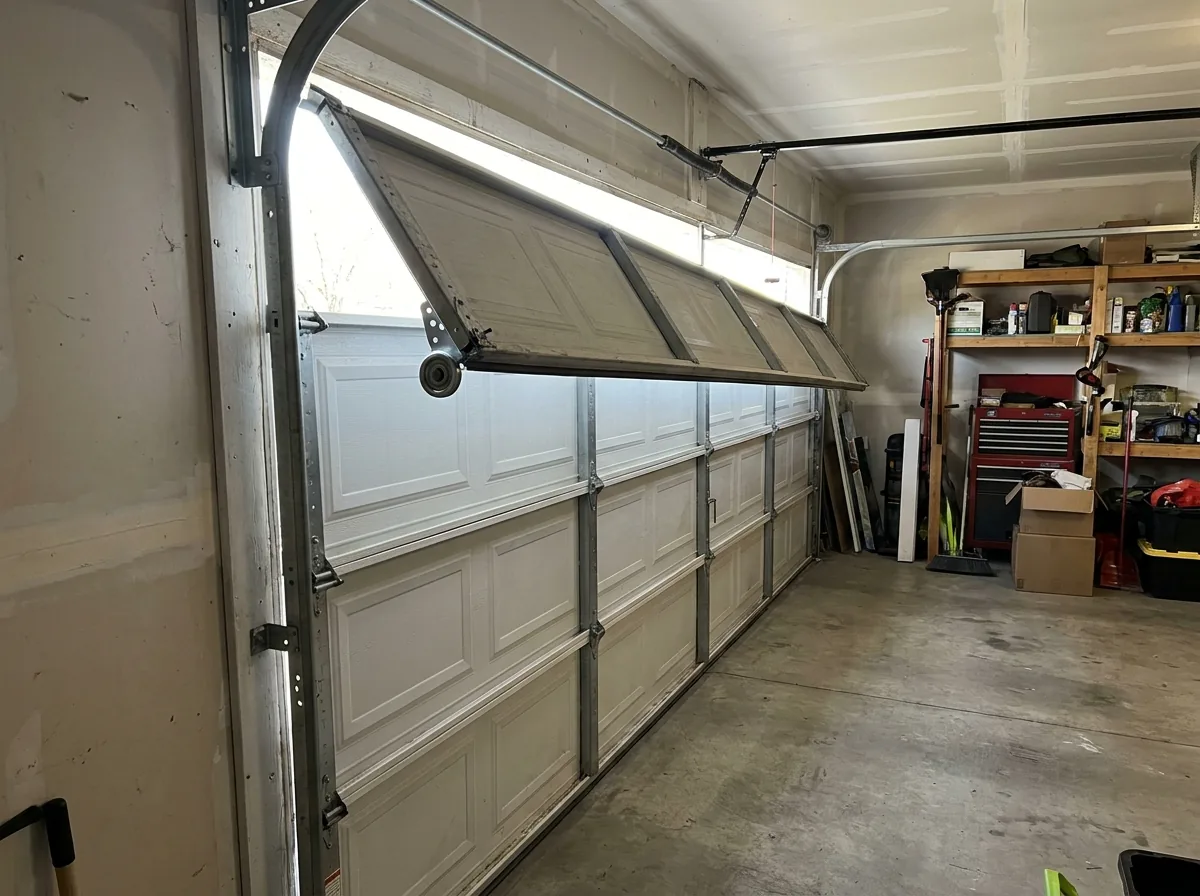
Garage Door Closes Then Reopens: Florida Causes and Fixes
A garage door that closes and immediately reopens is the opener deciding it has hit something. The usual causes are a down travel limit set too far so the door presses into the slab, photo eye sensors misaligned or washed out by afternoon sun, or a door that has grown stiff and trips the force setting. Adjusting limits and sensors is part of a tune-up at $85 to $160, and opener repair runs $95 to $300 if a part has failed.
What the opener is thinking
Modern openers have two independent ways of deciding something is in the way.
The photo eyes watch an infrared beam across the opening about six inches off the floor. Break it and the door stops and reverses before it touches anything.
The force monitor watches how hard the motor is working. If the door meets more resistance than the setting allows, the opener assumes it has hit something and reverses.
A door that comes all the way down, touches the floor and then lifts is almost always the force monitor, and the reason is usually the travel limit rather than a real obstruction. A door that reverses part way down, before it reaches the floor, is more likely the photo eyes. Notice which one you have, because it decides where to look.
Cause one: the down travel limit
The limit tells the opener where the floor is. If it is set slightly too far, the opener drives the door into the slab, meets resistance, and reads that as an obstruction.
The tell is that it happens every time, at exactly the same point, with the door fully down.
Florida has a few ways of moving that point on you. A summer garage runs past 100°F, and the door and track grow a little in the heat, so a limit set on a cool morning sits a fraction lower by late afternoon. A new bottom seal that is thicker than the old one does the same. And the seal matters more here than anywhere: for half the year an afternoon storm puts water at the bottom of the door daily, and a vinyl seal that has swollen or a rubber one that has gone stiff changes how far the door travels before it stops. Sand and grit washed under the seal by that rain will do it too.
The fix is adjusting the down limit on the opener, a dial on older units or a button sequence on newer ones. It is a small correction and it is part of every tune-up we do. If the seal is the problem, replacing it is a cheap part of the same visit.
Cause two: the photo eyes
Check both indicator lights near the floor. Steady on both means aligned. A flickering or dark receiving light means the beam is not getting across.
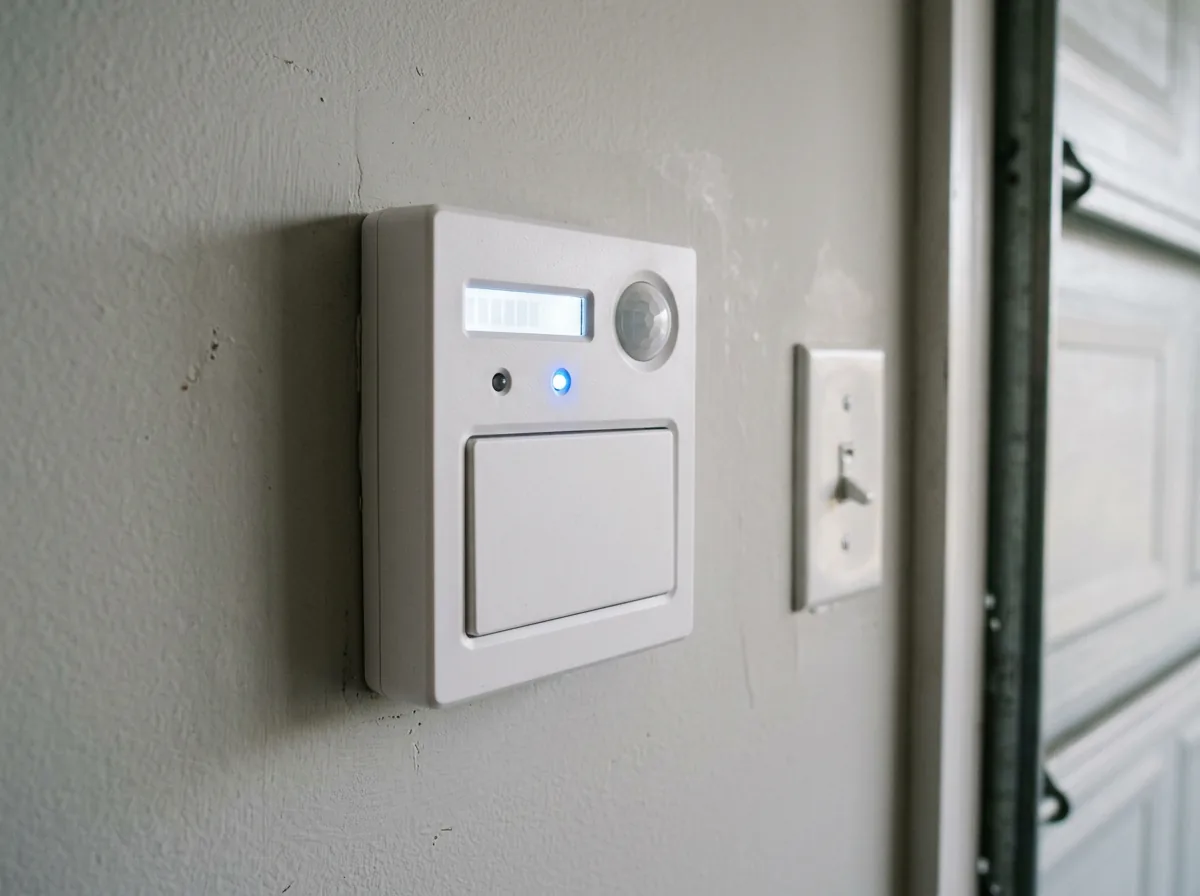
The Florida causes are specific. A west facing garage gets low, direct sun into the receiving eye in the late afternoon, and unlike further north that happens all year. A small hood above the sensor solves it. Ants and small lizards get onto the lens and into the housing. Rain splashes in from the driveway and leaves a film on the lens. And the sensor wire runs along the wall at floor level, which is where storm water sits, so the terminals corrode and the connection comes and goes with the humidity.
Look for a bracket that has been knocked, a wire that has been pinched or chewed, or green crust on the small screw terminals at the back of the sensor. Our guide on safety sensors shows how to realign them, and our guide on a flashing opener light explains what the opener is telling you while this happens.
If the fault is intermittent, or time of day dependent, this is where to look first.
Cause three: the door got harder to move
Less common as a setting problem and more common as a door problem.
Before turning the force up, check whether the door is actually harder to move than it should be. Pull the manual release with the door closed and run it by hand through its full travel. It should move smoothly with one hand and stay wherever you leave it.
If it binds anywhere, the resistance is real, and turning up the force just means the opener pushes through it. In Florida what we find is rusted hinges and dry rollers from a year of humidity, a track that has drifted, or a spring that has lost tension and left the door heavy. That last one is the important one, because an opener working against a fatiguing spring strips its own gears. Our guide on a door that opens slowly covers the balance test in detail.
Causes at a glance
| Cause | What to check | What it costs |
|---|---|---|
| Down limit set too far | Happens every time, door fully down, seal compressed hard | Adjusted during a tune-up, $85 to $160 |
| Swollen or stiff bottom seal | Water sits at the seal daily, seal looks fat or cracked | Seal replaced on the same visit, quoted as a part |
| Photo eyes misaligned or blocked | One sensor light flickering or dark, afternoon sun, insects | Realignment during a tune-up; sensor pair replaced as opener repair from $95 |
| Corroded sensor wire | Green terminals, fault comes and goes with humidity | Opener repair $95 to $300 |
| Door binding or heavy | Fails the hand test, rust on hinges, dry rollers | Tune-up $85 to $160; roller set quoted separately |
| Spring losing tension | Door drops when released at waist height | Spring replacement $150 to $350 per spring |
| Logic board misreading force | Everything above checks out, unit is older and runs hot | Opener repair, or a new opener at $275 to $600 if the board is not worth it |
All prices are starting prices for a standard single door. The full list is on our prices page.
The one thing not to do
Do not solve this by turning the force up until the door stays down.
That setting is the only thing stopping the door from crushing whatever is under it, and on most openers it is a small dial that is easy to turn too far. A door that reverses is telling you something rather than misbehaving. Our article on child and pet safety explains what the force setting is protecting.
When to call
If the door reverses every time and you have checked the sensors and the seal, book a tune-up. If it started after a storm or a power outage, or the opener is also doing other odd things, book opener repair and tell us what you have seen.
An opener that has spent ten Florida summers in a hot garage will sometimes start misreading force because the board itself is failing, and we will tell you whether repair or replacement is the better spend before you commit to either. Our guide on a door that will not close covers the related faults. We serve Broward County, Palm Beach and the Treasure Coast and the rest of the state, same day, seven days a week.
Related questions
Why does it only happen in the late afternoon?
Two Florida reasons. Low sun into a west facing garage washes out the receiving photo eye, and that happens all year here, not just in one season. And a garage that has been over 100°F all afternoon has a door and track that sit fractionally differently from the cool morning, which can be enough to push a tight down limit into the slab.
Why did it start after a rainstorm?
Water at the bottom seal is the usual reason. The seal swells, or sand and grit wash under it, and the door meets resistance an inch before the limit expects it. Storm water sitting against the sensor wire at floor level can also corrode the terminals and make the sensors drop out.
Can I just turn the force up?
You can, and it is often the wrong fix. Turning the force up tells the opener to push harder against whatever it meets, including a person or a pet. Find out why it is meeting resistance first. If the door is heavy by hand, the answer is a spring or a tune-up, not a dial.
Why does it reverse before it reaches the floor?
A reversal part way down is the photo eyes, not the limit. Something is crossing the beam, one sensor has been knocked out of line, or the wire to one of them is failing. A reversal that happens only after the door touches down is the force monitor and usually the travel limit.
Is a door that keeps reversing dangerous?
The reversing itself is the safety system working. What is dangerous is the fix people reach for, which is winding the force up until the door stays down. A door left open all day because it will not close is a security and, in storm season, a structural problem, so get it looked at rather than living with it.