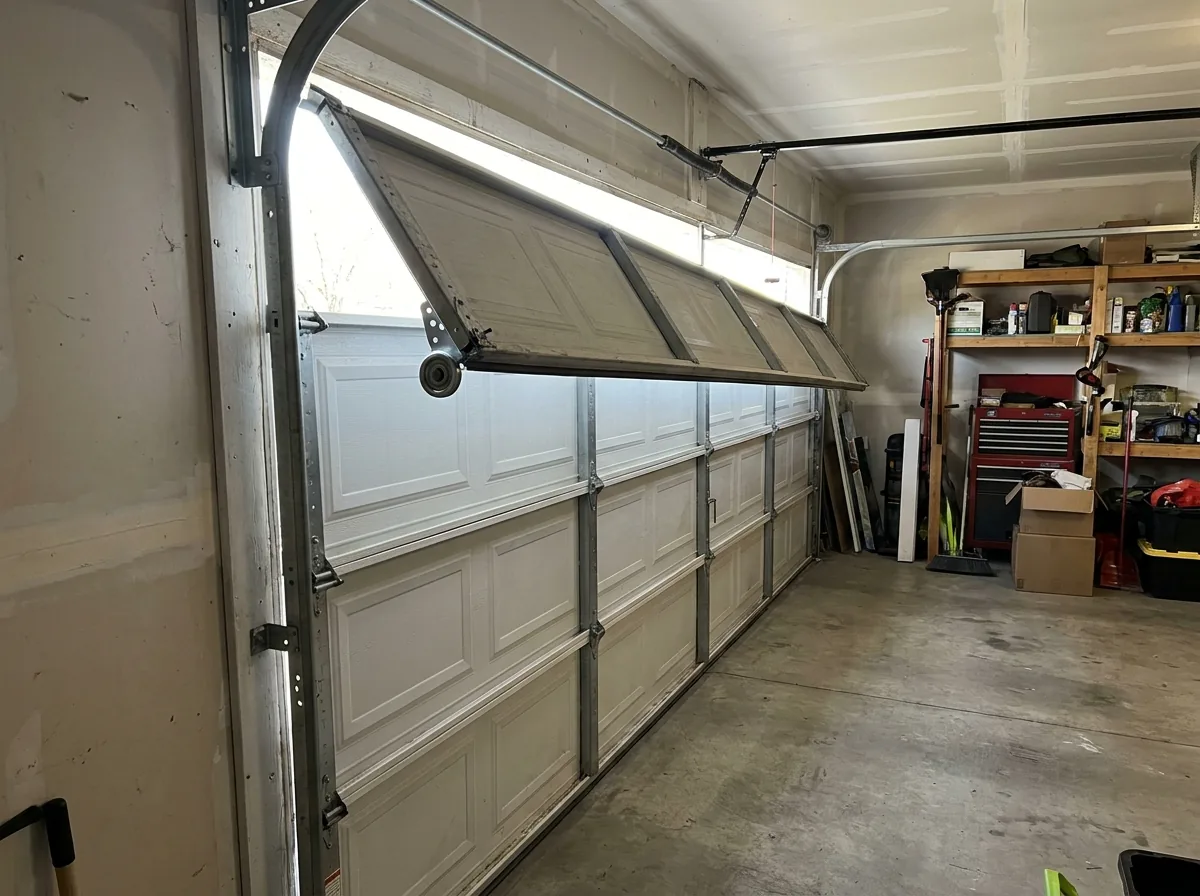
Garage Door Safety for Children and Pets in Florida
Every automatic garage door should have photo eye sensors mounted no more than six inches above the floor, a down force set so the door reverses on contact, and a wall control at least five feet up where a child cannot reach it. In Florida the garage is the second front door, so the door cycles more and the tests matter more. Test the sensors and the reversal twice a year, and replace any opener made before 1993 regardless of how well it still runs.
Why this matters more in a Florida garage
In most of the country the garage is where the car sleeps. Here it is the second front door. Children come and go through it, bikes and scooters live in it, the dog naps on the cool slab in the shade of the opening, and the door cycles six to ten times a day instead of twice.
More cycles mean more moments when a small person or an animal is in the opening while the door is moving. The three protections below are the same everywhere. The number of times a day they get tested for real is higher here.
The three protections
Photo eye sensors. An infrared beam across the opening, six inches or less above the floor. Break it while the door is closing and the door reverses. We explain how they work and how to align them in our guide to garage door safety sensors.
Force reversal. The opener monitors how hard it is working. If it meets more resistance than its setting allows, it stops and reverses. This is what catches whatever the beam misses.
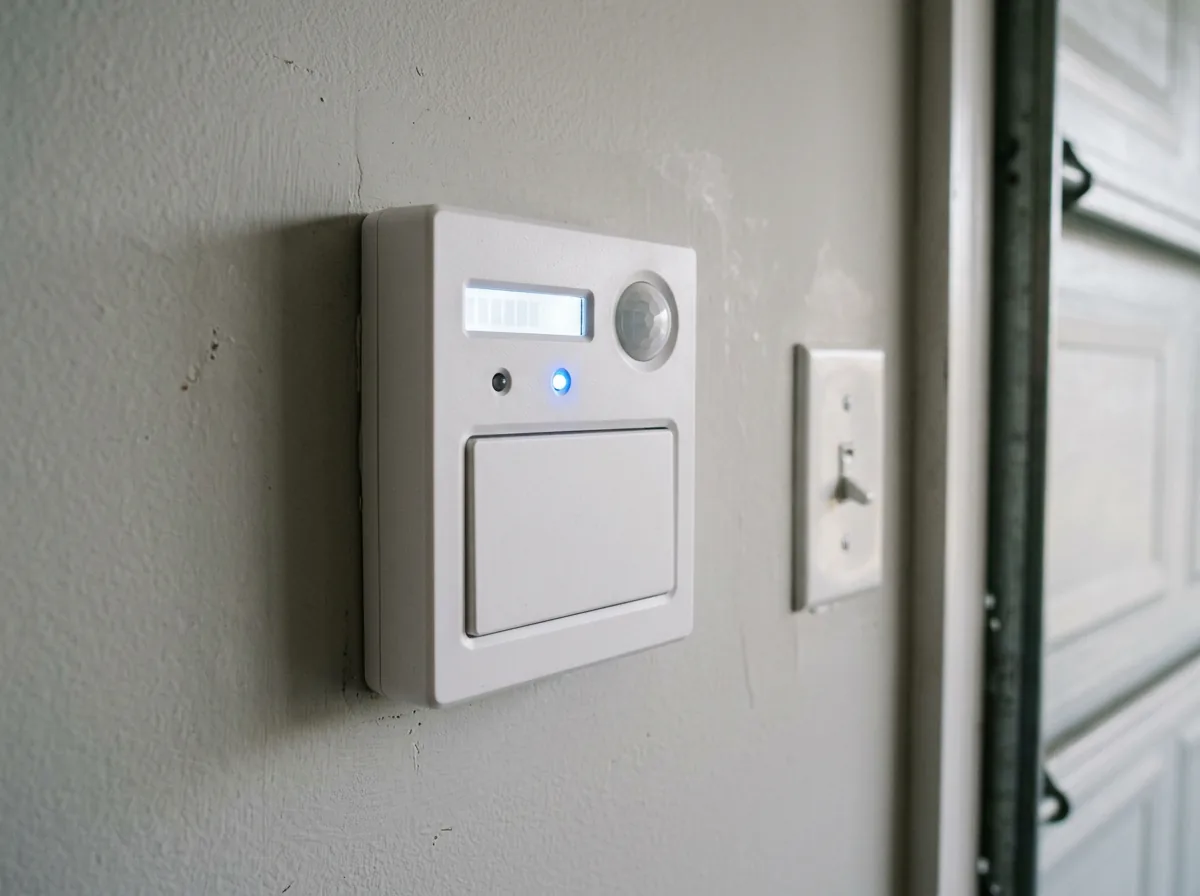
Physical placement. The wall control high enough that a child cannot reach it, and positioned so the door is visible from it.
All three exist because garage doors have killed children. Federal rules made an entrapment protection system mandatory on residential openers made after January 1993.
The five minute test
| Test | How | Pass | Fail |
|---|---|---|---|
| Sensor test | With the door open, press close and pass an object through the beam near the floor | Door reverses at once | Door keeps closing |
| Reversal test | Lay a piece of two by four flat on the floor in the opening and close the door onto it | Door touches, stops, reverses | Door pushes and stalls |
| Wall control | Measure from the floor to the button | Five feet or more | A child can reach it |
| Release cord | Measure from the floor to the handle | Six feet or more | It hangs lower |
Use an object for the sensor test, never a hand or a foot. Do both moving tests twice a year, alongside the balance test in our maintenance checklist. April or May, before storm season, is a good time for one of them, because that is also when a tune-up does the most good.
The mistakes that disable all of this
Sensors mounted too high. The most common one. Somebody mounts them at knee height because it is easier, and a toddler lying down or a dog asleep in the opening is below the beam entirely.
Force turned up to stop nuisance reversals. A door that reverses for no obvious reason is annoying, and the tempting fix is turning up the force. That setting is the only thing stopping the door from crushing what is under it. Find out why it is reversing instead. Our guide on a door that closes then reopens covers the usual causes.
Sensors bypassed after a sun glare problem. West facing Florida garages lose the beam to low afternoon sun, the door refuses to close at six in the evening, and someone taps the sensors up out of the way or wires around them. The glare has a fix that takes ten minutes. Removing the sensors is not it.
Hold to close used as a habit. Most openers close the door if you hold the wall button down continuously, which is meant for a one-off when a sensor has failed. Some households use it daily. Every time, the door is closing with no protection at all.
A wall button within reach. A three year old who can reach the button can operate a two hundred pound door.
A manual release cord hanging low. Children pull them. On a door with a broken spring, pulling the release with the door up lets it fall. Our guide to the manual release covers where it should hang and when it is safe to use.
Pets, specifically
Dogs are the most common animal we hear about, and the pattern is always the same: the dog is lying across the threshold in the shade, someone presses the remote from the car, and the dog either does not move or moves late. Working sensors at the right height are what catch that.
Cats climb. A cat on top of the door sections or in the track gets carried up into the opener rail or pinched between sections. If you have a cat that spends time in the garage, look before you press the button.
And on heat: a closed Florida garage in July is over 100°F by early afternoon. It is not a safe place to leave an animal for the day, whatever the door is doing.
What to teach
That the garage door is not a toy, that nobody stands or plays under it, and that only adults press the button.
For older children with their own remote: the door is watched until it is fully closed, and nobody runs under a closing door. The habit of ducking under a door on its way down is the one we would most like to see end.
When to replace rather than adjust
An opener manufactured before 1993 has no photo eye sensors, and there is no adjustment or retrofit that reliably adds them. Our guide on how old is too old for an opener explains how to date yours.
Replace it. A new opener is $275 to $600 installed, and a unit that age in a Florida garage has also spent thirty summers above 100°F, so its board and gears are on borrowed time anyway. On a house with children or pets, this is not a repair decision.
What we charge
Sensor replacement, force adjustment and travel limit work fall under opener repair, which starts at $95 and typically runs $95 to $300. A tune-up at $85 to $160 includes the sensor test, the reversal test and the balance test, and we show you each one working rather than telling you about it. A new opener with sensors is $275 to $600 installed through opener installation.
Every price on this site is a starting price for a standard single door, listed on our price list, and you get a written estimate before any work begins. We cover the whole state, from Miami-Dade County to North Florida.
Related questions
How high should the wall button be?
At least five feet from the floor, and placed where the door is visible from it. Both parts matter: high enough that a small child cannot reach it, and positioned so whoever presses it can see what the door is doing.
Are the sensors enough on their own?
No. They protect the beam line, about six inches off the floor. The force reversal protects against anything the beam misses, including a child on a step stool or a dog that jumps up as the door comes down. Both need to work.
What about the manual release cord?
It should hang no lower than six feet from the floor. Children pull them, and a released door with a broken spring drops. In older Florida houses with low headroom the cord often ends up within reach, so shorten it.
Is it safe to leave a dog in the garage during the day?
Not in summer. A Florida garage reaches 100°F and more by early afternoon, and a dog lying in the shade of the opening is also lying under the door. If the garage is the only option, the door stays closed, the sensors have been tested, and there is water and airflow.
My door reverses for no reason. Can I just turn the force up?
No. That setting is the only thing stopping the door from pushing down on whatever is under it. A door that reverses on its own has a reason, usually the sensors, the travel limit or something binding in the track, and the reason is what gets fixed.