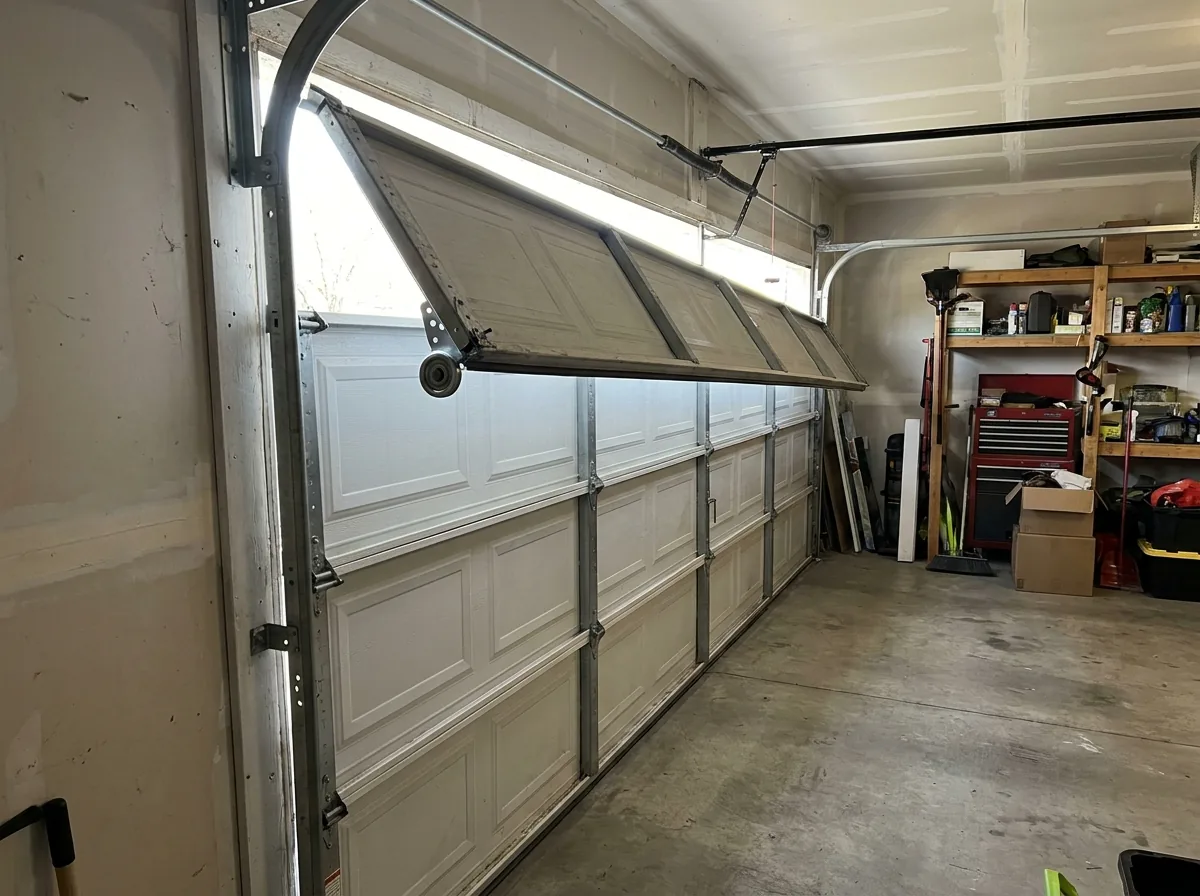
Garage Door Opening Slowly: Causes and Costs in Florida
A garage door that opens slowly is almost always losing spring tension. The springs carry the weight and the opener only guides the door, so as the springs wear the opener starts lifting weight it was never built to lift. In Florida, rust on the hardware, dry rollers and a garage that sits above 100°F all summer make it worse. Spring replacement runs $150 to $350 per spring installed, and a tune-up with lubrication and adjustment is $85 to $160.
The thirty second test
Close the door. Pull the red manual release cord so the opener is out of the picture. Lift the door to about waist height by hand and let go.
It stays where you left it. The door is balanced and the springs are doing their job. The problem is friction or the opener.
It sinks slowly. The springs are losing tension. This is the answer in most of the slow doors we see.
It drops. The springs are effectively finished, and you should not run the opener again until they are replaced.
That single test separates the causes into two groups, and it is the first thing we do on any slow door call. If you are not comfortable with the release cord, our guide to the manual release walks through it.
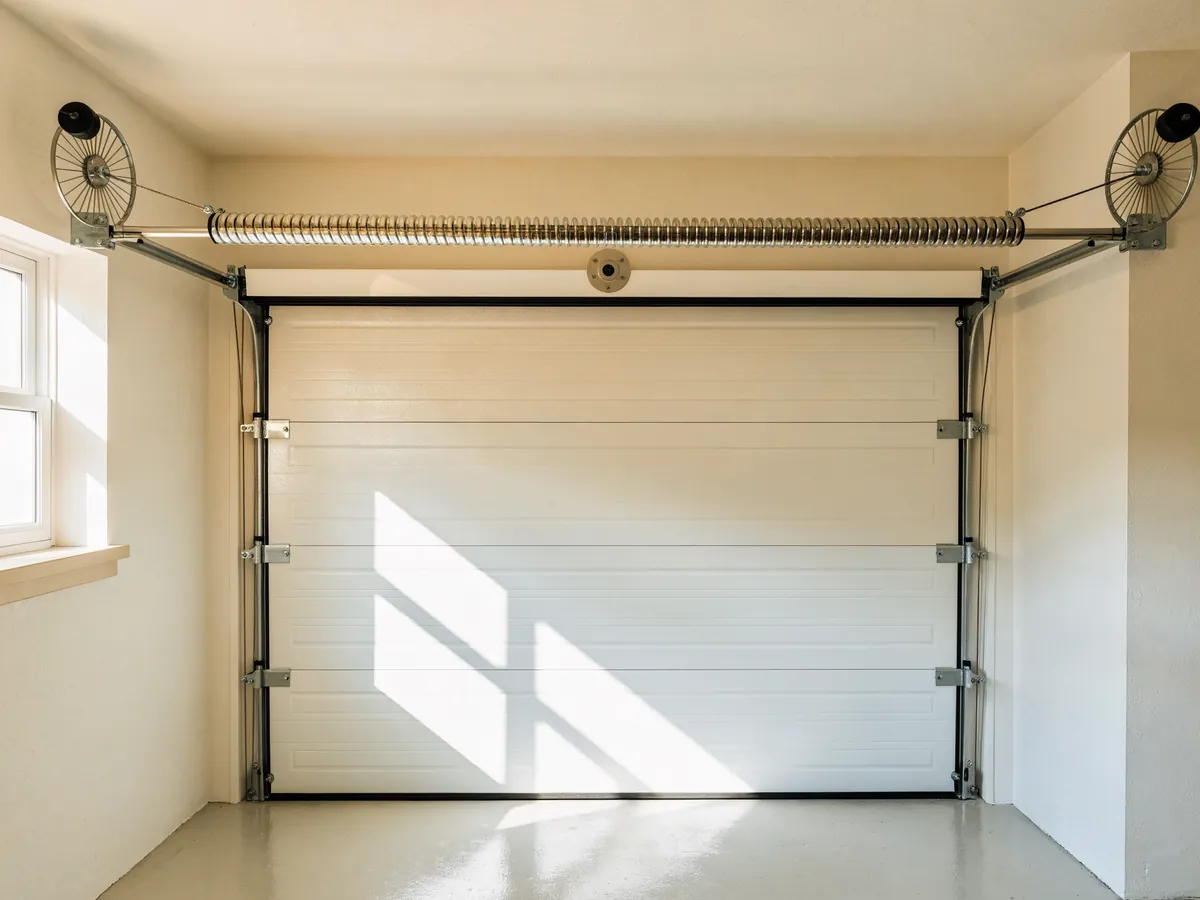
Why Florida doors get slow earlier
Springs are rated in cycles, not years. A standard torsion spring is good for about 10,000 opens and closes. In a Florida house the garage is the storage room, the workshop and the second front door, so a family door cycles six to ten times a day and reaches that count in five to seven years rather than ten. In golf cart communities and 55 plus developments the door runs several times a day for two people, and the count adds up just as fast.
Humidity does the rest. Moisture pits the surface of the spring coil, and every pit is a place the steel can start to crack. Within a few miles of either coast, salt air speeds that up. A pitted spring loses tension faster than a clean one, so the door gets heavier sooner. Our article on rust and Florida humidity covers what to look for.
The third factor is heat. An attached garage in Fort Myers or Orlando sits above 100°F for most of the summer. The opener motor, its start capacitor and its logic board are all mounted at ceiling height where the air is hottest, and a unit that is already working too hard because the door is heavy is the one that fails first. We cover that side in summer heat and garage door problems.
If the springs are tired
This is the usual answer. Springs lose tension gradually as they approach the end of their cycle life, and long before one snaps the door has become heavier than the opener expects.
What happens next, in order: the opener strains, then it starts tripping its force limit and stopping partway, then the plastic gear kit strips, and eventually the spring breaks anyway. Each step costs more than the one before it.
Replacing the springs at the point where the door starts running slowly costs $150 to $350 per spring installed, and doing both springs on a double door at the same visit adds $120 to $250 rather than doubling the price. It prevents everything downstream of it, including the gear kit and the opener.
If the door is balanced but still slow
Then it is friction somewhere in the hardware, or it is the opener itself.
Seized or dry rollers. Spin each one by hand with the door closed. They should turn freely. A roller that slides instead of rolling is dragging the door up the track, and a set of rusted nylon or steel rollers is common on any door that has never been serviced. Details in the roller replacement guide.
Dry hinges and bearings. The end bearing plates and the center bearing on the torsion shaft dry out and stiffen. Lubricate hinges, rollers and bearings with a silicone or white lithium spray. Never grease the track; it collects grit and sand and makes the drag worse.
Track alignment. A track that has spread, been knocked by a car bumper or has a loose lag bolt into the jamb adds resistance across the whole travel. This is a track adjustment or off-track repair from $140.
Opener force and speed settings. Most openers let us set travel force, and some let us set speed. A force setting that has drifted low gives you a slow, hesitant door with no mechanical fault at all.
The opener itself. The start capacitor weakens with age and heat, and a tired capacitor gives exactly this symptom: the motor runs, but with less torque than it had. A logic board that has been cooked through a few Florida summers behaves the same way. Both are opener repairs in the $95 to $300 range, provided the unit is worth repairing.
What it costs
| Cause | What to check | What it costs |
|---|---|---|
| Springs losing tension | Door sinks or drops on the balance test | $150 to $350 per spring; both together adds $120 to $250 |
| Dry or seized rollers and hinges | Rollers slide instead of turning, hinges squeal | Part of a $85 to $160 tune-up; rollers quoted on the visit |
| Track out of line | Rubbing at one point in the travel, loose brackets | $140 to $600 off-track or track repair |
| Force or limit setting drifted | Door moves freely by hand but opener hesitates | Part of a tune-up, or $95 to $300 opener repair |
| Weak capacitor or logic board | Motor hums, slow start, worse on hot afternoons | $95 to $300 opener repair |
| Opener at end of life | Over 15 years old, no sensors, parts unavailable | $275 to $600 new opener installed |
Every price here is the same one on our prices page, and each is a starting price for a standard single door in normal condition. We confirm the number before we touch anything.
The order to spend money in
Springs first, then hardware, then the opener. Doing it the other way round is how people end up buying two openers in five years for a problem that was never the opener.
A tune-up at $85 to $160 covers the balance test, lubrication, roller and hinge inspection, and the force and limit settings. On a door that is simply dry and out of adjustment, that is the whole fix. On a door with tired springs, the tune-up tells you so, and the spring quote is given on the same visit.
The best month for that visit is April or May, before the summer heat and before hurricane season starts on 1 June. A door that opens slowly in May is a door that stops halfway in August.
Same-day help across Florida
We work seven days a week across Miami-Dade County, Broward County, Palm Beach and the Treasure Coast, Tampa Bay, Central Florida, Southwest Florida and North Florida. Call (561) 897-9930 and tell us what the door does on the balance test. That one detail lets us bring the right springs on the first trip.
Related questions
Will a new opener fix a slow garage door?
Usually not, and it is an expensive way to find out. If the door is heavy because the springs are tired, a new opener lifts the same weight and wears out the same way. Fix the balance first, then judge the opener. A tune-up is $85 to $160 and tells you which one it is.
Why is my garage door slower in the summer?
Two reasons. A Florida garage runs above 100°F in July and August, and an opener motor that is already marginal loses torque when its capacitor and logic board get that hot. The grease on the rollers and hinges also thins and runs off, so the hardware gets dry and drags. A spring that was borderline in March is a slow door by August.
Can rust make a garage door open slowly?
Yes. Humidity and salt air pit the spring coils, seize roller bearings and stiffen hinges. A rusted roller slides in the track instead of rolling, and every one of them adds drag. Near either coast we see this on doors that are only five or six years old.
How slow is too slow?
A typical residential opener takes 12 to 15 seconds to open a 7 foot door. If yours has gone past 20 seconds, or it pauses and shudders on the way up, the door is heavier than the opener expects and the springs need to be checked before the gear kit strips.
Is a slow garage door dangerous?
The door is not about to fall, but an unbalanced door is heavy. If you pull the manual release to move it by hand you will feel every pound of a 130 to 350 pound door, so lift with a second person and keep hands away from the section joints.