Garage Door Tune-Up Cost in Florida: $85 to $160
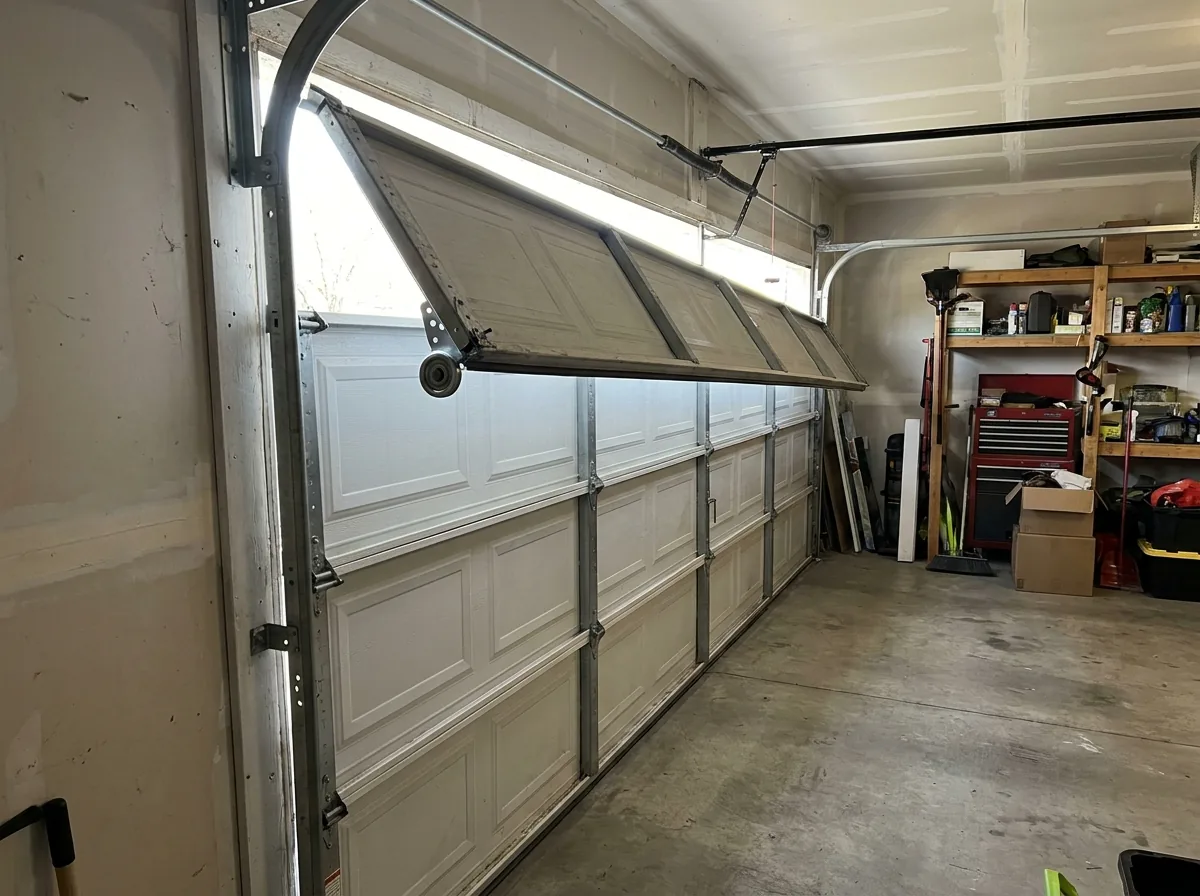
A garage door tune-up in Florida costs $85 to $160. It should include a balance test, cable and drum inspection, roller and hinge check, hardware tightening, track alignment, lubrication, safety sensor alignment, weather seal check and correct setting of the opener force and travel limits. Book it in April or May, before hurricane season starts on 1 June, and twice a year within a few miles of the coast.
What it should include
A tune-up that costs $85 and takes twenty minutes is worth what you paid. Here is the full list of what a real one covers.
Balance test. Disconnect the opener, lift the door halfway by hand, and let go. It should stay put. If it drops or rises, the spring is not matched to the door and everything else is downstream of that.
Cables and drums. Check for fraying at the drum, rust at the bottom bracket, and even tension on both sides. In Florida this is the check that finds the most, because a rusting cable at the bottom bracket is the most common visible warning on any door here.
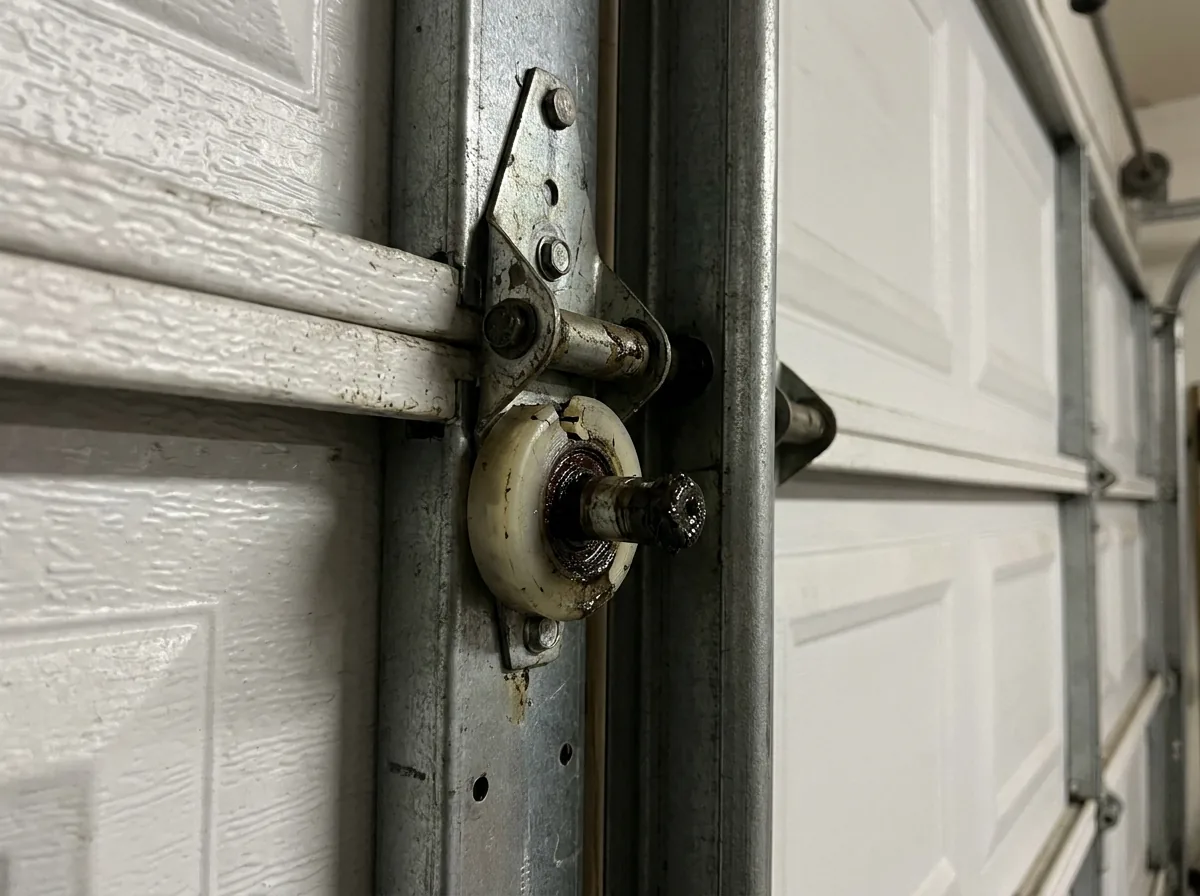
Rollers. Check every roller turns freely. Seized rollers drag, wear the track, and eventually derail the door. Nylon rollers do not rust and run quieter, which matters on the coast.
Hinges and brackets. Check for cracks and rust, particularly at the end hinges which carry the roller load, and at the bottom brackets which sit in water for half the year.
Hardware. A garage door vibrates every time it runs. Bolts work loose. On a wind-rated door the strut bolts and track fixings are what hold the door in the opening under pressure, so tightening them is not cosmetic.
Track alignment. Check the track is plumb, evenly spaced and firmly fixed to the jamb along its full length.
Lubrication. Springs, hinges, rollers, bearings and the opener rail. Not the track itself, which should be clean and dry. Our guide to how to lubricate a garage door covers what to use between visits.
Safety sensors. Check alignment and mounting height. They belong no more than six inches above the floor, which is the height at which they will actually catch a child or a pet.
Opener force and travel. Check the door reverses on contact and that the travel limits stop it in the right places. Test the battery backup if the opener has one, because a backup that has quietly died is found on the night the power goes out.
Weather seal. Check the bottom seal is intact and sitting flat. The seal is what keeps daily afternoon rain off the bottom section and the bottom brackets.
What it costs
| Service | Price |
|---|---|
| Tune-up, single or double door | $85 to $160 |
| Additional doors, same visit | Less per door |
| Rollers, hinges or seal found worn | Quoted separately, shown to you first |
| Cable found frayed, replaced | $95 to $300 |
| Spring found weak, replaced | $150 to $350 per spring |
| Opener fault found, repaired | $95 to $300 |
The tune-up itself is the $85 to $160 on our price list, with a single door at the low end and a heavy double at the top. Anything we find is priced at the published rate for that repair, and you decide.
Why it is the best value item on the list
Almost every emergency call we take has a cheaper version of itself that happened months earlier and was ignored.
A grinding noise is a dry roller bearing, which is a small part replaced during the visit. Left alone, it seizes, drags in the track, and takes the door off it. That is now a $140 to $600 off-track job.
A slightly frayed cable is a $95 to $300 replacement. Left alone, it snaps, the door drops on one side, and the repair becomes the off-track job above plus the cable.
A door that has gone slightly out of balance is a spring adjustment. Left alone, the opener compensates for months, then the board or the gear gives up in the July heat, and that is $95 to $300 to repair or $275 to $600 to replace. Our article on summer heat and garage doors explains why Florida openers die in August.
Timing it: April or May
The most useful time to have this done in Florida is April or May, and the reason is the calendar. Hurricane season runs from 1 June to 30 November. A door that has been checked in the spring goes into the season with tight track fixings, sound hinges, an intact seal and a working battery backup. A door that has not been checked finds out what was loose during the first tropical storm.
The spring visit also comes before the summer heat, which is when openers fail, and it is the window in which a bracing kit or a new rated door can still be ordered and installed before June. If the tune-up finds that your door has no wind rating at all, that is the month to hear it.
Seasonal residents in Naples, Bonita Springs, Venice and Palm Beach Gardens should book the visit for the week before they leave in the spring, or the week they return in November. A door that sits closed for six months in coastal humidity is the door most likely to have a rusted cable waiting.
Coastal doors: twice a year
Within a few miles of either coast, once a year is not enough. Salt air works on the cable, the spring coil, the hinges and the bottom brackets all year, and the difference between a spring and an autumn check is often the difference between a cable replaced and a door on the floor. Cape Coral, Fort Lauderdale east of US 1, Clearwater, Pompano Beach, Jupiter, Melbourne, St. Augustine and Palm Coast are all in that band. Our article on rust and Florida humidity covers the between-visit rinse that slows it down.
What you get afterwards
A written list of what was checked, what passed, and what is worth watching, with a photograph of anything we recommend replacing. If nothing needs doing, the list says so. If something does, it is priced at the published rate and you can book it or not. Our maintenance checklist is the same list, for the months in between.
We tune up doors across Southwest Florida, Broward County, Central Florida and every region on the site, with spring slots filling from March onward.
Related questions
How often should a garage door be serviced in Florida?
Once a year for a door used daily, and twice a year for a door within a few miles of either coast, where salt air corrodes cables, springs and brackets faster. Doors that cycle several times a day, as they do in golf cart communities, also benefit from a second visit.
When is the best time for a tune-up in Florida?
April or May. Hurricane season runs 1 June to 30 November, and a tune-up in the spring means the tracks, hardware, bracing and bottom seal are checked before the first storm rather than after it. It is also before the summer heat that fails opener boards.
Does a tune-up extend the life of the springs?
Not the spring itself, which fails on cycles rather than on condition. What it does is catch the things that make springs work harder than they should, such as seized rollers, misaligned track and a door that has gone out of balance, and it catches rust early enough to matter.
Is a tune-up just an excuse to sell repairs?
It can be, which is why the report matters. A proper tune-up ends with a list of what was checked, what passed, and what is worth watching. Anything recommended should be shown to you and priced at the published rate, and you can decline it.
Does a tune-up include hurricane preparation?
The tune-up checks the things a storm tests: track fixings, strut bolts, hinge condition, the bottom seal and any bracing kit hardware. It does not make an unrated door rated. If your door has no wind rating label, we tell you, and the options are a bracing kit where Florida Product Approval allows one or a rated door.