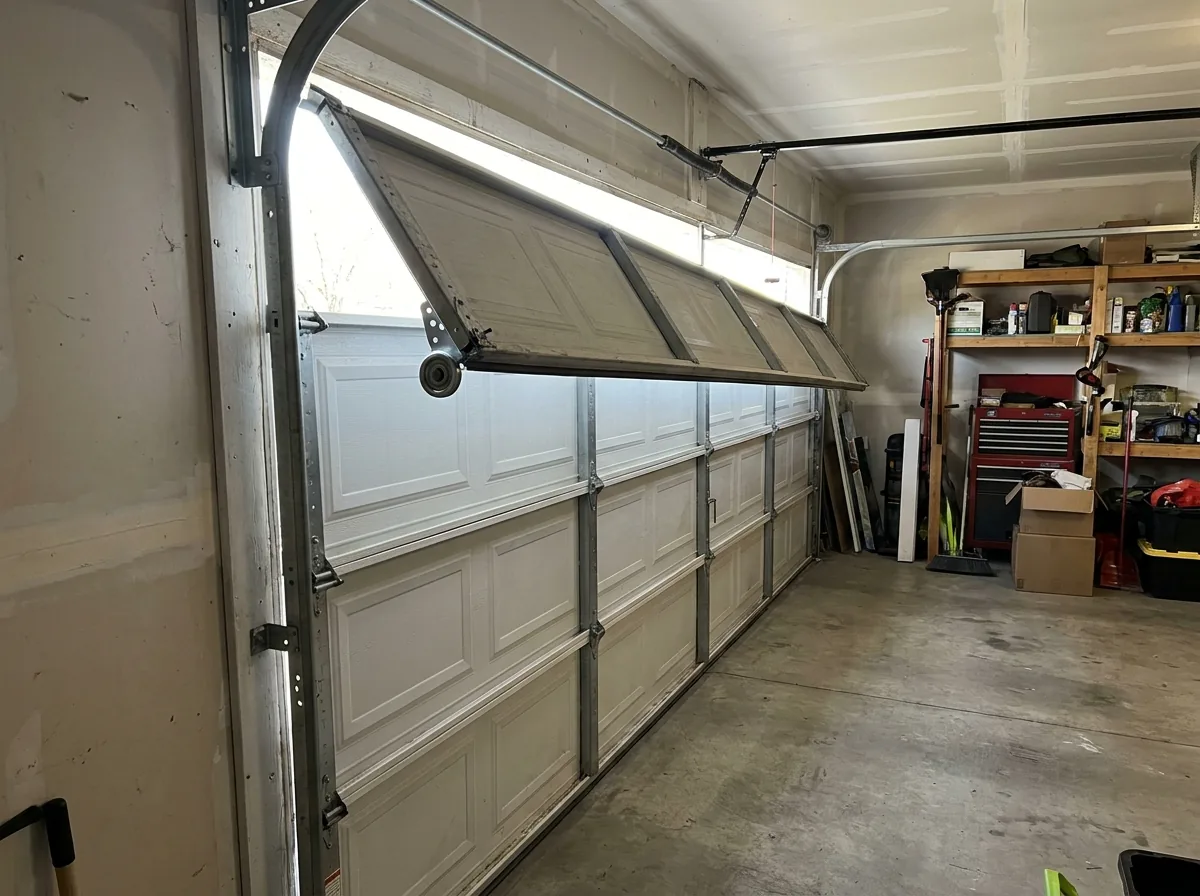
Garage Door Technician: What They Actually Do on a Call
A garage door technician is a specialist tradesperson who diagnoses and repairs door hardware, springs, cables, tracks and openers. In Florida a full door replacement needs a permit pulled by a licensed contractor, while most repairs do not, so the company's license and insurance are what you check. A real technician tests the door balance by hand before quoting, carries common parts on the van and can explain why a part failed. A salesman quotes a new door from the driveway.
The names all mean the same thing
People search for a garage door tech, a garage door technician, garage door experts, garage door specialists and a garage door doctor. In this trade they all describe the same person: someone who comes out, works out what broke, and fixes it.
None of those words is a qualification. There is no exam that makes somebody a garage door expert and no register of garage door doctors. They are marketing terms, which is worth knowing before you assume one company is more qualified than another because of what it calls its staff.
What the job actually is
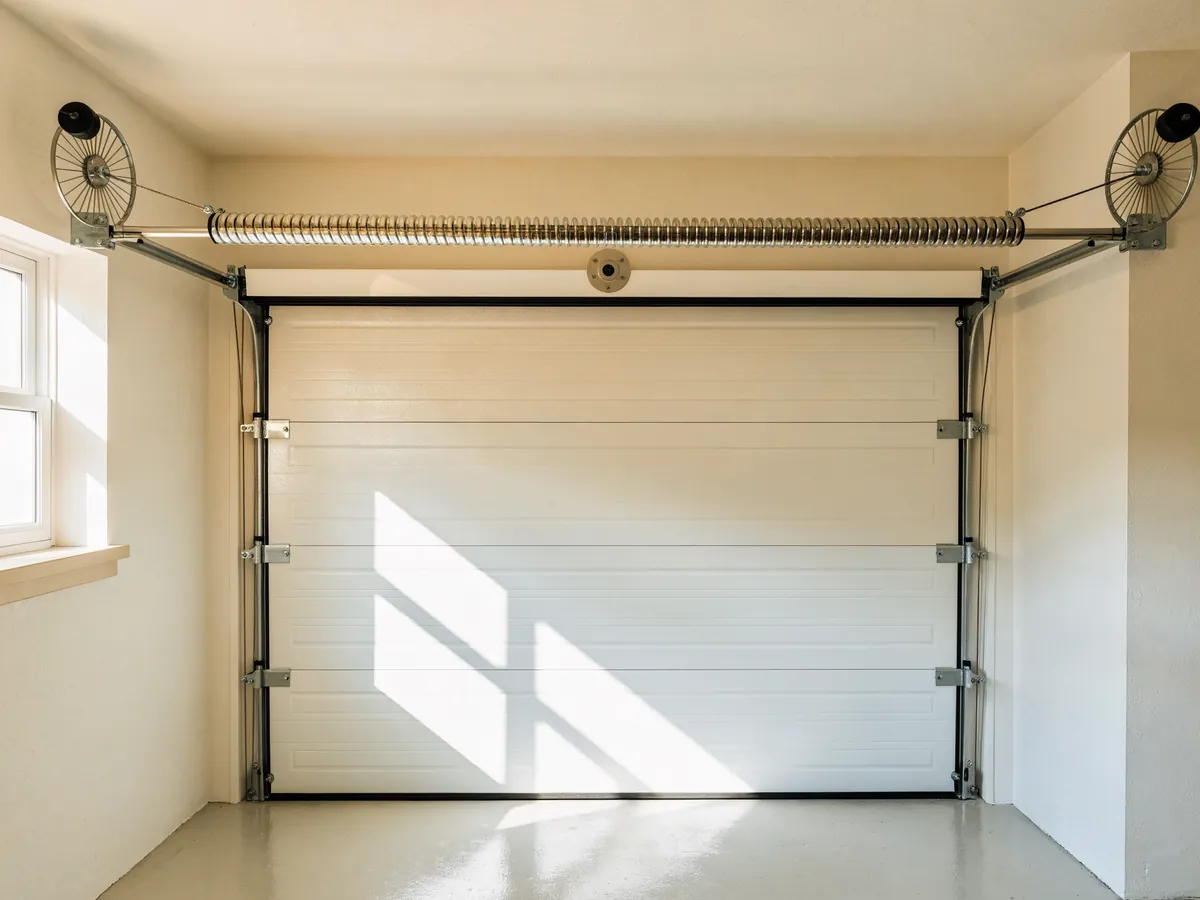
Garage door work sits in an odd corner of the trades. It is part mechanical, part electrical, part carpentry, and the mechanical part involves the single most dangerous residential component most people own.
A technician on a normal Florida week deals with:
- Torsion and extension springs, and the winding that makes them safe or lethal
- Cables, drums and the shaft that connects them, and the rust that eats all three near the coast
- Track alignment, rollers, hinges and bearings
- Opener motors, logic boards cooked by summer heat, safety sensors, limits and force settings
- Panel and section replacement, including storm damage
- The bottom seal, which takes an afternoon storm every day for half the year
- Door balance, which governs whether everything else lasts
The skill that separates people in this trade is diagnosis, not installation. Almost anyone can fit a part. Knowing why the part failed, and whether the thing that killed it is still there, is the job. In Florida that usually means knowing the difference between a spring that reached its cycle count and one that rusted through at half its life, because the second one means the cables and brackets are next.
Licensing in Florida, honestly
The line that matters is the permit. Replacing a garage door in Florida requires a building permit, pulled by a licensed contractor, with the door’s wind rating documented on it. Replacing an opener, a spring or a cable normally does not.
So for a door replacement, the company’s license is not optional and you can check it in two minutes on the Department of Business and Professional Regulation license search. For a repair, the same lookup tells you whether the company is a real business with a record, which is still worth knowing.
What else exists:
- Manufacturer training. Opener and door manufacturers run programs for installers. Real and worth something, but commercial training rather than a public license.
- General liability insurance. Not a qualification, but the one thing never to skip. If somebody is injured in your garage or your door is damaged, this is what stands between you and the bill.
Ask for the license and a certificate of insurance and expect both without friction. A company that gets defensive about either has told you what you needed to know. Our guide on garage door permits in Florida covers what the permit involves and why it protects you at inspection time and at resale.
What happens on a normal service call
| Step | What the technician does | Why it matters |
|---|---|---|
| 1. Look before quoting | Opens and closes the door, listens, checks both sides | Nothing should be priced from the driveway |
| 2. Balance test | Pulls the release, lifts the door to waist height, lets go | Separates a spring problem from an opener problem in thirty seconds |
| 3. Diagnosis out loud | Says what failed, why, and what else is near the end of its life | Not a list of everything that could be replaced |
| 4. Written estimate | Itemized parts and labor, before any work starts | The number you pay |
| 5. The work | An hour to ninety minutes for a spring, two to three hours for an opener, most of a day for a door | Anything much quicker is a corner cut |
| 6. Test and handover | Balance rechecked, sensors tested, reversal shown against an obstruction | You watch it work, not hear about it |
If nobody does the balance test on your call, that is a flag. It is the most informative thing anyone does on a garage door, and skipping it is how the wrong part gets replaced.
What a real technician has on the van
You can learn a lot from the back of the vehicle.
Springs in a range of sizes. Torsion springs vary by wire gauge, inside diameter and length, and a stocked van carries the common combinations. A technician who has to order a standard spring for a standard door is not really in this trade.
Winding bars. Two solid steel bars, sized to the cones. If somebody winds a torsion spring with a screwdriver, stop the job. That is how people lose fingers and eyes, and it tells you about everything else they do.
Cables, drums, rollers, hinges, bottom brackets and bearing plates. Consumables that should never require a second visit, and in Florida the cables and bottom brackets go on the van in stainless or galvanized versions for coastal doors.
Opener parts. Sensor pairs, gear kits, capacitors, logic boards for the common brands, remotes, wall controls.
Bracing hardware and a way to secure an opening. After a storm, a door that cannot be repaired that day still needs to be closed and held so the house is not open to the weather.
Technician or salesman
The distinction that costs people the most money.
A technician disconnects the opener and lifts the door by hand. Tells you which part failed. Quotes the repair. Mentions a new door only if the door is genuinely finished, or if it has no wind rating and you have asked about a hurricane-rated replacement, and explains why.
A salesman arrives with a tablet, does not disconnect anything, and has a full door replacement priced before understanding what broke. The opening move is often a very low advertised call-out fee, and the number climbs once they are in your driveway. After a hurricane the same person arrives on foot and asks for a deposit.
The single tell: did the person touch the door before naming a number?
The bait pricing pattern is the reason this trade has the reputation it has, and it is why every price on this site is published in advance.
Questions worth asking on the phone
Before anyone is dispatched:
- Is the price you have quoted the price I pay, or is it a call-out fee?
- Are you replacing both springs or one?
- Are you licensed and insured, and will you send the certificate?
- If this becomes a door replacement, do you pull the permit?
- What is the warranty on parts and on labor?
- Is the technician employed by you or subcontracted?
Our guide on what to ask before hiring goes through what each answer tells you, and how to choose a company covers the checks worth doing on the company itself.
The one thing never to attempt yourself
Torsion springs. They hold enough stored energy to break bones, and they release all of it instantly if a winding bar slips. Cables, drums and anything on the shaft belong in the same category, because they are under the same load, and a rusted Florida bracket makes the job worse rather than easier.
We have written about why nobody should replace a torsion spring themselves at length. If you take one thing from this page, take that one.
What we charge
Every service on this site carries a published starting price, and you get a written estimate before any work begins. Spring replacement starts at $150 per spring. Cable repair starts at $95. Opener repair starts at $95. A new wind-rated door is $950 to $4,200 installed with the permit included in the quote. Emergency dispatch carries a $150 to $300 premium, stated before we leave, and it applies to the dispatch only, never to the repair. One year on parts and one year on labor, written on the invoice.
There is no low advertised call-out fee here, because that number exists to get somebody into your driveway. Every price is a starting price for a standard single door, listed on our price list, and we cover the whole state from Miami-Dade County to North Florida.
Related questions
Do garage door technicians need a license in Florida?
A garage door replacement requires a building permit, and the permit is pulled by a licensed contractor, so the company doing the replacement must hold a license you can look up on the Department of Business and Professional Regulation site at myfloridalicense.com. Most repairs, springs, cables and openers, do not need a permit. Either way, ask for the license and the certificate of insurance and check both.
How long does a garage door repair take?
A spring replacement on a standard single door takes about an hour to ninety minutes. Cables run similar. An opener installation is two to three hours. A full door replacement is most of a day, plus the permit and inspection around it. If someone quotes twenty minutes for a spring, they are either not replacing both springs or not doing it properly.
What is the difference between a technician and a salesman?
A technician looks at the door before quoting, tests the balance by hand, and can tell you which part failed and why. A salesman arrives with a tablet, does not disconnect the opener, and steers every conversation toward a new door. The tell is whether the person touches the door before naming a number.
Should I get more than one quote?
For anything above a few hundred dollars, yes, and any honest company expects it. For an emergency where the door is stuck open or the car is trapped, three quotes are not realistic. That is exactly why we publish our prices, so you can sanity check a number at two in the morning without making three calls.
What should I have ready when the technician arrives?
The opener brand and model if you know it, whether the door is a single or a double, what you heard or saw when it failed, and whether anyone has worked on it before. Clear the car and anything stored under the tracks. If the door is stuck and the car is inside, say so on the phone so we bring what a trapped car needs.